The New York Times reports former DraftKings employees say the company used machine-learning models to target promotions at customers likely to bet—and lose—more. DraftKings insists promotions are aimed at engaged users and highlights safeguards such as monitoring, cool-off periods and LLM-based message scanning. Former staffers say proactive risk-prediction projects were delayed or cancelled, leaving protections largely reactive. The investigation spotlights wider concerns about aggressive marketing and public-health risks in the fast-growing online betting industry.
Former DraftKings Employees Say AI Targeted Promotions At Players Likely To Keep Losing — NYT Investigation
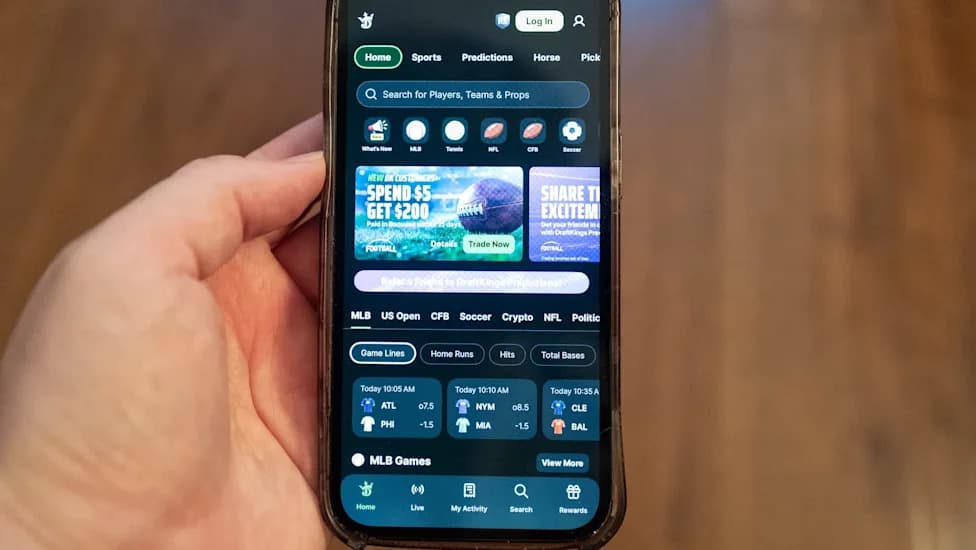
Photo Credit: Getty Images
A New York Times investigation has renewed concerns about how artificial intelligence is used in online gambling after former DraftKings employees said the company used machine-learning models to identify customers most likely to respond to promotions by increasing their betting—and their losses.
Jayden Butts, a former DraftKings data analyst, said a 2023 assignment asked him to evaluate a model that estimated how much casino customers might lose after receiving a promotion. DraftKings spends hundreds of millions annually on incentives such as free bets, profit boosts and deposit bonuses and has worked to identify which offers produce the strongest returns.
“The best investment would be a problem gambler,” Butts said, describing why the targeting objective troubled him.
Six former employees who worked on promotional targeting told the Times that DraftKings continued refining those methods. Meanwhile, former staff assigned to responsible-gaming programs said projects intended to predict addiction risk were delayed or cancelled.
Company Response and Safeguards
DraftKings defended its practices, saying marketing is not improperly targeted at people based on losses and that promotions are aimed at "customers who demonstrate sustained, engaged use of our platform, not toward customers based on their losses." Lori Kalani, DraftKings’ chief responsible gaming officer, said the company tracks "potentially risky behaviors" and chose not to deploy predictive risk-scoring technology because it had not proven useful.
DraftKings says it maintains multiple safeguards, including cool-off periods, self-exclusion lists, help-line information and a nationwide monitoring program that tracks more than two dozen indicators of potentially risky behavior. When customers trigger those markers, the company may send responsible-gambling messages, educational videos, questionnaires or, in some cases, close accounts. The company also says it uses large language models to scan customer messages for signs of distress.
Proactive Risk Detection? Former Staff Say It Was Dropped
Former employees argue those measures are mostly reactive. An internal project led by ex-data scientist Nestor Hernandez aimed to use machine learning to identify emerging gambling problems days or weeks earlier so the company could intervene sooner.
“The idea of this model is to be more proactive instead of being reactive,” Hernandez said. “You will basically predict that a user will be in trouble, let's say, a few days or a few weeks in advance. And you can act accordingly.”
Former data scientist Jacob Shulkin described how promotions affect users: they often feel like "free money" even when the incentives draw them back into persistent play. Another former DraftKings analyst summarized the dynamic bluntly: "It is as predatory as it sounds. If you lose more, we give you more, so you keep playing more."
Industry Context
Since the U.S. Supreme Court’s 2018 ruling allowed states to legalize online sports betting, companies such as DraftKings and FanDuel have helped transform smartphones into always-available gambling platforms. DraftKings says its customer base grew from about five million in 2022 to roughly 11 million in 2025. The company reported roughly $8.7 billion in gross revenue in 2025 and, according to Citizens Bank research, distributed about $3 billion in promotions.
Public-health experts have long regarded gambling as addictive. The investigation highlighted signs of rising strain: for example, calls to Ohio’s problem-gambling helpline tied to sports betting rose more than fourfold after legalization in 2023. Other operators, including FanDuel and Fanatics, have said they use third-party risk-scoring tools.
What This Means
The report raises broader questions about an industry driven by aggressive promotions, limited guardrails and intensifying scrutiny from regulators, public-health advocates and the public. The central tension: promotional strategies that grow customers and revenue may also magnify harm for vulnerable players if interventions remain reactive rather than preventive.
Help us improve.