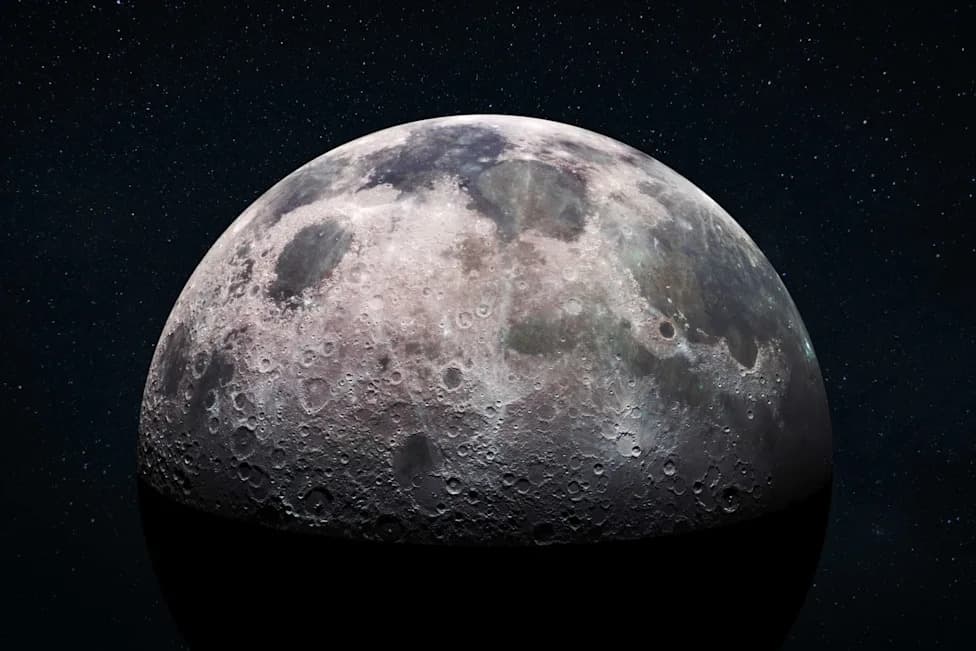
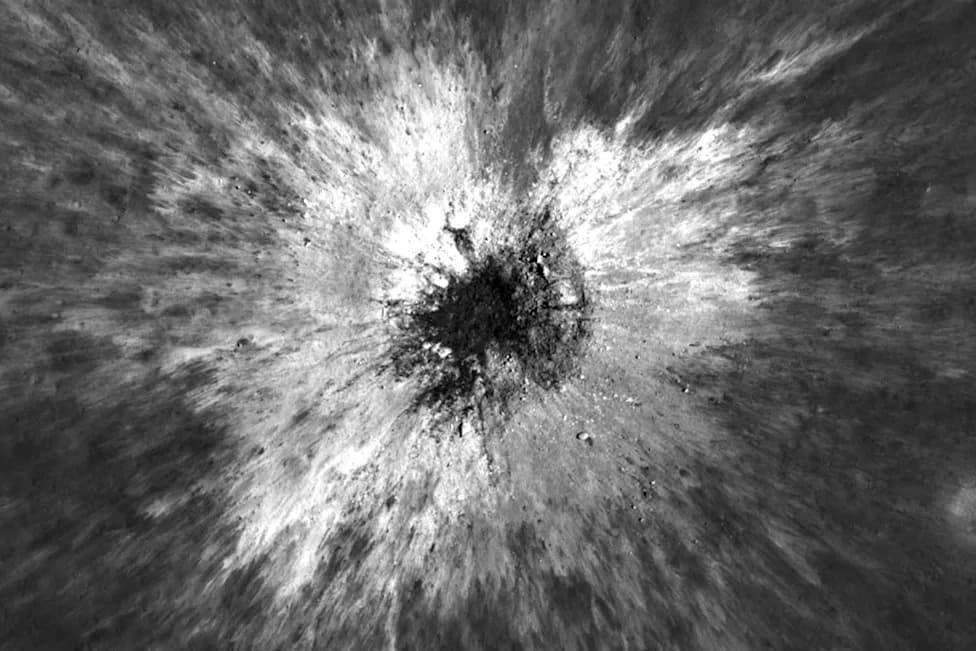
The 4.5‑ton SpaceX Falcon 9 upper stage struck near Einstein Crater on Aug. 5, 2026, at about 5,400 mph, leaving a crater imaged by South Korea's Danuri and NASA's LRO. Large observatories detected brief sodium and lithium plumes that lasted roughly five to 10 minutes. Experts warn uncontrolled impacts and high‑velocity ejecta are growing risks for future lunar infrastructure and recommend designated impact zones or controlled de‑orbiting. Scientists now await full observational data to refine ejecta and impact models.
SpaceX Falcon 9 Upper Stage Crashes Into Moon — What It Means For Future Lunar Bases
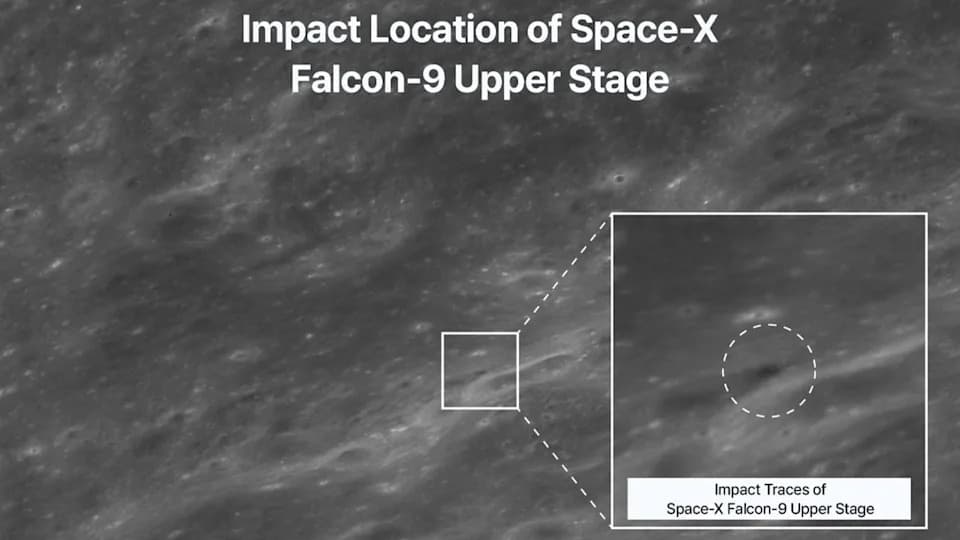
South Korea's Danuri lunar orbiter captured this image of the crater blasted out by a SpaceX Falcon 9 upper stage when it hit the moon on Aug. 5, 2026. | Credit: KARI
On Aug. 5, 2026, a 4.5-ton leftover SpaceX Falcon 9 upper stage slammed into terrain near Einstein Crater, punching a new crater that was subsequently imaged by South Korea's Danuri orbiter and NASA's Lunar Reconnaissance Orbiter (LRO). The impact, occurring at roughly 5,400 mph (8,690 kph), was also reportedly recorded by a Chinese commercial debris‑tracking satellite.
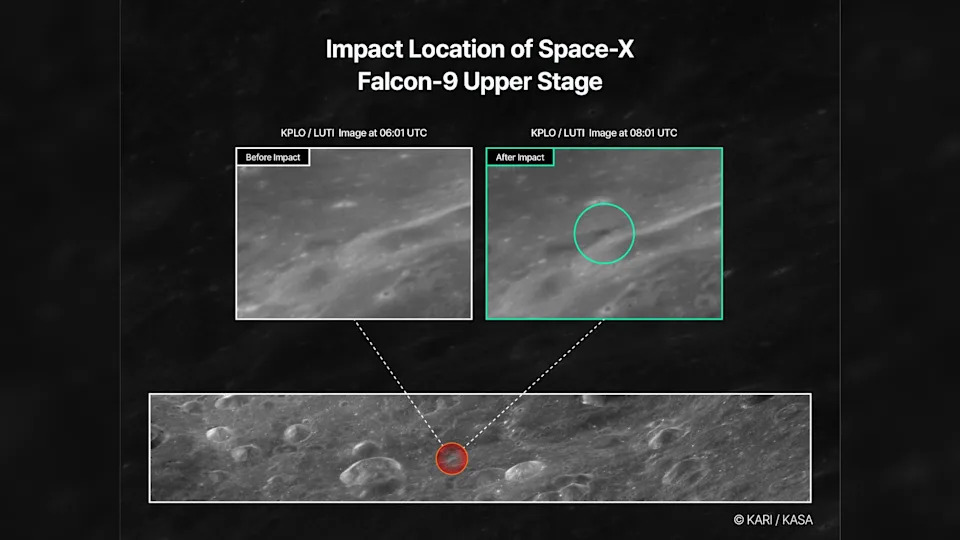
Before-and-after imagery of the impact site. | Credit: KARI
The spent upper stage had been drifting in cislunar space since it launched Firefly Aerospace's Blue Ghost‑1 lander and Japan's Hakuto‑R Mission 2's Resilience lander on Jan. 15, 2025. Although the Moon's surface is quiet again, the uncontrolled strike has renewed debate about how to manage spent hardware as humans plan longer‑term operations on the lunar surface.
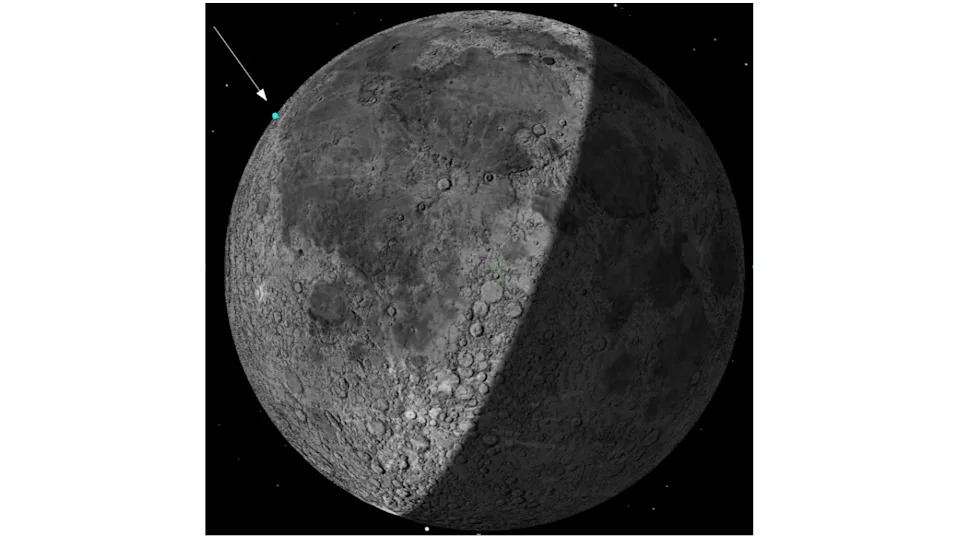
Illustration of the moon, with an arrow pointing to the Falcon 9's upper stage impact site on Aug. 5, 2026. | Credit: Bill Gray/Project Pluto
How Close Calls Were Avoided
South Korea's Danuri team first flagged the inbound Falcon 9 stage in late June, noting substantial uncertainty in its predicted trajectory. Eunhyeuk Kim, a senior researcher at the Korea Aerospace Research Institute (KARI), said Danuri's orbital data were precise, but the tumbling rocket stage's path remained unpredictable, creating a non‑negligible risk of conjunction.
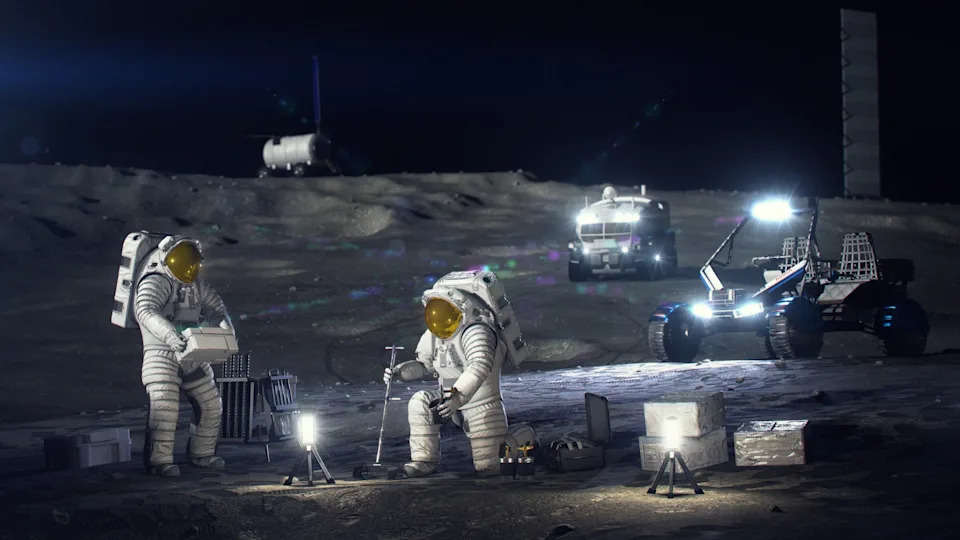
An artist's concept of astronauts working on the lunar surface. | Credit: NASA
KARI executed a mid‑July maneuver on Danuri to prepare for a near‑total lunar eclipse on Aug. 28 (about 96% of the visible lunar disk passes through Earth's umbra). That adjustment shifted Danuri's orbital phase and effectively eliminated the likely conjunction; at the moment of impact, Danuri was over the Moon's south polar region, far from the strike zone.
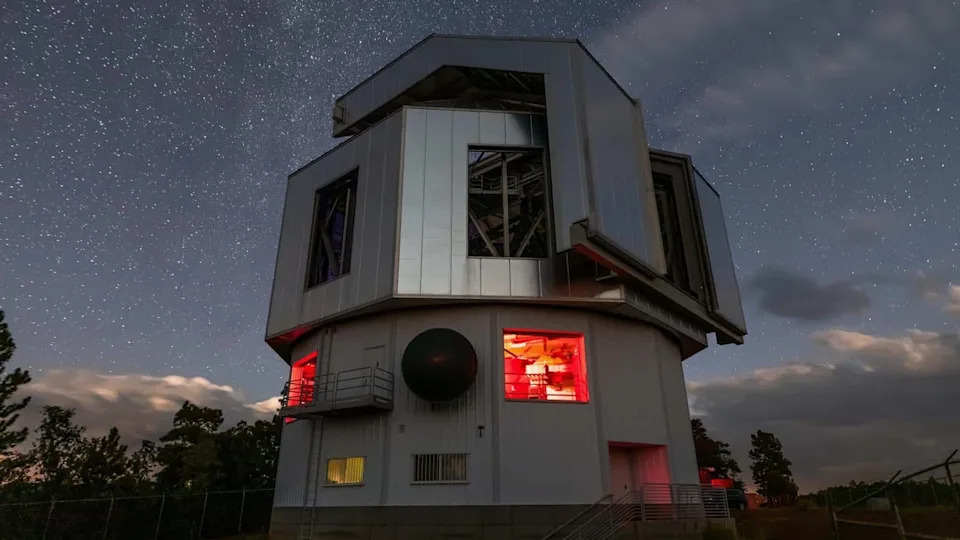
Credit: Lowell Observatory
Telescopes Caught a Brief Chemical Plume
Although the plume was faint against the bright lunar surface and short‑lived, large observatories detected chemical signatures minutes after impact. The European Southern Observatory's Very Large Telescope (VLT) in Chile reported a transient chemical fingerprint for about five to 10 minutes, and the 4.3‑meter Lowell Discovery Telescope (LDT) in Arizona measured a bright lithium signal and a fainter sodium signature.
"The bright lithium plume extended more than halfway up our field of view," said Patrick Lierle of Boston University, describing LDT's observations, which are being analyzed further by graduate students.
Why This Matters For Lunar Infrastructure
Dean Sladen, an aerospace engineer and quality manager at Accu Components, warned that as permanent lunar infrastructure grows, uncontrolled rocket stages shift from a nuisance to a tangible operational risk. Even distant impacts can generate ground shocks and high‑velocity ejecta — fine regolith and rock fragments launched at bullet‑like speeds across large distances — that may damage habitats, solar arrays, antennas and endanger astronauts.
Sladen and other experts say the industry should consider designated impact zones and strictly controlled, targeted de‑orbit procedures so spent hardware is directed to safe locations away from active sites. They emphasize that, while natural meteorite impacts remain an unavoidable background risk, managing human‑made debris is a part of the risk profile we can and should control.
Next Steps For Scientists
Researchers are awaiting the release of detailed observational datasets to refine impact and ejecta models. Combining telescope spectra, orbital imagery from Danuri and LRO, and computational simulations should help determine plume height, composition, impact angle and energy — all inputs that improve predictions of how artificial impacts affect lunar surface operations.
Bottom line: The Falcon 9 strike is a reminder that as activity around the Moon increases, so does the need for clearer rules, improved tracking and deliberate end‑of‑mission plans to protect future lunar missions.
Help us improve.