The salvage firm Ambrey has begun operations to stabilise the grounded tanker Caroline Bezengi, which has been leaking oil near Oman's Hallaniyat archipelago since an unexplained June explosion. Satellite imagery shows the slick growing sharply — Greenpeace estimates it expanded from about 45 sq km in late July to roughly 1,300 sq km, while Omani authorities recently estimated about 400 sq km. The International Oil Pollution Compensation Funds said it will not join the cleanup after deeming the incident likely an act of war. Experts warn that delayed source control, the remote location and Khareef monsoon conditions have severely complicated containment and recovery.
Salvage Operation Under Way to Stabilise Oil‑Leaking Tanker Off Oman as Spill Widens
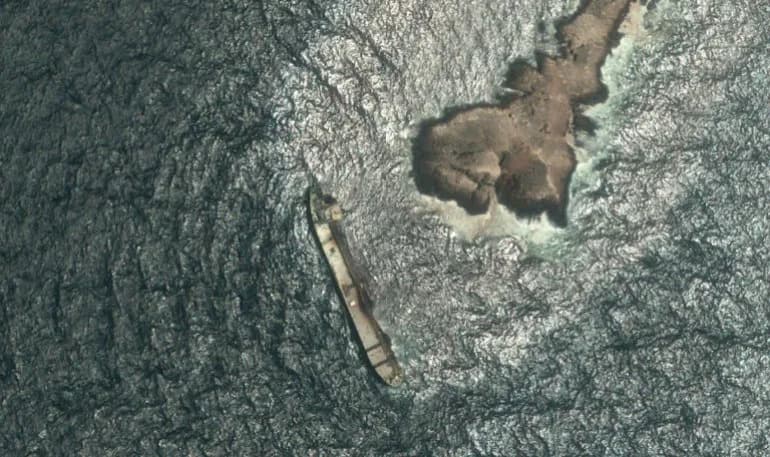
A satellite photo shows the tanker Caroline Bezengi, grounded and partly submerged off the coast of Oman, on August 5, 2026 [File: Pleiades © CNES 2026, Distribution Airbus DS via AP]
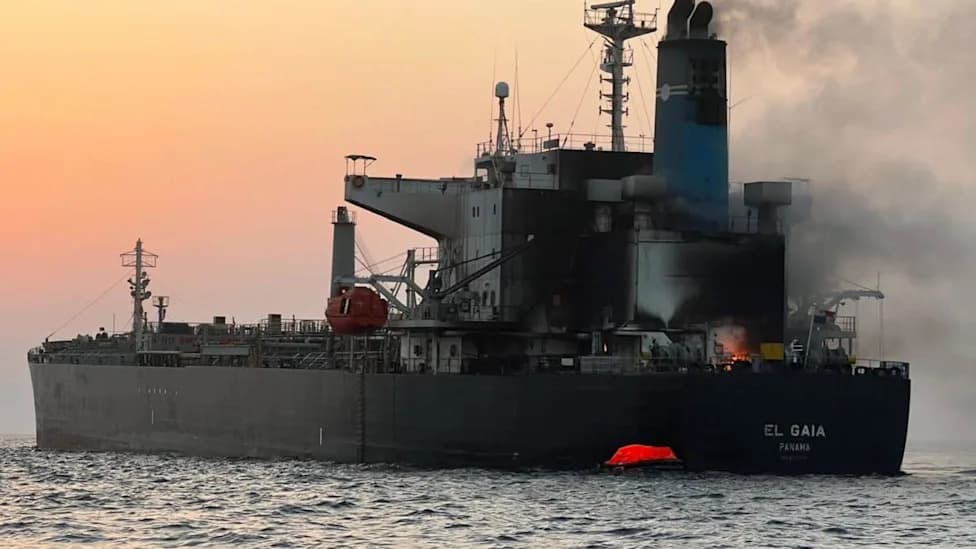
A coordinated salvage operation has begun to stabilise the Caroline Bezengi, the tanker that has been leaking oil near Oman's Hallaniyat archipelago since an unexplained explosion in June, the risk firm Ambrey said.
Response Underway
Ambrey announced on Thursday that it is working with Omani authorities as part of a "significant international response" that includes salvage vessels, aircraft and specialist personnel. The company said specialist teams had already boarded the vessel to begin stabilising its cargo and expected additional salvage ships to arrive soon.
Aside from Oman and an unnamed "leading international oil spill response company," Ambrey did not specify other participating countries or private firms. The tanker has previously sailed under the flags of Cameroon, Palau and Liberia and is suspected to be part of Russia's so‑called shadow fleet used to move sanctioned crude.
International Bodies And Liability
The International Maritime Organization (IMO) said it is "closely monitoring" the situation and will continue to support ongoing efforts. The International Oil Pollution Compensation Funds — two intergovernmental bodies set up to provide compensation for oil pollution — said they would not participate in the cleanup after determining the incident likely resulted from an act of war.
Scale Of The Spill And Environmental Risk
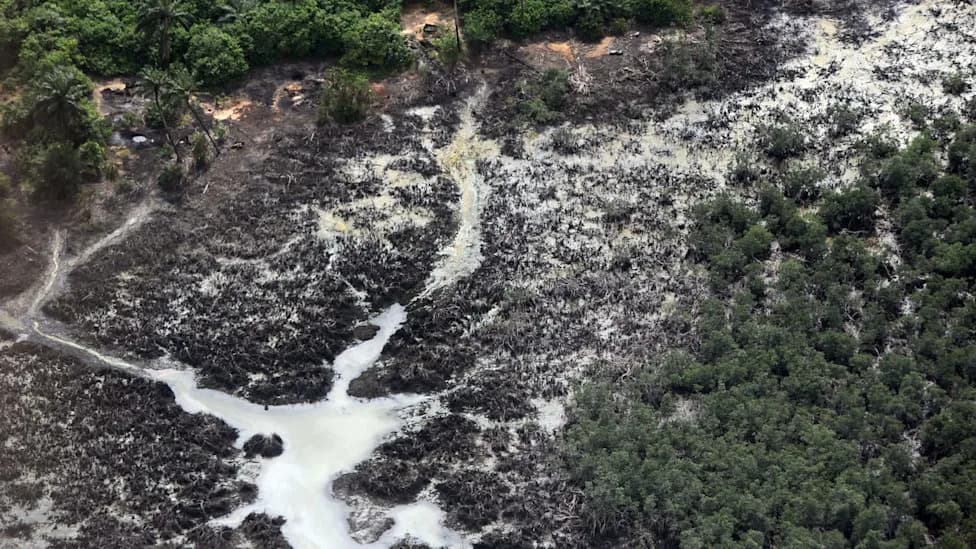
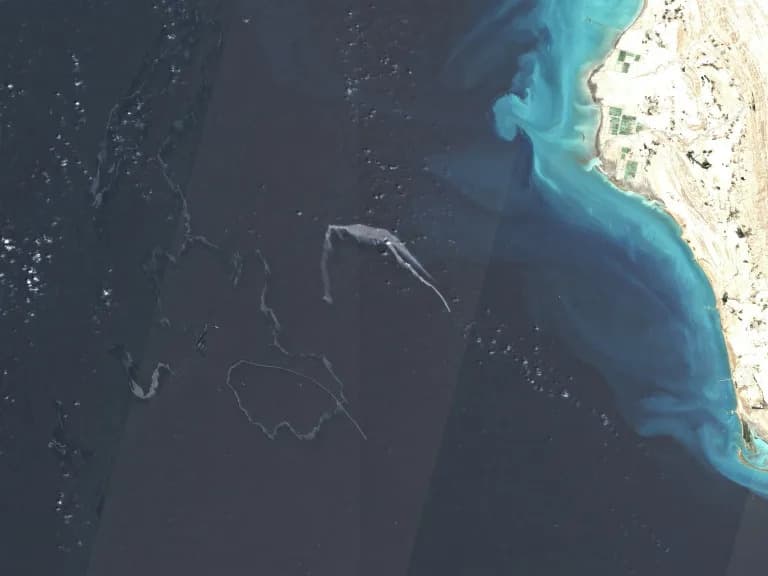
Satellite analyses show the oil slick has expanded substantially in recent days, raising alarms for coastlines and sensitive ecosystems, including a newly established marine reserve off the Hallaniyat islands. Greenpeace said satellite imagery indicated the spill grew from roughly 45 sq km in late July to about 1,300 sq km by Wednesday. Omani authorities had estimated the slick at about 400 sq km as recently as Monday.
A satellite image dated 5 August 2026 shows the Caroline Bezengi grounded and partly submerged off Oman's coast (File: Pleiades © CNES 2026, Distribution Airbus DS via AP).
Operational Challenges
Ambrey and local officials say the salvage and containment effort is being complicated by the remote location and adverse weather associated with the annual Khareef monsoon. Ed Wollaston, Ambrey's director of global response, called the situation "extremely challenging" but said the firm had deployed leading experts and the necessary equipment to mitigate environmental damage.
"We are working around the clock to mitigate the environmental impact of the situation," Wollaston said.
Expert Views
Environmental groups and specialists say the response was too slow and the lack of a clear owner or insurer has hampered urgent action. Hanen Keskes of Greenpeace urged immediate international assistance, noting that specialised salvage capabilities often exceed the capacity of any single state.
Najmedin Meshkati, an oil‑spill expert at the University of Southern California, said authorities had lost a critical response window. "Source control on day three is worth many multiples of source control on day 60," he said, while acknowledging Oman was dealing with an "orphaned wreck" with no responsive owner, verifiable insurer or functioning flag state.
Damilola S. Olawuyi, a professor of energy and environmental law, said the incident highlights how geopolitical complexities and war‑exclusion clauses can frustrate the "polluter‑pays" principle and complicate cleanup and compensation.
The situation remains fluid as salvage teams work to stabilise the vessel and contain further pollution. Authorities and responders warn that adverse weather and the remote location could prolong recovery efforts and worsen environmental damage if containment is delayed.
Help us improve.