Newly released DHS reports detail an inquiry called "Operation Puppet Master" that used undercover agents, encrypted‑chat infiltration and administrative subpoenas to surveil left‑wing groups and anti‑ICE organizers. Nearly 30 internal documents were filed in a DoJ criminal case charging 15 Minneapolis protesters; the records name major unions and activist groups but do not show those groups were charged. Defense attorneys and civil‑liberties experts argue the files indicate broad political surveillance and "guilt‑by‑association" tactics rather than narrowly targeted criminal investigations.
Records Reveal 'Operation Puppet Master': DHS Undercover Surveillance of Left‑Wing Groups and Anti‑ICE Protesters
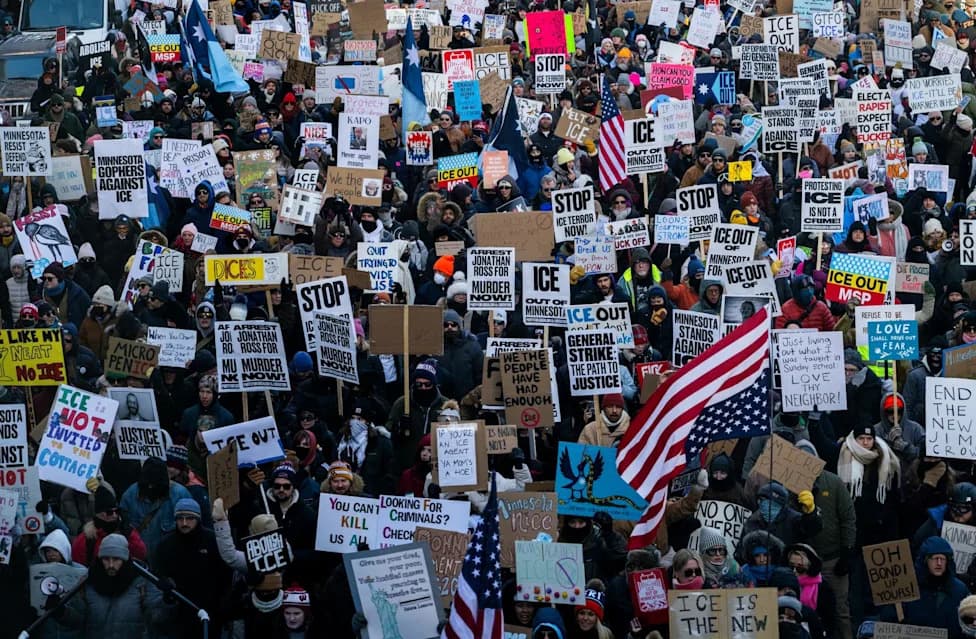
Protesters march during a 'Nationwide Shutdown' demonstration against ICE enforcement on 30 January in Minneapolis, Minnesota.Photograph: Stephen Maturen/Getty Images
Newly disclosed internal records show the Department of Homeland Security (DHS) conducted extensive undercover surveillance of prominent left‑wing organizations and anti‑ICE protesters in connection with an immigration enforcement surge in Minnesota earlier this year.
What the Records Show
Nearly 30 internal law‑enforcement reports were produced to a federal court in a criminal case brought by the Department of Justice (DoJ) against 15 Minneapolis protesters. The filings describe an inquiry opened in January under the name “Operation Puppet Master,” which DHS said aimed to identify a "network of conspirators" organizing against U.S. Immigration and Customs Enforcement (ICE).
According to the documents, DHS agents attended community meetings in the Twin Cities and New York City, infiltrated encrypted Signal chat groups, made audio recordings of events, and used administrative subpoenas to obtain financial records from major unions and nonprofit groups. The records also document undercover operatives who posed as activists and engaged directly with attendees at trainings and meetings.
Surveillance Methods and Incidents
The reports describe a range of tactics:
- Undercover agents attended trainings and public meetings — including a Sunrise Movement "resistance skills" session on Jan. 31 — and at times actively participated in conversations about recruitment and protest tactics.
- Agents joined encrypted Signal groups used by activists and monitored virtual gatherings, including a meeting at Hunter College on "ICE brutality."
- DHS used administrative subpoenas to obtain banking and wire‑transfer records linked to unions such as SEIU, and requested financial data from the Federal Reserve Bank of New York related to the Communications Workers of America. Records connected to the Sunrise Movement were also obtained.
- Undercover operatives made audio recordings, documented license‑plate numbers at events, and occasionally misrepresented their identities when questioned at protests or meetings.
One report recounts an undercover agent saying he "works in construction" and could build items for more "direct‑action" protests, claiming that "going to jail did not bother him," and giving out a phone number. Another agent recorded boxing and sparring drills at a church gymnasium training, only to note that a recorder had fallen and needed to be retrieved.
Organizations Identified
The files name several national and local organizations, including the AFL‑CIO, Service Employees International Union (SEIU), Minneapolis Federation of Educators, Minnesota Association of Professional Employees, Democratic Socialists of America (DSA), Showing Up for Racial Justice (SURJ), Sunrise Movement and Unidos MN. None of these organizations have been charged with crimes in the case.
Legal Case and Civil Liberties Concerns
The DoJ indictment against 15 individuals alleges a broad conspiracy organized through a loose coalition called Direct Action Minnesota but — according to defense filings — contains no accusations that the defendants inflicted physical injuries on specific ICE officers or committed serious violence. Defense attorney Kevin Riach, who filed the DHS records in court, called the investigations a "mass spying campaign" and accused authorities of using undercover agents to "entice people into discussing or committing crimes."
"I was shocked at the scope and the apparent lack of investigative discipline involved, but not totally surprised," said Kevin Riach.
DHS spokespeople did not respond to requests for comment and the DoJ declined to comment on the reports.
Expert Reaction
Former FBI agent and civil liberties advocate Mike German said it was notable that DHS — rather than the FBI, which traditionally leads domestic terrorism inquiries — spearheaded the probes. He also highlighted DHS's use of administrative subpoenas, which do not require prior judicial approval, and warned the government appeared to be relying on "guilt‑by‑association" theories rather than narrowly focused criminal investigations.
Observers and organizers told reporters the surveillance reverberates with historical patterns of state attention on left‑wing activism and labor organizing, and raises questions about the line between lawful protest and policing of political dissent.
Community Response
Emilia Gonzalez Avalos, executive director of Unidos MN — named in the files — said the surveillance felt designed to intimidate and repress dissent. Organizers noted they often request meetings not be recorded, but also say that they welcome immigration agents to stay when present because their work is constitutionally grounded.
The newly disclosed reports have prompted renewed debate about civil‑liberties safeguards, the scope of domestic surveillance authorities, and the appropriate use of undercover tactics when monitoring political organizing.
Help us improve.