New fossil evidence from Wyoming shows that during the Paleocene–Eocene Thermal Maximum (56 million years ago) forest canopies thinned by about 60% as temperatures rose ~11°F (6°C). Researchers used the shapes of fossil leaf epidermal cells—calibrated against modern forests—to reconstruct ancient leaf area index. Canopy loss persisted for more than 100,000 years, illustrating that forest recovery can take geological time and warning that today’s CO₂ emissions, occurring ~10× faster, could push ecosystems past long-lasting thresholds.
Wyoming Fossils Reveal Ancient Forests Lost 60% Canopy and Needed 100,000+ Years to Recover
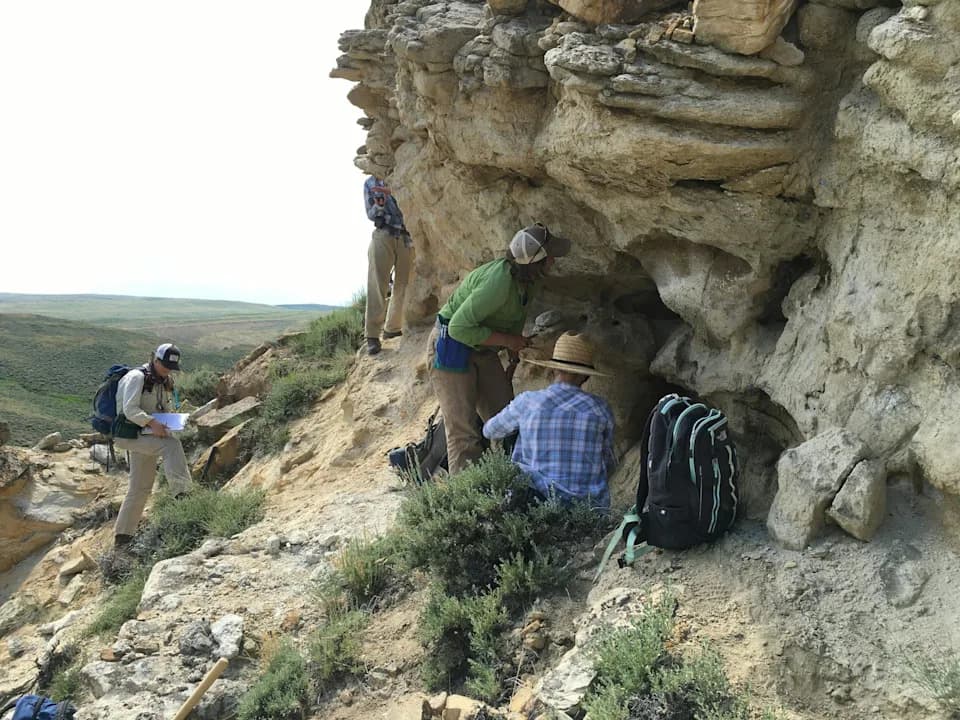
Two authors of the new study, Marieke Dechesne, left, and Ellen Currano, standing at center, collect fossils from a sand channel in rocks in Wyoming dated to the Paleocene-Eocene Thermal Maximum. Regan Dunn
Fossils from southern Wyoming show how forests responded when Earth warmed 56 million years ago—and what that might mean for today.
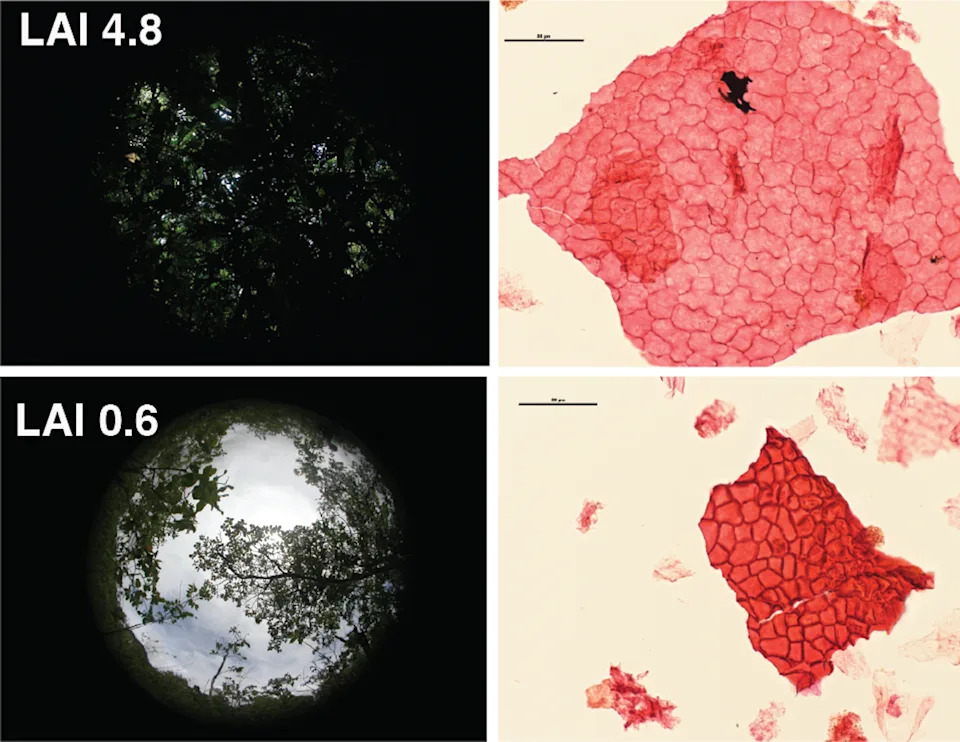
Images on the left illustrate the amount of canopy cover that a creature on the ground likely would have seen looking up toward the sky. Each example is connected to the shape of its fossil cuticle cells on the right. The more open the canopy, the rounder the cells.R. Dunn, et al., 2026
What Happened During the PETM
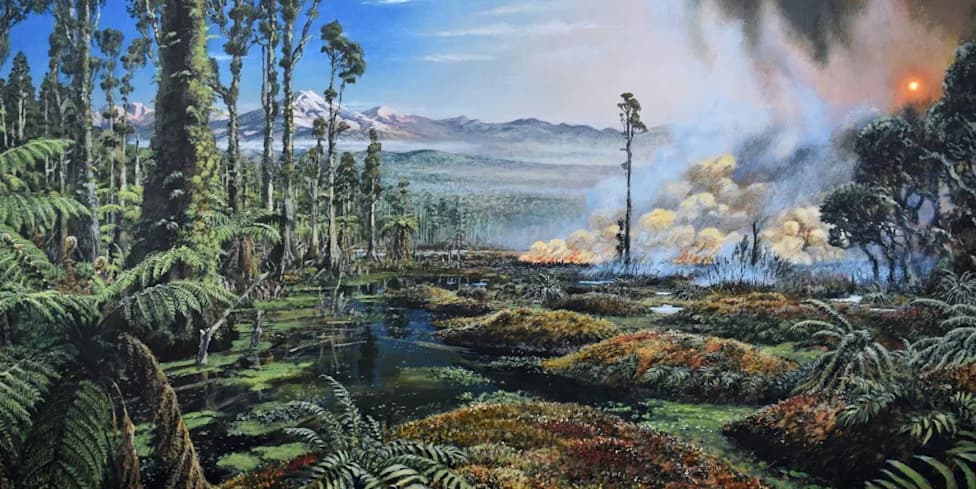
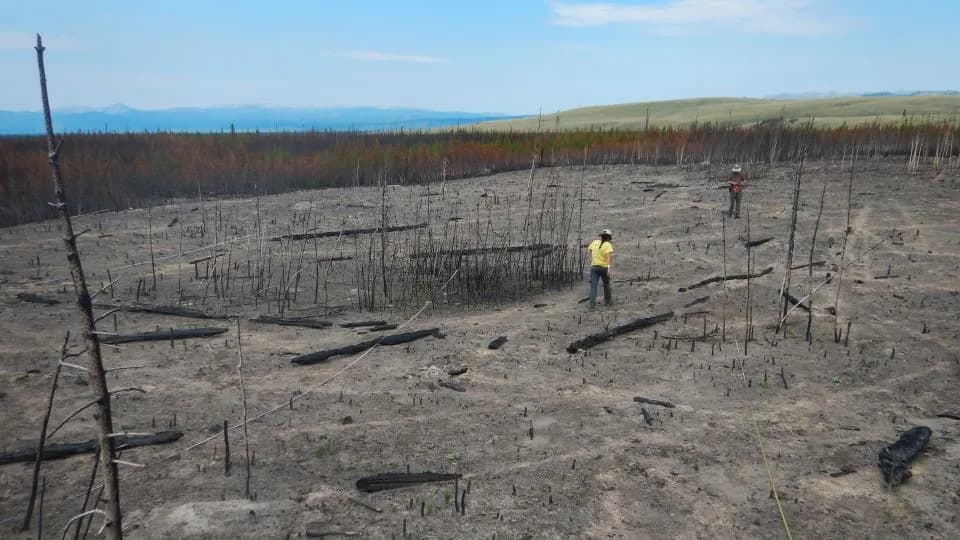
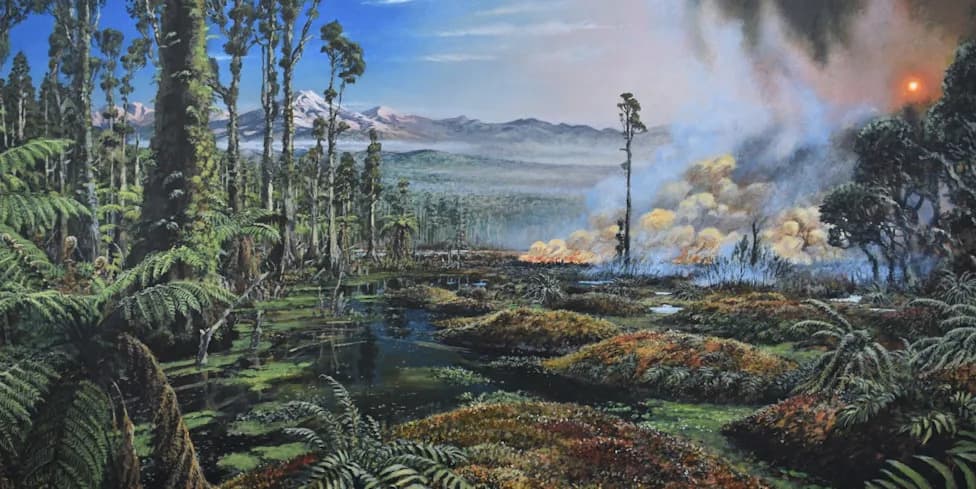
About 56 million years ago, during the Paleocene–Eocene Thermal Maximum (PETM), global temperatures rose by up to 11°F (6°C). In Wyoming, this warming triggered widespread heat and drought that killed large numbers of trees, opening forest canopies and altering landscapes. Ferns briefly proliferated where temperate trees once dominated, and warmth-loving plants such as palms moved northward.
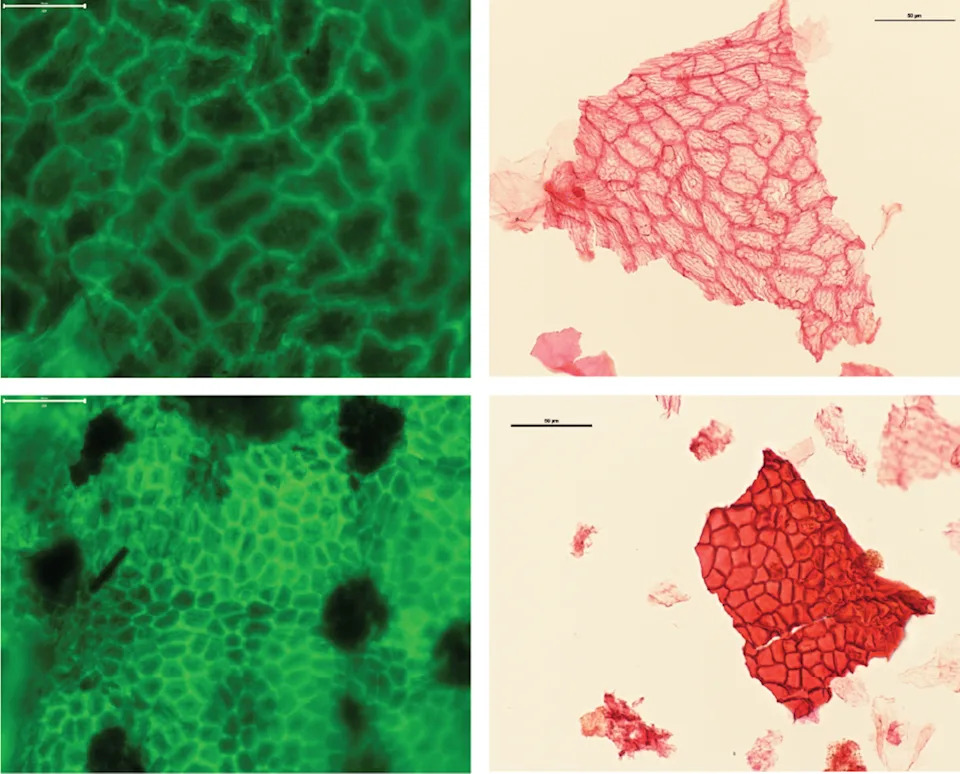
Two sets of magnified leaf cuticle cells: Fresh leaves are on the left and fossil leaves are on the right. Comparing the two sets shows the difference between the more elongated cells in the top set, which had more canopy cover, and rounder cells, suggesting more sun exposure, in the bottom set.R. Dunn, et al., 2026
How We Reconstructed Ancient Canopy Density
Paleobotanists reconstructed canopy density using microscopic leaf cuticles—thin, waxy fragments of leaf epidermis preserved in sediments. Epidermal cell shapes record the light environment: shaded leaves grow longer, more elongated cells; sun-exposed leaves develop shorter, rounder cells. The researchers calibrated this relationship by sampling soils across Central and South American forests with known leaf area index (LAI) values, then compared those modern measurements to thousands of fossil cells from Wyoming.
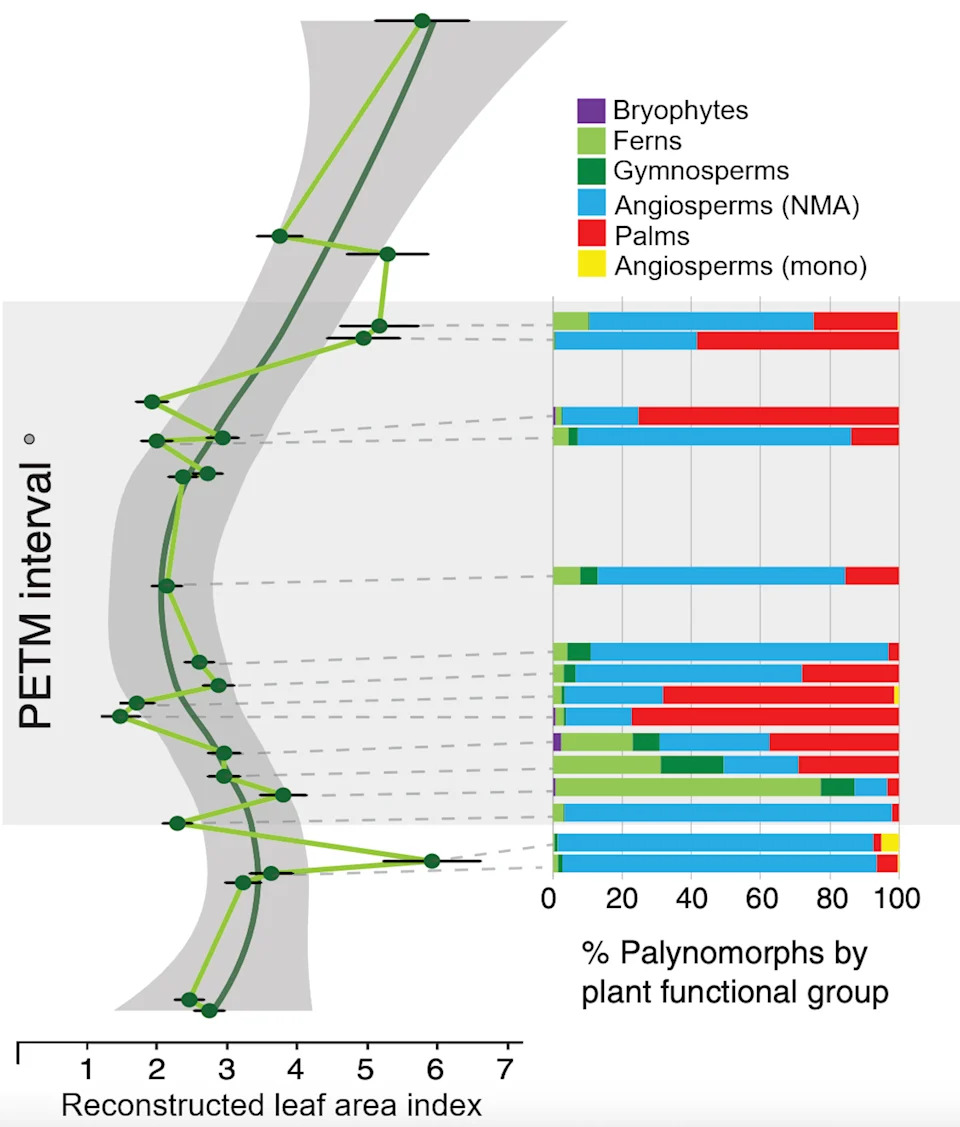
Tree canopy is often measured using leaf area index. This chart of the Paleocene–Eocene Thermal Maximum, 56 million years ago, shows how the canopy cover shrank as temperatures rose, with the timeline starting with the oldest period at the bottom. The bars on the right show the percentage of different types of plants in forests in Wyoming as the mix changed with the canopy cover, based on fossilized pollen and other palynomorphs.R. Dunn, et al., 2026
Key Findings
The fossil evidence indicates Wyoming's forests lost roughly 60% of their canopy during the PETM and remained in a diminished state for well over 100,000 years. Before the rapid warming began, canopies were unusually dense—likely a temporary boost from rising atmospheric CO₂—yet rising heat and drought soon overwhelmed any fertilization benefits. Reduced canopy cover changed ecosystem function: ancient soils eroded and were replaced by coarser river deposits, demonstrating how vegetation loss reshapes hydrology and sediment transport.
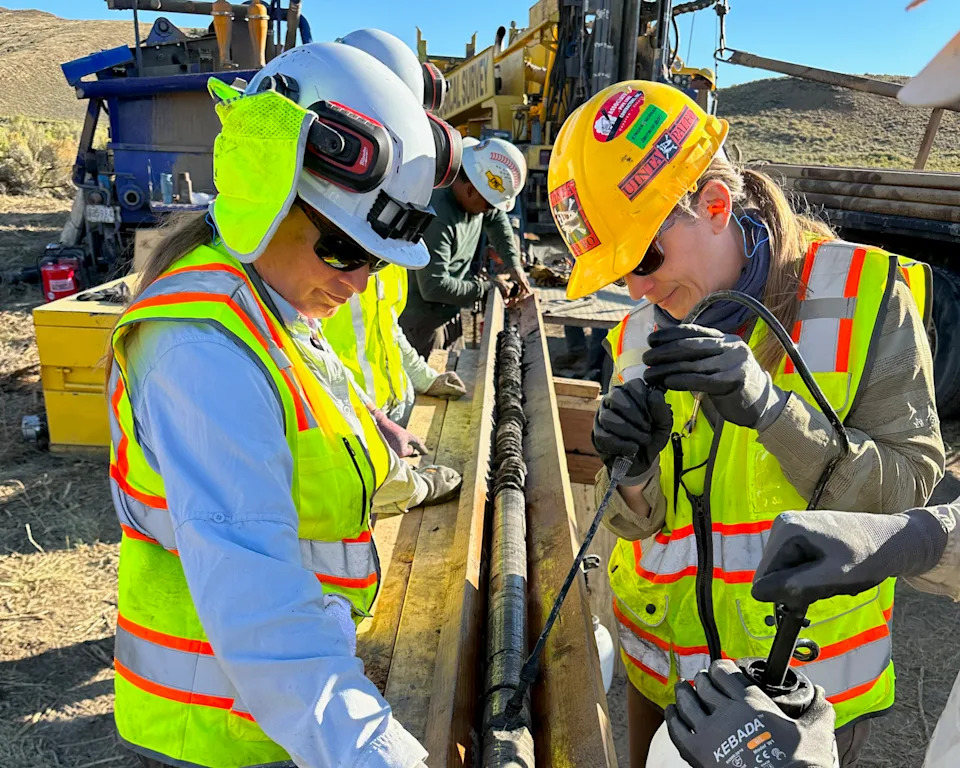
Study authors Regan Dunn and Ellen Currano work on a sediment core extracted from Wyoming's Hanna Basin by colleagues with the U.S. Geological Survey. Cores like this capture layers of fossil pollen and leaf material going back in time, revealing how environments changed. Regan Dunn
Recovery and Long-Term Processes
Recovery occurred, but on geological timescales. Enhanced chemical weathering in the warmer climate gradually removed CO₂ from the atmosphere, storing carbon in marine sediments. That slow drawdown cooled the climate and restored water availability, allowing forest canopies to regrow and eventually exceed their pre-PETM density. However, this recovery required tens to hundreds of thousands of years—far longer than human lifespans or civilizations.
Why This Matters Now
The PETM is the best natural analogue for our current warming, but it differs in rate: humans are releasing CO₂ roughly ten times faster than the natural carbon pulse that drove the PETM. The fossil record shows that forests can be pushed beyond physiological limits—after which temperature, drought, pests and fire can reverse any short-term CO₂ fertilization. The ancient example is a cautionary tale: while forests are resilient given long periods, modern rapid emissions risk crossing ecological thresholds that could require millennia for recovery.
"The changing climate changed the forest, and the forest changed the landscape."
Study credit: Regan E. Dunn et al., published in Science. Reporting and analysis by Regan E. Dunn, USC Dornsife College of Letters, Arts and Sciences. This analysis is republished from The Conversation.
Help us improve.