Viles Dorsainvil, a Haitian community leader in Springfield, Ohio, is juggling urgent advocacy work and graduate studies while facing the same immigration threat as the people he helps. A federal court recently upheld the termination of Temporary Protected Status (TPS) for roughly 330,000 Haitians, and DHS is offering $2,600 to return home or fitting people with ankle monitors. The ruling has sparked fear, job losses and reduced mobility across Haitian communities—forcing local centers and volunteers to scramble to provide practical and emotional support.
“We Don’t Have a Country to Come Back To”: Ohio Haitian Leader Holds Community Together as TPS Ends

Viles Dorsainvil, co-founder of Haitian Support Center, poses for a picture at his office in Springfield, Ohio, on July 29, 2026. —Jim Vondruska—Reuters
Viles Dorsainvil, 40, wakes to urgent phone calls from fellow Haitians in Springfield, Ohio, and often studies until midnight as he pursues dual master’s degrees in public administration and international relations at Wright State University. As co‑founder of the Haitian Support Center, he has become a trusted interpreter and organizer for a community now facing an uncertain future.
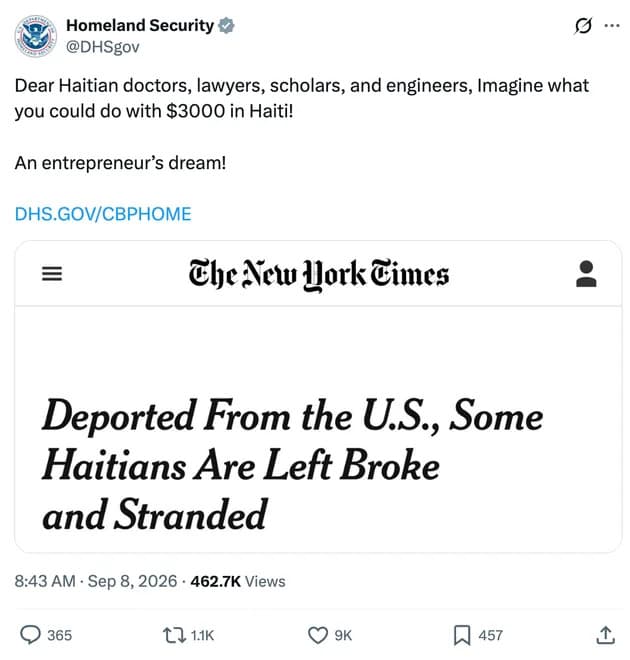
This summer a federal court upheld the government’s decision to terminate Temporary Protected Status (TPS) for roughly 330,000 Haitians who arrived after catastrophic events at home. The Department of Homeland Security (DHS) has been presenting affected people with a stark choice: accept $2,600 and a flight home, or refuse and be fitted with an ankle monitor that could make future detention and removal easier for Immigration and Customs Enforcement (ICE).
Dorsainvil has not yet received a DHS notice himself, but the center he helped form has tracked at least 50 Springfield residents who received letters since late July requiring ICE check‑ins. He accompanies clients to appointments for translation, and says the check‑ins typically follow the same sequence: identity verification, an offer of $2,600 to depart voluntarily (usually declined), and then placement of ankle monitors despite legal objections.
Community Ties Strained by Fear
Springfield’s Haitian community has long felt targeted. Local anxiety was stoked during the last presidential campaign when false rumors circulated about Haitian migrants, and last June then‑Secretary of Homeland Security Kristi Noem announced plans to end TPS for Haitians—setting off months of litigation that culminated in the recent court decision. "I don't know which plan I should have," Dorsainvil says, describing the daily strain of advising neighbors while facing his own uncertainty.
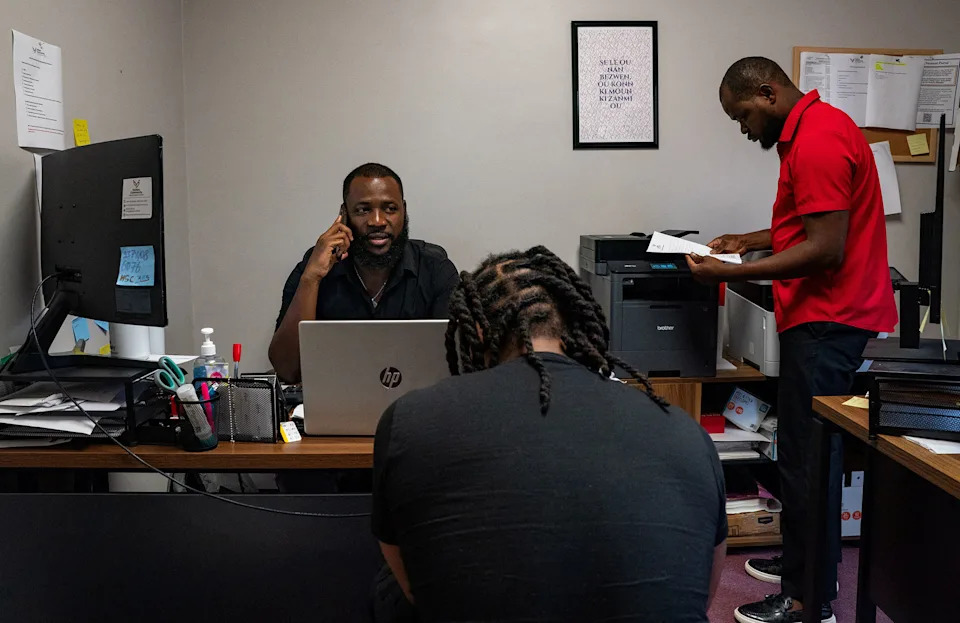
James Fleurijean helps a Haitian immigrant with paperwork at the Haitian Support Center in Springfield, as Dorsainvil (right), reviews paperwork for another Haitian immigrant, on Aug. 3, 2026. —Seth Herald—Reuters
Fears of enforcement have already changed daily life. Two weeks ago Dorsainvil closed the Haitian Support Center for two days after reports of a rumored ICE operation; many families are keeping children home from school and staying inside. Volunteers are stretched thin providing rides, translation, grocery shopping and paperwork assistance.
Broader Impact: Jobs, Mobility, and Options Shrink
The effects extend beyond Ohio. In Florida—the state with the largest Haitian population—recent policies require local cooperation with ICE and have intensified enforcement. Attorneys report that TPS holders are avoiding public transit, driving less, and in some cases losing jobs and driver’s licenses when status‑based paperwork cannot be renewed. Employers in hospitality and long‑term care reportedly have dismissed many Haitian workers since the court ruling.
For many, options are grim. The U.S. State Department continues to warn against travel to Haiti because of violence, kidnapping and limited medical care. Reports of brutality affecting deported Haitians in neighboring countries have heightened fears of returning. Canada has tightened asylum and border rules, reducing the likelihood that TPS holders could safely relocate there. The result is that many Haitians feel they must wait and hope for a humane outcome.
"So far, we just don't have a country to come back to," Dorsainvil says. He relies on prayer, meditation and community solidarity to sustain his work: "I meditate to reboost my system and mental health... so that I can continue to serve my community again tomorrow, and the next day."
The unfolding situation raises legal, logistical and humanitarian questions about how the U.S. will manage hundreds of thousands of people whose lives were disrupted by extraordinary crises. For now, community centers, advocates and volunteers continue to provide practical help and emotional support as families navigate rapidly changing policy and enforcement decisions.
Help us improve.