
The 7.4-magnitude earthquake struck western Colombia 72 hours after Abelardo de la Espriella's inauguration, killing over 260 people and injuring thousands. First responders and humanitarian flights moved quickly, but remote communities in Chocó remain cut off and without basic services. A botched transition between administrations has complicated coordination, with the presidency assuming sole responsibility for official updates. The disaster presents an early and potentially defining test for the new government.
Deadly 7.4 Quake Tests Colombia’s New Government as Rescue Efforts Race Against Time
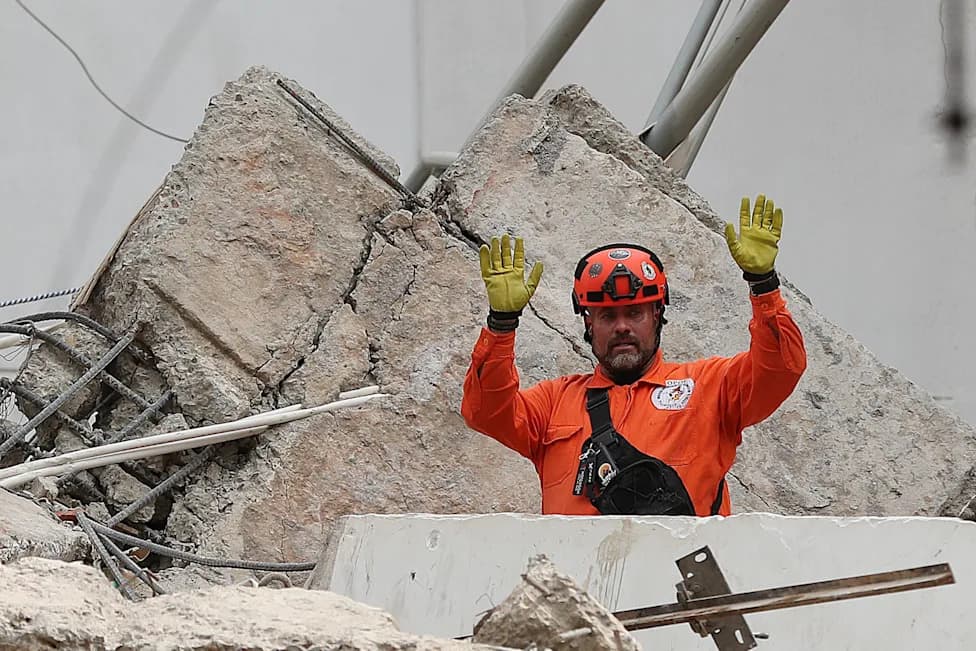
A rescue worker gestures while searching through rubble two days after an earthquake struck Cali, Colombia, August 12, 2026 [Santiago Saldarriaga/AP]
Bogota, Colombia — A powerful magnitude 7.4 earthquake struck western Colombia just 72 hours after Abelardo de la Espriella was sworn in as president, killing more than 260 people, injuring thousands and leaving widespread destruction in cities and remote towns.
Emergency responders and aid groups mobilized immediately: firefighters and Civil Defence teams reached impacted areas first, while humanitarian donations gathered in Bogotá and other cities were airlifted to hard-hit zones. Temporary shelters were set up for displaced families, and heavy machinery — cranes and excavators — was operating within 24 hours in cities such as Cali and Pereira.
In smaller and more isolated communities, particularly in the Chocó region, residents were still clearing rubble by hand. Dense rainforest, poor road access and long-standing state neglect — compounded by areas affected by past armed conflict — have left some communities cut off and communications difficult, hampering a full assessment of damage.
The newly inaugurated president declared an "economic emergency" and ordered three days of national mourning before touring the worst-hit areas. The national government also announced targeted relief for families in Risaralda, including rent subsidies and a three-month suspension of utility payments for affected households.
Coordination of the response has been complicated by a flawed transition from the outgoing administration. A lack of a formal handover left the National Disaster Risk Management Unit in limbo, with an acting director from the previous government attempting to coordinate with the new team. Officials from both administrations have been forced to work together despite deep political polarization following one of Colombia's closest elections in history.
The executive branch stated that the office of the president would be the sole authority for official updates, including the death toll, rather than the disaster agency. That decision has contributed to slower and sometimes fragmented public information, leaving journalists and citizens to rely on local authorities for real-time reports.
Critical infrastructure has been hit hard: aviation authorities closed six airports, dozens of roads were damaged by landslides, and several floors of a major hospital in Cali collapsed, forcing roughly 600 patients into temporary tents. Numerous other medical facilities sustained damage, placing additional strain on rescue and treatment operations.
For a president who campaigned on promises of "decisive leadership and an iron fist against crime," the earthquake is an immediate and unexpected test of crisis management. How de la Espriella leads the national response — and whether Colombia's polarized political class can cooperate during this emergency — may help define his administration in its earliest days.
What Comes Next
Authorities face urgent tasks: restoring communications and transport links to isolated communities, accelerating clear-up and medical support in damaged cities, and establishing transparent, timely reporting of casualties and needs. International assistance and sustained coordination between national and local authorities will be crucial in the weeks ahead.
Help us improve.





















