
Geologists say a recent run of high‑profile tremors — including a deadly 7.4 quake in western Colombia — feels alarming but does not yet indicate an unusual global rise in large earthquakes. Long‑term data show about 15–18 magnitude 7.0–7.9 quakes per year; 10 have occurred so far this year. Experts point to cognitive biases and nonstop media coverage for the heightened public perception, while warning that high stress on the southern San Andreas Fault and reduced monitoring capacity increase the importance of preparedness.
Why So Many Earthquakes Lately? Geologists Explain What’s Really Happening
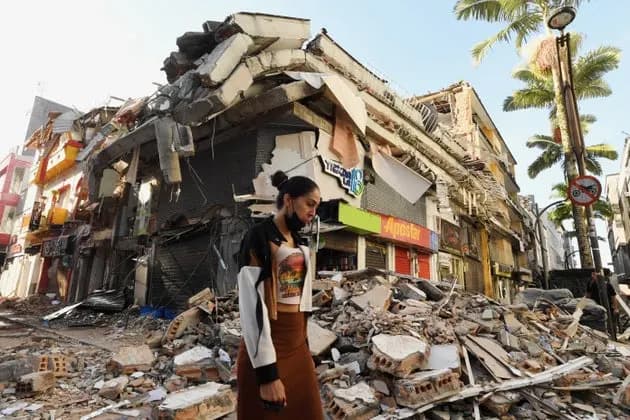
A woman walks past the rubble of a collapsed building after an earthquake in Pereira, Colombia, on Aug. 11, 2026. JAIME SALDARRIAGA via Getty Images
This summer has brought a string of high-profile earthquakes that has put the public on edge. A 7.4‑magnitude quake that struck western Colombia earlier this week killed at least 169 people and caused widespread damage. In June, four powerful tremors struck Northern California, Venezuela and Japan within roughly eight hours, prompting questions about whether these events are linked and whether global seismic activity is increasing.
What the Data Say
Seismologists say the pattern feels alarming but does not yet depart from long‑term statistical expectations. "It may feel like we're having an unusually large number of earthquakes, but statistically, this has been a fairly normal year," says Wendy Bohon, a geologist who studies earthquakes. By global standards, about 15–18 earthquakes of magnitude 7.0–7.9 typically occur each year; so far this year there have been 10 such events, putting the year at the lower end of what we'd expect by this point.
Why Recent Quakes Stand Out
What makes this season feel notable is not the total number of large earthquakes but their impact: several recent quakes have been destructive and well‑publicized. Those are the events that produce dramatic images, casualties and lasting memories.
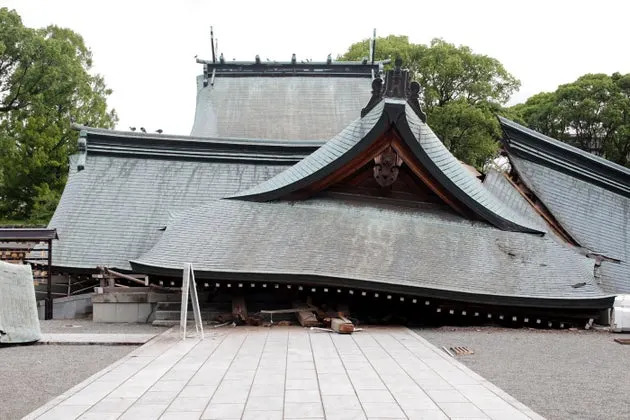
Part of the Yatsushiro Shrine collapsed after an earthquake struck the area, in Kumamoto Prefecture, Japan, on July 29, 2026. STR via Getty Images
"There is a magnitude 7 on Earth about once every three to four weeks, but the vast majority of these are unfelt or do not cause damage," says William D. Barnhart of the USGS Earthquake Hazards Program.
Perception vs. Reality
Psychological effects and modern media shape our sense of frequency. Experts point to recency bias (giving extra weight to recent events) and the frequency illusion (noticing similar events more often after you become aware of them). Faster, round‑the‑clock news and social media also bring distant disasters into our feeds instantly, making seismic activity seem more common than it may be.
When Earthquakes Are Connected
Most related events are aftershocks: smaller quakes that follow a larger "mainshock" in the same region, sometimes lasting days, months or years. Some clusters are attributable to induced seismicity, where human activity (for example, fluid injection or extraction) changes crustal stresses and triggers tremors.
The Risk In California
U.S. scientists continue to warn about the possibility of a major quake on well‑known faults. Recent research indicates tectonic stress along the southern San Andreas Fault may be at its highest level in about 1,000 years, raising concern about the potential for a magnitude ~7.8 or larger rupture. "The next magnitude 7 or higher earthquake might very well happen in California — on the San Andreas or the Hayward or the San Jacinto," says Ahmed Elbanna of USC.
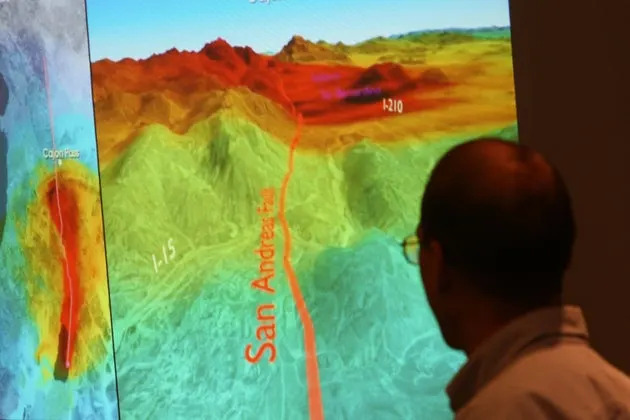
The most recent research shows that tectonic stress along the southern portion of the San Andreas fault line has reached its highest level in 1,000 years, raising concerns about a potential magnitude 7.8 or greater rupture. David McNew via Getty Images
Monitoring, Funding And Preparedness
Effective monitoring depends on instrumentation and maintenance. A network of roughly 800 seismographs across the western United States provides early detection of ground motion and helps scientists assess threats, but experts say maintenance and field repairs have been hampered in recent years as federal science agency workforces were reduced. "The impacts will not be seen immediately but will become increasingly severe," Michael Wysession warns.
For people living in earthquake‑prone areas, the takeaway is clear: preparedness matters. Experts recommend having an emergency plan, keeping basic supplies on hand, securing heavy furniture, and knowing the recommended protective actions (drop, cover and hold on) for your area.
Practical Tips
- Make a family emergency plan and review it regularly.
- Keep a grab‑and‑go kit with water, food, medications and important documents.
- Secure bookcases, TVs and other heavy items to reduce falling hazards.
- Know how to shut off utilities if instructed by local authorities.
While the recent sequence of damaging quakes is tragic and memorable, scientists stress that current global rates of large earthquakes remain within expected ranges. Continued monitoring, adequate funding, and personal preparedness are the best defenses against future disasters.
Help us improve.





















