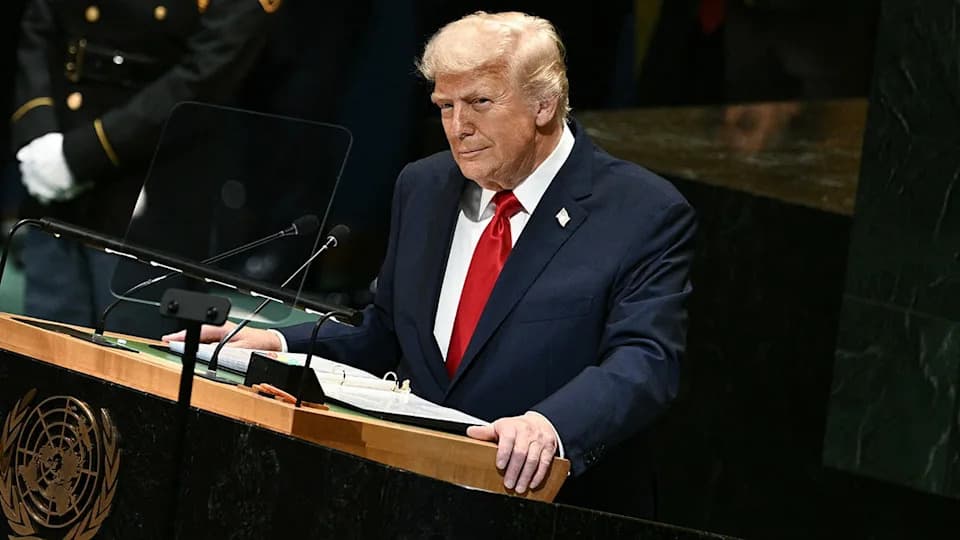
Donald Trump says he is "low‑keying" the U.S. approach to Iran, favoring economic sanctions and pressure over immediate military strikes while keeping strike options available. He has claimed Iran is "totally broke" and accused the country of inflation exceeding 300% — assertions echoed in public posts but debated by analysts. U.S. measures now target the IRGC and restrict Iranian port activity, even as Tehran tightens control of the Strait of Hormuz. Observers warn sanctions can be slow to change behavior and may complicate diplomatic exit options.
Trump Says He’s 'Low‑Keying' Pressure On Iran, Leaning On Sanctions Over Strikes
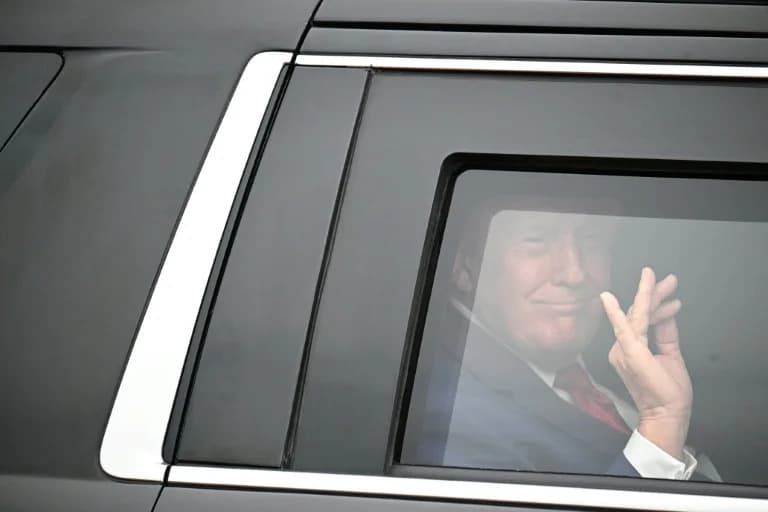
US President Donald Trump is shifting strategy on Iran by focusing on sanctions (Jim WATSON)
Donald Trump says he is deliberately dialing back public threats against Iran and is placing greater emphasis on economic pressure rather than immediate military strikes. In comments to Axios and in public remarks from the Oval Office, he described the current approach as "low‑keying" the confrontation while keeping a strike option available.
What He Said
"We are low-keying it," Trump told Axios by phone. "We're only semi-negotiating with them. We are just watching Iran with its huge inflation and the fact they have no money."
He added that "Iran is broke, totally broke and they're not paying their soldiers," and has repeatedly claimed — most recently in a Truth Social post — that Iran is experiencing inflation above 300 percent. He has also said the United States maintains "total control" of the Strait of Hormuz, a strategic oil transit route at the center of heightened tensions.
Sanctions, Ports and Oil
U.S. officials have intensified economic measures, most recently targeting Iran's Islamic Revolutionary Guard Corps (IRGC). The Wall Street Journal reports advisers have shown Trump data on the effects of U.S. sanctions, and he is weighing tighter restrictions. At the same time, Washington is enforcing restrictions on Iranian ports while Tehran has moved to tighten control over the Strait of Hormuz.
Michael O'Hanlon of the Brookings Institution described Iran as "in terrible shape economically. It can't ship oil at any meaningful level. And it still labors under sanctions and still can't access its overseas assets." He cautioned, however, that Iran's leaders may only be modestly affected by those pressures.
Tehran's Reaction
Iran's foreign ministry spokesman Esmaeil Baqaei called the renewed push for sanctions a "retreat," arguing that Tehran has withstood U.S. penalties for decades. "Whenever Washington proves itself incapable of pursuing diplomacy it retreats into sanctions; and whenever those sanctions fail to produce results, it simply increases the dose," Baqaei wrote on X. He warned that continued reliance on sanctions could close off diplomatic exit routes and deepen the crisis.
Why This Matters
The shift toward economic pressure may reflect a tactical calculation — and possibly limits on military options — amid reporting that U.S. munitions stockpiles have been heavily drawn down. A sanctions-first posture seeks to inflict long-term economic pain while avoiding the immediate risks of large-scale strikes, but it also carries risks: sanctions can be slow to produce desired political outcomes and can reduce incentives for a negotiated solution.
For now, it remains uncertain whether Trump — who has historically favored dramatic rhetoric and rapid action — will sustain a prolonged, low‑profile campaign of economic pressure or revert to more confrontational tactics. The confrontation, he told Axios, is like a chess match; Iran's officials say they are experienced players in that game.
Help us improve.