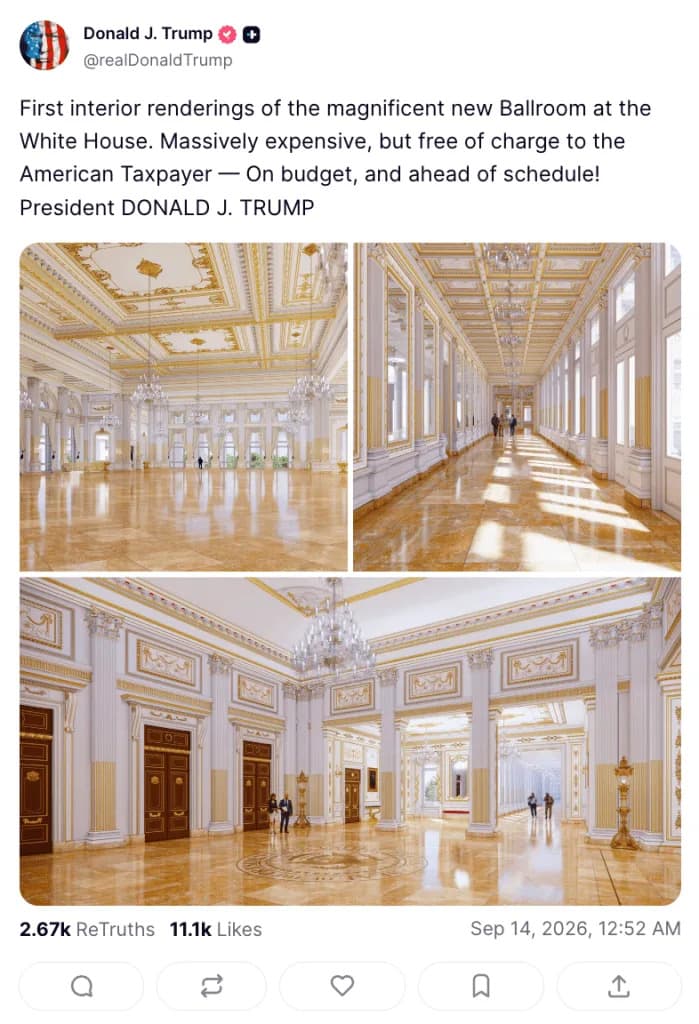
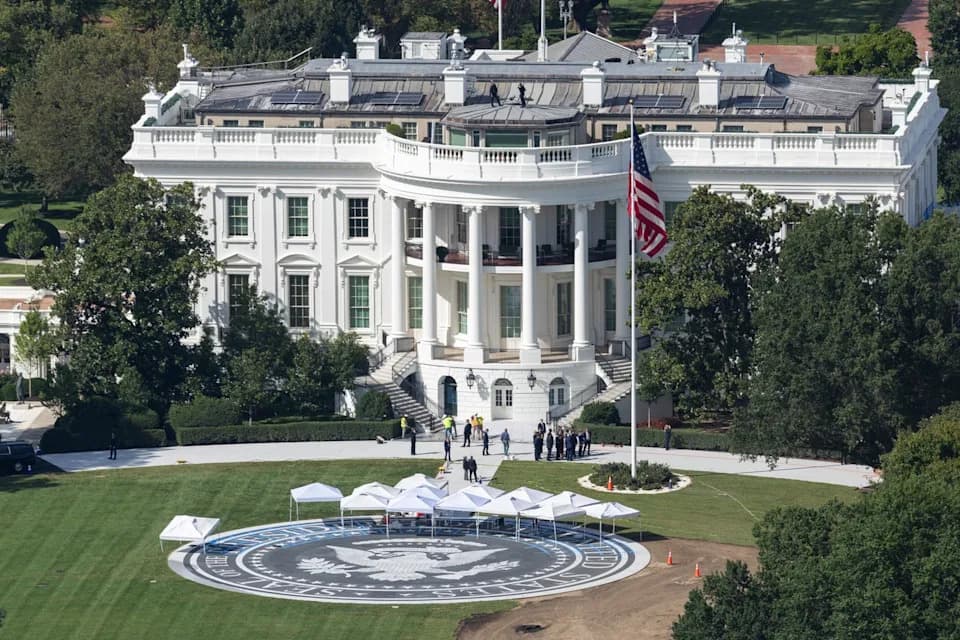
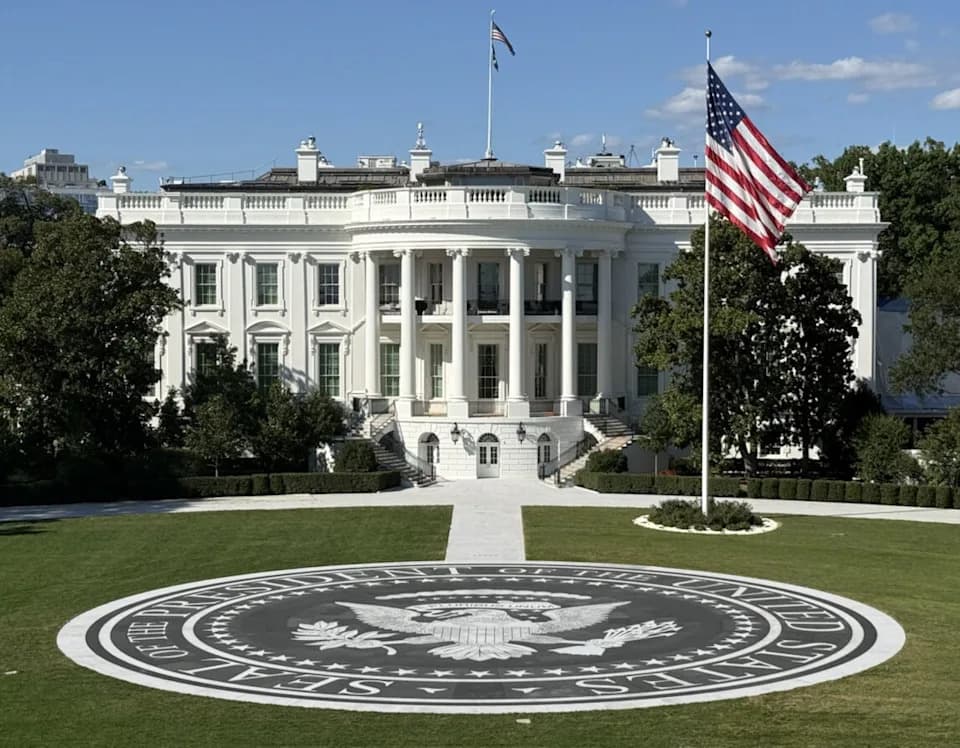
The Trump administration's White House modernization program has swelled to about $900 million, records show, prompting questions about funding and authority. On Aug. 7 a federal appeals court blocked construction of a proposed 90,000-square-foot ballroom without congressional approval, saying such a major project belongs to Congress. The administration routed funds from other agencies and private donors into a little-known maintenance account and is also pursuing projects including a helipad, Rose Garden work, and a proposed visitor screening center.
Trump White House Renovations Near $1 Billion as Appeals Court Blocks Ballroom Without Congress
The White House on Aug. 6, 2026Credit: Kevin Carter/Getty
Reports show that the Trump administration's sweeping White House renovation program has ballooned to roughly $900 million, far exceeding earlier estimates and drawing renewed scrutiny over funding and legal authority.
Court Blocks Aboveground Ballroom Construction
On Aug. 7, the U.S. Court of Appeals for the D.C. Circuit issued a 2-1 ruling blocking aboveground construction of a proposed 90,000-square-foot East Wing ballroom unless Congress explicitly authorizes the project. In their opinion, Judges Patricia A. Millett and Bradley N. Garcia wrote that "Each President is a temporary tenant, not the owner, of the White House and its Executive Residence," and that such a major decision belongs to Congress rather than unilateral executive action.
Costs, Funding And Controversy
Records reviewed by The Washington Post put the administration's broader construction program at about $900 million, with taxpayers expected to bear most of the cost. Initial contractor estimates for the ballroom began at roughly $200 million, later increased to $400 million, then $600 million, and the $900 million figure reflects a wider slate of modernization projects beyond the ballroom itself.
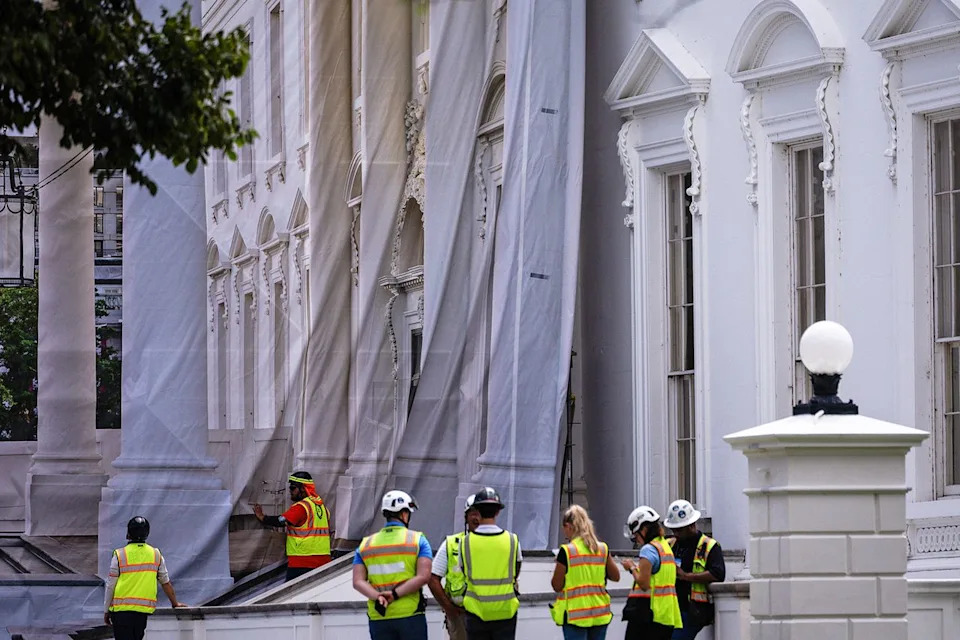
Workers use a tarp to cover scaffolding on the North Portico of the White House in Washington, DC, US, on Thursday, July 9, 2026Credit: Tierney L. Cross/The Washington Post/Bloomberg via Getty
Rather than seek a single congressional appropriation, the administration assembled money from other federal agencies and private donors and funneled those resources into a little-known White House account normally used for routine maintenance. That account historically held only a few million dollars but has been tapped for multiple projects, according to reporting.
White House officials have defended the work as necessary modernization to host large state events and to improve security by reducing reliance on temporary structures. A White House spokesman, Davis Ingle, said the renovations are being carried out "in a manner consistent with" Congress' original intent and framed the work as timely improvements ahead of the nation’s 250th anniversary.
Other Projects And Legal Challenge
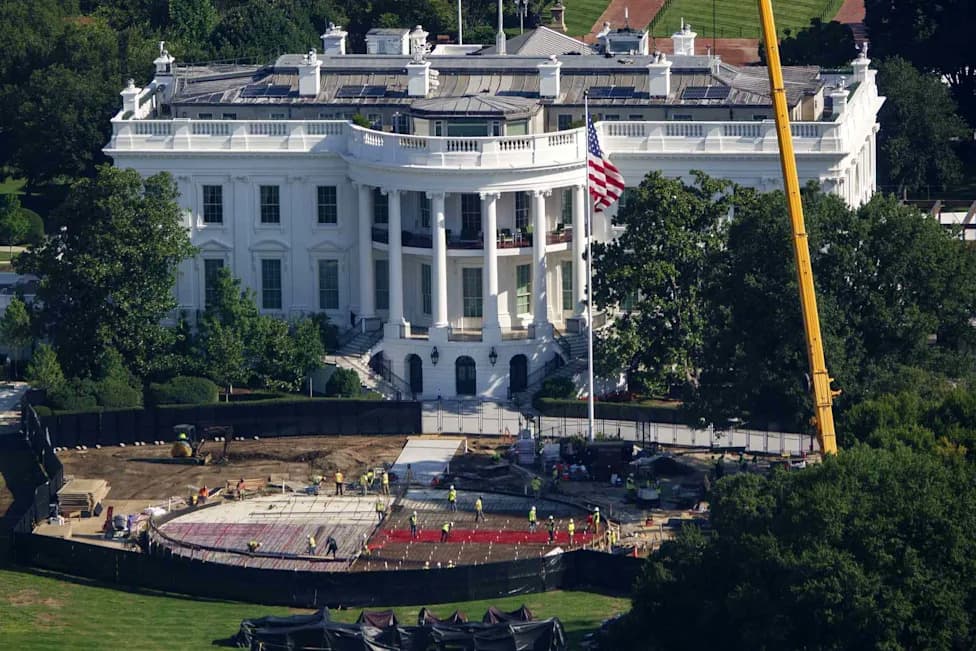
Confidential contracts and planning documents obtained by Reuters describe a range of "White House modernization projects," with the gilded ballroom as the centerpiece. Other projects include a new helipad on the South Lawn, renovations to the Rose Garden, and a proposed visitor screening center under Sherman Park put forward by the Secret Service and National Park Service.
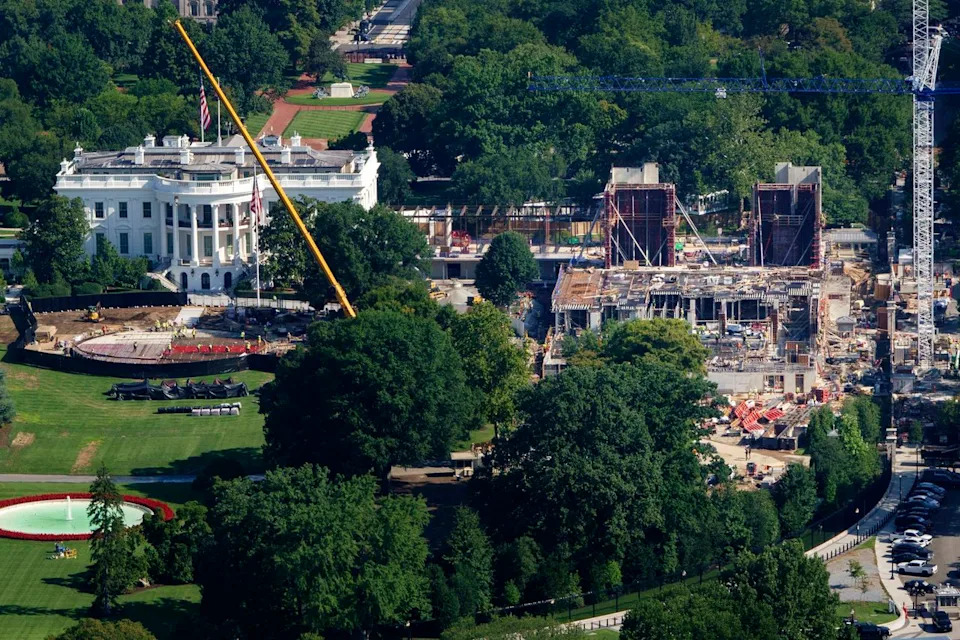
Construction continues on a new helipad on the South Lawn of the White House and the East Wing ballroom on Aug. 6Credit: Kevin Carter/Getty
The lawsuit that produced the appeals court ruling was brought by the National Trust for Historic Preservation, which argued that demolishing and replacing the East Wing with a major new structure requires congressional authorization and should not be undertaken by executive fiat.
"Each President Is A Temporary Tenant, Not The Owner, Of The White House And Its Executive Residence," the judges wrote.
The White House did not fully answer questions from The Washington Post about the precise mix of private and federal funds used or the final total cost, and the administration has maintained that private donations cover a substantial portion of the work despite earlier requests for federal support.
As debates over funding and authority continue, the ruling places clear limits on aboveground expansion of the Executive Residence and signals that Congress will have a decisive role if leaders want to proceed with large-scale changes to the historic complex.
Help us improve.