Iran says there has been no progress in talks to revive the June interim ceasefire with the United States, leaving efforts to end the Gulf war stalled. Both sides have exchanged sharp rhetoric while separate attacks on shipping — including a deadly Houthi strike and a U.S. strike on a cargo vessel — have heightened tensions. The conflict has caused thousands of deaths and driven volatile oil markets, with Brent crude surging earlier this year before settling nearer to $88 a barrel.
Iran Says No Progress Reviving June Interim Ceasefire With U.S.; Shipping Attacks and Oil Volatility Rise
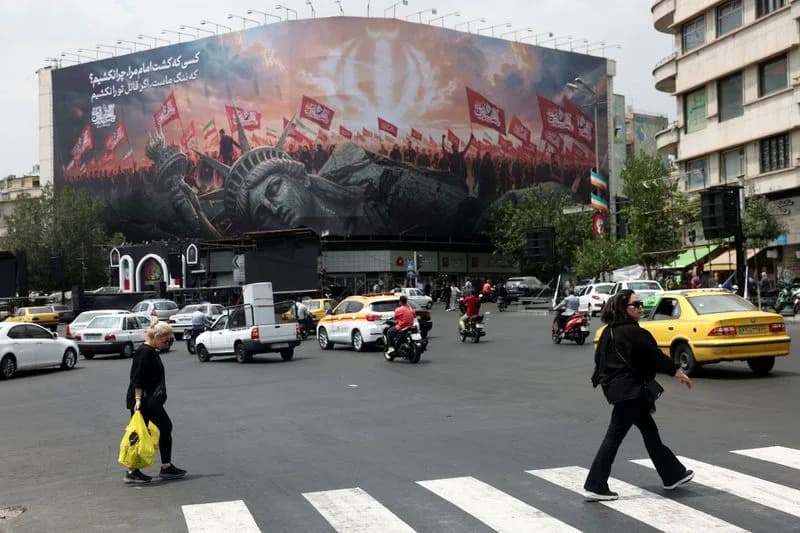
People walk past an anti-U.S. billboard on a street in Tehran, Iran, August 3, 2026. Majid Asgaripour/WANA (West Asia News Agency) via REUTERS
Dubai, Aug 12 (Reuters) - Iran and the United States remain deadlocked over efforts to turn the interim June agreement into a permanent end to the Gulf war, a senior Iranian source told Reuters. The source said there has been no progress in talks to restore the pact or to agree a timetable for its implementation.
Stalled Talks and Mutual Accusations
The interim deal struck in June declared an "immediate and permanent termination of military operations on all fronts," but it unraveled quickly. U.S. President Donald Trump declared the agreement "over" on July 7, and Iran's foreign ministry described its participation as "suspended" a week later.
Washington accuses Tehran of failing to honor commitments under the deal, notably reopening the strategically vital Strait of Hormuz. Iran counters that the U.S. reneged on promises such as lifting a blockade of Iranian ports and releasing frozen assets.
"One of the issues that is being discussed via mediators is the U.S. returning to the interim agreement and defining a timeframe for implementing the commitments. There has been absolutely no progress on this issue," the Iranian source told Reuters.
There was no immediate comment from Washington.
Bilateral Rhetoric Intensifies
Both sides have stepped up rhetoric in recent days. Iran's top security official, Mohsen Rezaei, warned that the Strait of Hormuz would remain closed unless the U.S. accepted Tehran's conditions to end the war. That followed a fresh demand from President Trump that Iran should pay compensation for people killed in 50 years of conflicts, attacks and protests.
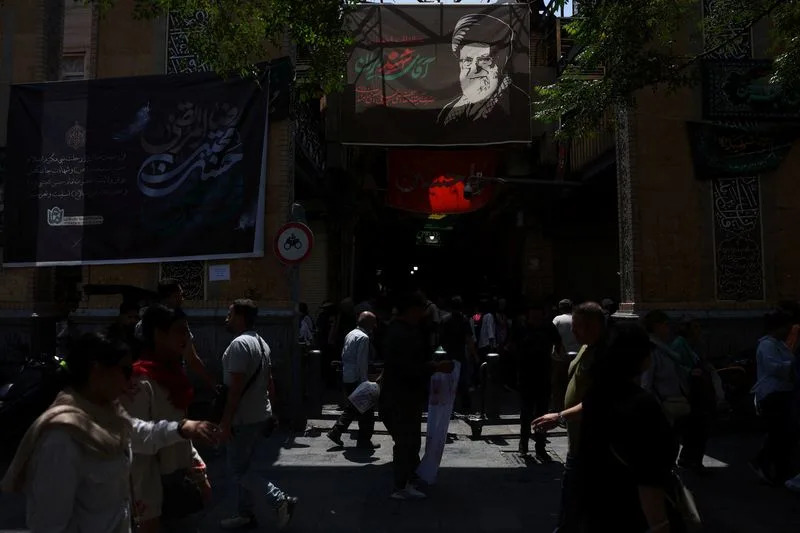
A banner depicting Iran's late Supreme Leader Ayatollah Ali Khamenei in the Grand Bazaar in Tehran, Iran, August 11, 2026. Majid Asgaripour/WANA (West Asia News Agency) via REUTERS
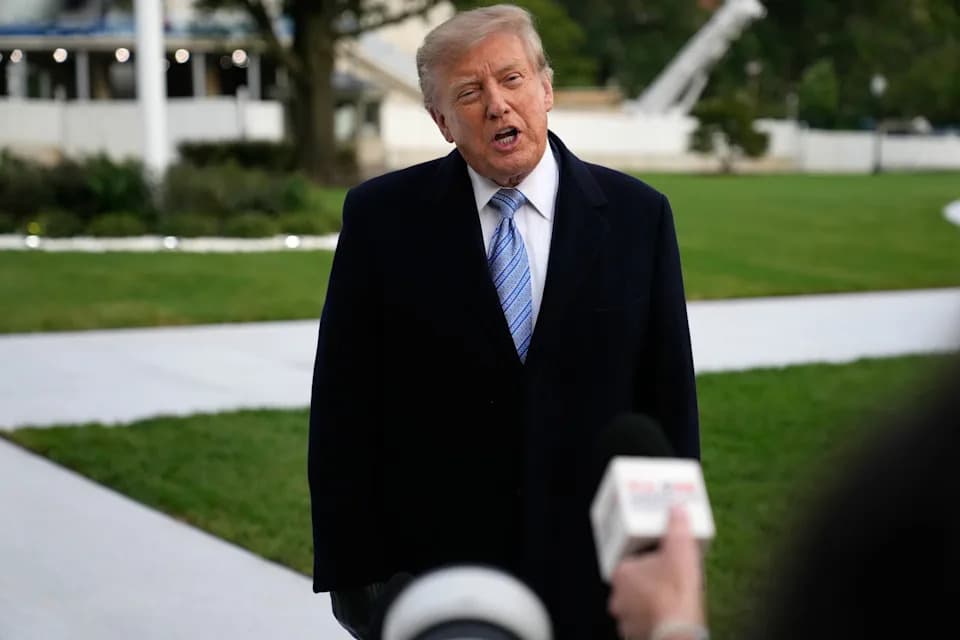
Throughout the conflict, Trump has alternated between threats of escalation and assurances that a peace deal is near. Speaking to reporters after a visit to Ohio, he said: "Iran is going fine, going just absolutely fine," and accused Tehran of long-standing regional aggression.
Attacks on Shipping
Separate maritime incidents on Tuesday heightened tensions. In the Bab el-Mandeb Strait, Iran-backed Houthi fighters attacked a small cargo vessel, killing four crew members — the first deadly Houthi strike on shipping since the conflict began.
U.S. forces reported that a U.S. Navy MH-60 helicopter fired two Hellfire missiles to disable the steering gear of a Panama-flagged cargo ship that had ignored repeated warnings while violating a naval blockade on Iranian ports. U.S. Central Command said the vessel was struck after failing to heed orders; maritime sources told Reuters the ship was hit off Pakistan while sailing into the Gulf of Oman.
Human Cost and Market Impact
Thousands have been killed in the conflict, mainly in Iran and Lebanon, with the confrontation traced to U.S. and Israeli strikes on Iran on February 28 and subsequent reprisals by Tehran against U.S. assets and infrastructure across the region.
The Strait of Hormuz — the narrow waterway between Iran and Oman that is the gateway to the Gulf — handled about a fifth of global oil and liquefied natural gas flows before the war. Benchmark Brent crude futures surged earlier in the conflict to a peak near $126 a barrel, about 75% above pre-war levels, before settling amid volatile trading. At the time of reporting Brent was trading around $88 a barrel and U.S. West Texas Intermediate near $83, after forecasters trimmed 2026 demand projections.
(Reporting by Parisa Hafezi, Tala Ramadan and Elwely Elwelly; Writing by Alex Richardson; Editing by Timothy Heritage and Philippa Fletcher)
Help us improve.