Thousands of women in Gaza, like Mona al-Masri, have become sole providers after losing spouses during the conflict that began in 2023. The Gaza Ministry of Social Development reports more than 50,000 widows, including 28,224 who lost husbands because of the war. Officials and psychologists warn of deep economic and psychological needs and call for urgent, sustained financial, legal, medical and psychosocial support for widows and their children.
Widows in Gaza’s Displacement Tents Struggle Alone, Urgently Need Support
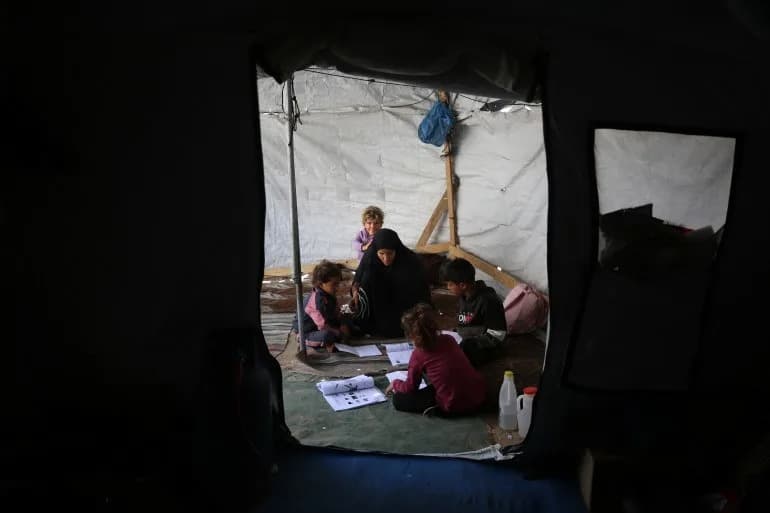
Mona al-Masri spends every day trying to provide for her children [Eman Abu Zayed/Al Jazeera]
Gaza City, Gaza Strip — Inside a makeshift displacement tent in northern Gaza, Mona al-Masri wakes each day under searing heat to shoulder the full responsibilities of running a household. Mona, a widow and mother of four children aged two to nine, lost her husband, Mohammed, in an Israeli strike in September 2024. Behind thin fabric walls that offer little protection, she searches for water, arranges whatever food she can find, and tries to shelter her children from a life transformed by the war that began in 2023.
“There is no normal life inside the tent. Every day begins with the same questions: how will we secure our needs, and how will we get through another day surrounded by this exhaustion?” Mona says. “The war did not only take away our homes; it took away our sense of safety and stability and made even the simplest things require enormous effort.”
Mona is one of thousands of women across the Gaza Strip who have been pushed into new roles by the conflict, becoming sole providers for their families amid widespread destruction and a collapse of basic services.
Rising Numbers, Growing Needs
Data from the Gaza Ministry of Social Development show the total number of widows in the Strip has risen to more than 50,000. That figure includes 28,224 women who became widows as a direct result of the war, alongside more than 22,500 who were registered as widows before the recent escalation. Officials warn these numbers may increase as not all deaths have been registered.
Aziza al-Kahlout, a ministry spokesperson, says the scale of loss has left many women responsible for supporting households without a breadwinner while markets, services and housing have been devastated. “This requires effective programmes for economic empowerment, job creation and strengthening self-reliance to help lift them out of poverty and deprivation,” she says.
Al-Kahlout stresses that widows need more than cash assistance: they require psychological and social support, healthcare, and legal help with guardianship, custody, inheritance and other financial rights. She calls for sustained interventions including regular financial assistance, emergency relief, vocational training and support for small and family businesses.
Psychological Impact on Women and Children
Aseel Abu Shaweesh, a psychologist, says losing a husband in wartime is a profoundly traumatic experience with long-term psychological and social consequences for both widows and their children. Many women are forced to hide their grief to maintain emotional stability for their children while coping with mounting daily pressures.
“A widow in Gaza faces the pain of losing her husband, the responsibility of supporting her family, and caring for her children in an environment filled with fear and instability,” Abu Shaweesh says. “The accumulation of pressures and the lack of space to express pain increase levels of anxiety and psychological exhaustion.”
Children in these families often show persistent fear, sleep disturbances and behavioural changes, especially when a father’s death is compounded by displacement and loss of home. Experts say continuous, integrated support is needed—combining financial aid, mental-health services, legal assistance and educational opportunities to help families rebuild safety and routine.
As displacement continues and basic services remain fragile, community groups and humanitarian organisations are being urged to prioritise targeted, long-term assistance for widows and their children to prevent deeper, generational harm.
Help us improve.