
The magnitude-7.4 earthquake that struck western Colombia has killed at least 182 people, injured 2,542 and left hundreds missing as search-and-rescue teams work across the hardest-hit departments. Authorities report widespread damage—more than 13,000 homes were damaged and 2,501 destroyed, along with major impacts to health and education facilities. International aid, including a $15.5 million U.S. pledge and a 47-member rescue team from Ecuador, has arrived while the government implements emergency relief and a national state of disaster.
Magnitude 7.4 Earthquake in Western Colombia Kills 182 — Rescue Crews Race to Find Survivors
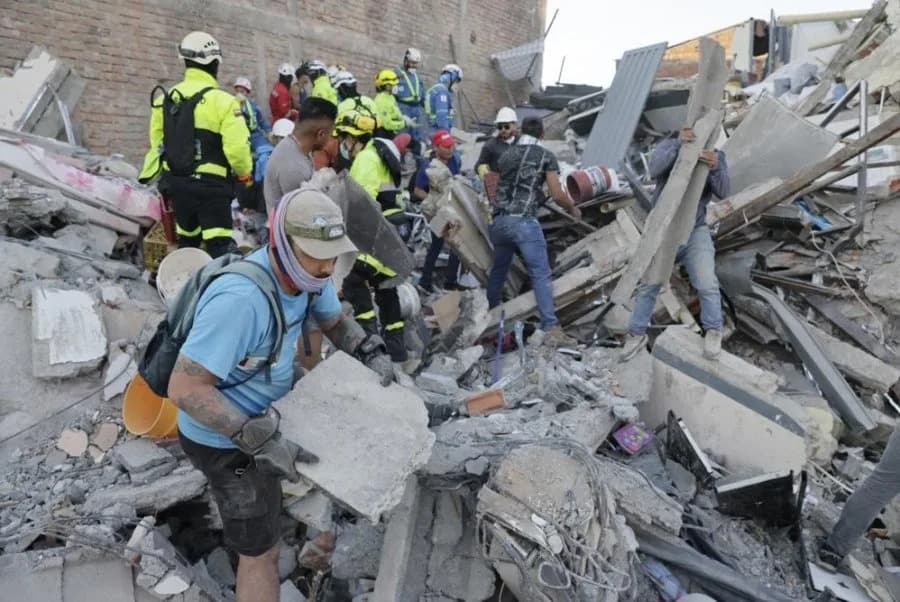
Rescuers search through the debris of a damaged building in Pereira, Colombia, on Tuesday after a 7.4-magnitude earthquake struck the country the day before. Photo by Carlos Ortega/EPA
A powerful magnitude-7.4 earthquake struck western Colombia early Monday, killing at least 182 people, injuring 2,542 and leaving hundreds missing as search-and-rescue teams continue operations across the hardest-hit departments.
Damage Overview
The National Unit for Disaster Risk Management's updated assessment reported widespread destruction: 13,067 homes damaged and 2,501 destroyed. Officials also recorded damage to 93 health facilities, 884 schools, 427 community centers and 77 roads. Local authorities warned the death toll may rise as crews continue to search collapsed structures.
Search and Rescue Operations
Rescue efforts focused on major urban centers. In Cali, officials said around 193 people remained trapped beneath rubble from 56 collapsed residential and commercial buildings; rescuers had pulled 37 people alive from debris in recent hours. One dramatic rescue saw a mother and her 6-month-old infant found alive beneath a concrete slab, located after search dogs alerted crews and the mother’s faint cries were heard.
In Pereira, authorities reported 53 people still trapped in 58 destroyed structures, prioritizing 15 buildings where search dogs and acoustic sensors detected possible survivors. A complex vertical-rescue operation also freed 16 people stranded inside cabins of the Megacable aerial cable car system after teams completed rappelling and extraction work over six hours.
Humanitarian Response and Aid
President Abelardo de la Espriella declared a national state of disaster to speed up financial and logistical support. The government said it will conduct a census of affected residents in Risaralda department and provide three months of utility-bill relief, as well as rental assistance for families who lost their homes. Interior Minister Rodrigo Lara reported that more than 300 rescuers had been deployed to the most critical collapse sites, with an additional 45 specialists and canine teams sent from Bogotá.
International assistance began arriving: the U.S. committed $15.5 million in humanitarian aid, and a 47-member urban search-and-rescue team from Ecuador with canine units joined Colombian Red Cross and Civil Defense personnel in operations.
Seismology and Aftershocks
The Colombian Geological Service said the main quake struck at 7:34 a.m. local time with an epicenter near San José del Palmar in Chocó department at a depth of about 60 miles (roughly 100 km). The agency called it the longest-lasting seismic event recorded in Colombia in the 21st century, with intense shaking for 40–50 seconds and reports of tremors lasting up to two minutes in some areas. About 100 aftershocks have been recorded so far, the strongest measuring magnitude 4.8.
Detention Center Fire and Security Measures
In the quake’s aftermath, a major fire and violent disturbances broke out at a temporary detention center in Buenaventura, Valle del Cauca, killing four inmates, injuring two and destroying much of the facility. Regional reports indicate the fire began during a fight inside the center, which can hold up to 400 people. Valle del Cauca Governor Dilian Francisca Toro coordinated with the Justice Ministry to transfer inmates to other facilities nationwide; the government authorized the immediate transfer of 117 high-profile inmates linked to peace processes and criminal gangs to reduce the risk of further violence or escapes amid the crisis.
Outlook
Authorities and aid agencies continue to search rubble, rescue survivors and deliver humanitarian relief as aftershocks persist. Officials emphasized the possibility of an increasing death toll as rescue teams reach more damaged areas and complete more thorough assessments.
Help us improve.





















