Boeing unveiled the Ultra Low-Cost Seeker (ULCS), an active radar seeker largely made from commercial parts, at the Space and Missile Defense Symposium in Huntsville. Designed to be modular and reusable across interceptors, guided bombs and cruise missiles, ULCS completed chamber, aircraft and rocket-surrogate tests this summer. Boeing plans further flight tests in 2027 and is analyzing results; it has not disclosed funding or final cost estimates. Competitors such as Lockheed Martin are pursuing similar modular sensor programs.
Boeing Unveils Ultra-Low-Cost Radar Seeker Built From Commercial Parts
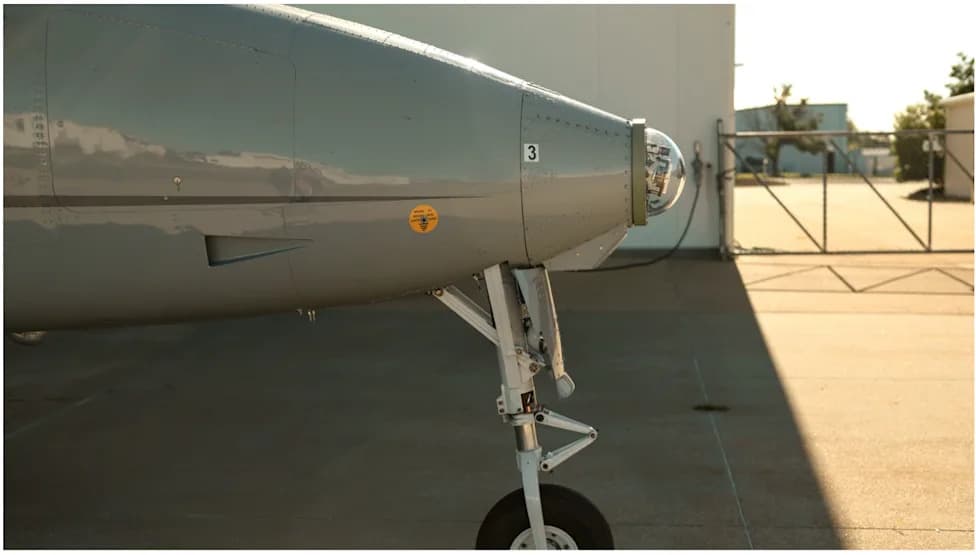
Boeing’s Ultra Low-Cost Seeker sits mounted to a Beechcraft 1900 ahead of a captive-carry test flight to evaluate baseline seeker target detection and tracking. (Chris Bishop © Boeing)
Boeing on Tuesday introduced the Ultra Low-Cost Seeker (ULCS) at the Space and Missile Defense Symposium in Huntsville, Alabama, pitching it as a way to put radar-guided seekers on more weapons at a much lower price.
Sitting in the nose of a missile or guided bomb, a seeker detects a target and steers the weapon toward impact. Seekers are often among the most expensive components of a guided munition, and Boeing argues that lowering seeker cost is key to increasing overall inventory and affordability.
What ULCS Is
Called the Ultra Low-Cost Seeker (ULCS), the system is an active radar seeker—meaning it emits its own radar signal rather than relying on external illumination from an aircraft or ground station. Boeing says ULCS is built largely from commercial, off-the-shelf components adapted for military use and remains in development.
Modularity and Cross-Platform Use
Boeing is evaluating ULCS for use across multiple weapon families, including air and missile defense interceptors, guided bombs and cruise missiles. The company emphasizes a common, modular sensor architecture and open standards so the same seeker design can be integrated into different weapons and updated without a full redesign.
"We are developing ULCS with the goal of sharing a common sensor architecture across several of our programs," said Bob Ciesla, vice president of Boeing Precision Engagement Systems. "The seeker is modular and built to open standards so it can be integrated into different weapons and updated without a full redesign."
Testing So Far
Earlier this summer Boeing ran a series of tests to validate the concept. Engineers verified the sensor design in an anechoic chamber to confirm antenna performance without stray reflections. The seeker then flew aboard a Beechcraft 1900 over land and water where Boeing said it detected and tracked targets as expected.
At Spaceport America in New Mexico, the seeker tracked a passing drone from a fixed ground position. Boeing also mounted the unit on a rocket acting as a missile surrogate and launched it toward a second drone equipped with a radar reflector to simulate the radar return of a full-size target. Boeing reported the seeker survived the acceleration and vibration of each trial and consistently detected and tracked the test targets.
Next Steps and Context
Boeing said teams are analyzing test data and will use the results to shape the next development phase, including several flight tests planned for 2027 intended to better replicate operational scenarios. The company has not disclosed whether ULCS is funded internally or tied to an existing government program, nor has it quantified the expected unit cost.
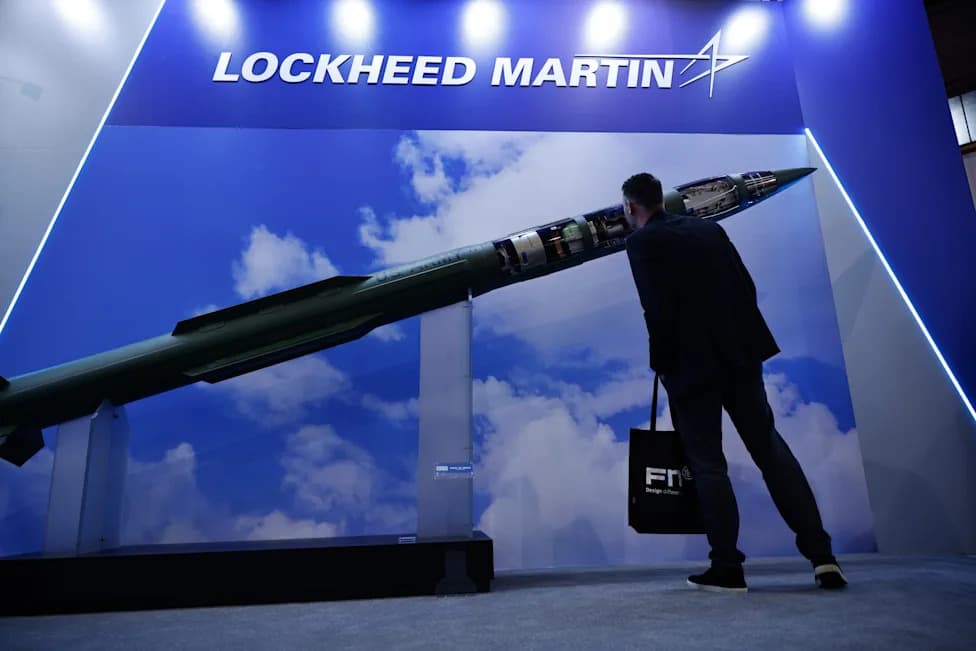
Boeing is not alone in pursuing modular sensor approaches. On Aug. 10, Lockheed Martin announced Strigo, a family of radio-frequency sensors, missile datalinks and seeker technologies built on a similar modular concept aimed at serving multiple weapon types.
While Boeing draws on prior experience building active radar seekers—including work on the PAC-3 Missile Segment Enhancement interceptor—it says ULCS aims specifically at much lower cost points for engagements against less sophisticated threats.
Help us improve.