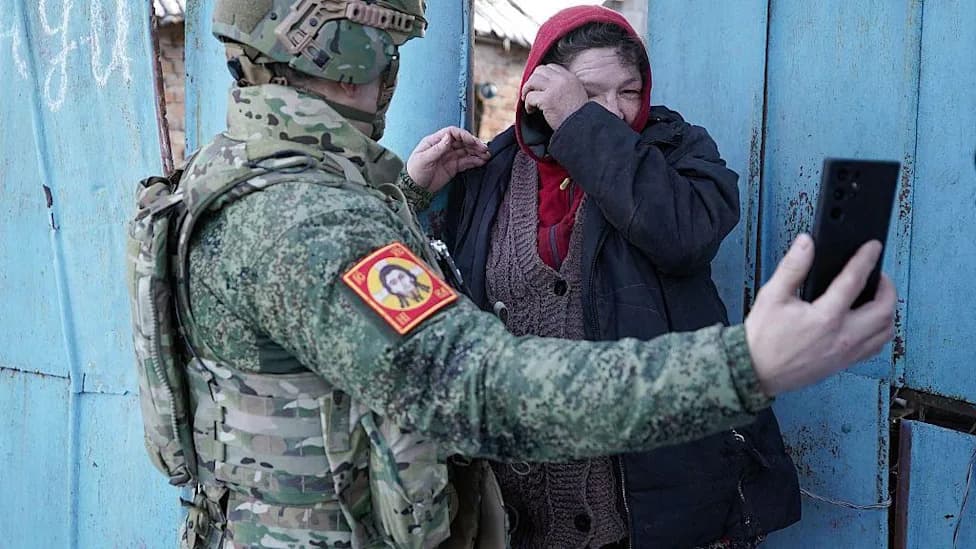
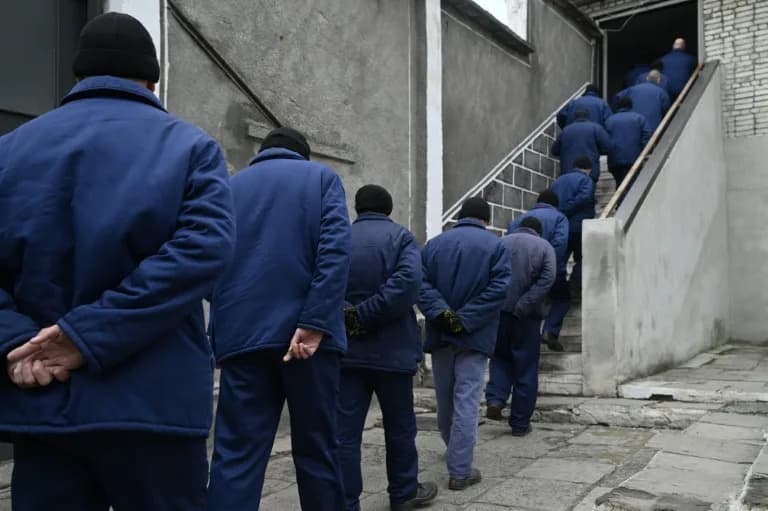
UN Says More Than 16,000 Civilians Detained By Russia Since 2022 Remain Held. The U.N. reports widespread and systematic torture, including sexual violence, and documents executions and deaths in custody. U.N. monitors interviewed hundreds of released detainees but have not been granted access to detention facilities inside Russia. Russia denies the allegations and called the meeting a disinformation campaign.
UN: More Than 16,000 Civilians Detained By Russia Since 2022 Invasion, Many Subjected To Torture
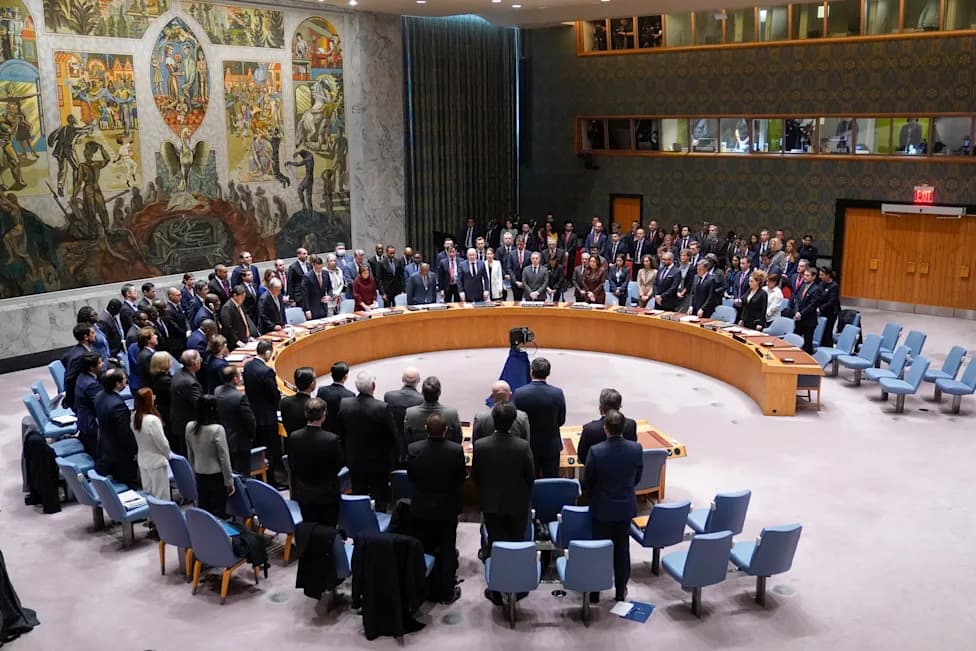
FILE - Participants in a Security Council meeting rise for a moment of silence at United Nations headquarters, Feb. 24, 2023. (AP Photo/Seth Wenig, File)
The United Nations estimates that more than 16,000 civilians taken into custody by Russian authorities since the full-scale invasion of Ukraine in February 2022 remain deprived of their liberty, many held incommunicado and under conditions that the U.N. says violate international standards.
U.N. Findings
Claudia Fuentes Julio, the U.N. assistant secretary-general for human rights, told an informal Security Council meeting convened by Latvia and the United Kingdom that the U.N. has documented "widespread and systematic torture and ill-treatment" of Ukrainian civilian detainees and prisoners of war, including incidents of sexual violence.
Since the invasion began, U.N. human rights staff have interviewed 910 Ukrainian prisoners of war and 403 civilian detainees following their release. The U.N. has not been granted access to detention facilities inside Russia, and its overall estimate does not distinguish between adults and children among those still held.
According to the interviews, more than 95% of the Ukrainian prisoners of war and 85% of the civilian detainees reported being tortured or otherwise ill-treated, often repeatedly. Reports include sexual attacks, severe food deprivation and denied medical care.
Deaths, Executions and Detention Conditions
The Geneva-based U.N. human rights office said it has documented the execution of 129 Ukrainian prisoners of war early in their captivity and recorded 48 deaths in custody resulting from torture, denial of medical care, or other inhumane detention conditions.
Personal Testimonies
The Security Council heard wrenching testimony from former detainees. Crimean Tatar human rights activist Leniie Umerova described nearly two years as what she called a "political prisoner," recounting repeated transfers between facilities and fabricated charges. Umerova said her experience reflected a broader system of unlawful detention, isolation and torture used against civilians.
Ukrainian soldier Khuan Leyva Garsiya — who surrendered at the Azovstal steel plant in Mariupol and spent 1,183 days as a prisoner of war — described extreme mistreatment and severe weight loss. He said captors singled him out for harsher treatment because of his Cuban ancestry and time spent studying in the United States. Garsiya recounted beatings, freezing, electrocution and sexual abuse, and said two friends died as a result of beatings or the conditions in detention.
Other Detainees And Comparative Findings
U.N. experts also interviewed 816 Russians and 57 third-country nationals who had served with Russian forces in Ukraine. About half reported torture or ill-treatment, mainly during early capture and interrogation. U.N. monitors noted that conditions at Ukrainian detention facilities generally comply with international humanitarian law and have improved since 2022.
Responses From Russia And Ukraine
Russia's deputy U.N. ambassador, Maria Zabolotskaya, rejected the allegations and said Russian forces comply with international humanitarian law. She called the meeting "part of a disinformation campaign against Russia," alleging involvement by NATO countries and accusing Ukrainian authorities of abuse toward Russian prisoners.
Ukraine's deputy U.N. ambassador, Volodymyr Pavlichenko, said Russia was not willing at the meeting to discuss the return of prisoners of war and the release of all civilian detainees, including children reportedly abducted during the conflict.
What Remains Unclear
The U.N. figure of more than 16,000 detainees cannot be independently verified inside Russia because U.N. monitors have not been allowed access to detention facilities there. The estimate also does not break down how many of those detained are children.
Bottom line: The U.N. reports large-scale detention and severe mistreatment of civilians and combatants since 2022, backed by survivor testimony and documentation of executions and deaths in custody, while Russia denies the allegations.
Help us improve.