The U.S. Navy has revised guidance to limit the automatic processing of anonymous allegations under the Military Equal Opportunity (MEO) program and to promote a confidential complaint system that asks service members to identify themselves. The change follows a September 2025 Pentagon memo recommending confidential reporting to improve support and resolution. Confidential reports will be documented and routed to support services without forcing formal filing, though commanders may still act on anonymous tips and certain anonymous allegations (such as hazing) will continue to be processed. Formal MEO complaints remain subject to 60/120-day filing limits and other dismissal grounds.
Navy Limits Anonymous Harassment Reports, Promotes Confidential Complaint System
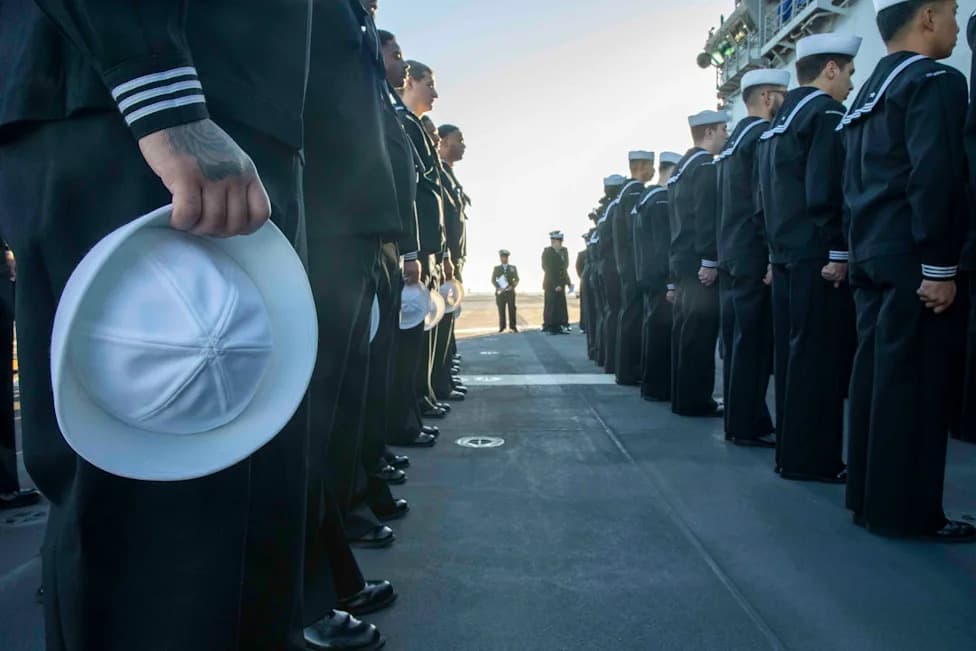
Sailors stand in formation during a uniform inspection, Nov. 7, 2025. (MCS Dylan Spears/Navy)
The U.S. Navy has issued new policy guidance narrowing the role of anonymous allegations in the Military Equal Opportunity (MEO) process and encouraging service members to use a confidential reporting pathway instead. The change affects how harassment and discrimination complaints in the Navy and Marine Corps are documented, routed and resolved.
What's Changing
The guidance states that anonymous allegations of misconduct will no longer be processed automatically as MEO complaints. Instead, sailors are encouraged to file a confidential complaint, which asks individuals to identify themselves to designated Navy or Marine Corps personnel who receive and document the report. The anonymous channel will remain available but will not trigger routine MEO processing.
— This does not prevent a commander from taking appropriate action in response to an anonymous report. —
How the Confidential System Works
- Documentation Without Pressure: Confidential reports are recorded and the service member is connected to support services without being forced to convert their report into an informal or formal complaint, although they may choose to do so.
- Limited Disclosure of PII: Personally identifying information provided in a confidential report may be disclosed if allegations include serious bodily harm, death, or an admission of intent to commit a crime.
- Command Action: Commanders retain authority to act on anonymous reports when appropriate.
Exceptions, Limits, And Potential Dismissals
The Navy will continue to process anonymous allegations related to harassment, hazing and bullying while awaiting further guidance. The guidance also warns that knowingly making false official statements during complaint processes may violate the Uniform Code of Military Justice (UCMJ).
Formal MEO complaints may be dismissed for several reasons, including:
- Filing more than 60 calendar days after the most recent incident for active-duty members (120 days for reservists)
- Falling outside MEO jurisdiction
- Insufficient information to investigate
- Incident already resolved
- False statements by the filer
- Failure to comply with Navy requests for information
Background And Related Updates
The policy change implements recommendations from a September 2025 Pentagon memo urging replacement of the anonymous reporting mechanism with a confidential complaint system to "foster a more effective support and resolution-based program." The Navy first introduced a confidential reporting option for sexual harassment in February 2024. Months later, the Department of Defense Inspector General criticized the service for shortcomings in training and documentation for officials handling sensitive cases.
Separately, following a high-profile murder by a service member previously charged with sexual assault, the Navy updated guidance restricting relocation options for personnel under investigation for alleged sexual misconduct, sexual assault or stalking — limiting such moves to brief shore-command relocations rather than broader temporary transfers.
What This Means For Sailors
Sailors seeking help for harassment or discrimination will be encouraged to use confidential channels that provide documentation and support while allowing the complainant control over whether to pursue formal action. Commanders and investigators will retain tools to act in serious cases, and the Navy has clarified circumstances under which confidentiality may be broken for safety or criminal reasons.
Help us improve.