
The article examines growing concerns that Iran’s leadership may use external conflict to justify domestic repression after the January 8–9, 2026 uprising. Protesters, strikes and a deteriorating economy — including a reported >20% rise in bread prices during two weeks of US strikes — are intensifying pressure on the government. Activists and insiders warn that leadership gaps, notably around Mojtaba Khamenei, have deepened regime disarray and could fuel further unrest.
Tehran Student: Regime May Resort To War To Justify Repression After Mass Uprising
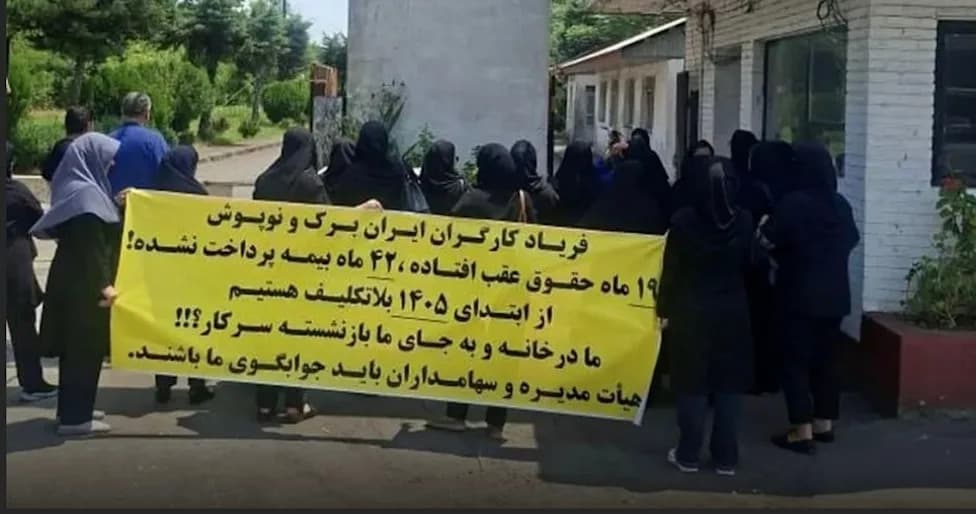
Labor protests and strikes have intensified in recent weeks. The photo shows workers at the Iran Berk factory in Rasht gathering and striking over 19 months of unpaid wages. (photo credit: SOCIAL MEDIA)
Fears are mounting in Iran that the Islamic Republic may exploit external conflict to justify intensified domestic repression and secure its hold on power following the mass January 8–9, 2026 uprising, activists and insiders told The Media Line.
Diplomacy, Threats And Uncertainty
Although US President Donald Trump recently canceled a planned strike, diplomatic talks continue and it remains unclear whether Israel would join any future operations. Civilians remain on edge, worried about potential damage to critical infrastructure. At the same time, labor unrest, economic distress and protests over executions are testing the regime's capacity to contain domestic dissent.
Why Some See War As A Political Tool
Minoo, a left-wing university student in Tehran who spoke to The Media Line on condition of anonymity, argued that the regime has "no option but to engage in warmongering in order to survive," adding that in peacetime the government would lack the pretext to keep armed forces deployed on the streets.
"The Islamic Republic has no option but to engage in warmongering in order to survive, because under conditions of peace it would have no justification for keeping its armed forces in the streets under the pretext of war," she said.
She described the January uprising as "a revolt of the underprivileged classes," and said that, despite lacking unified leadership on the ground, it showed how large-scale popular mobilization could challenge the regime if it had clear objectives and leadership.
Leadership Vacuum And Regime Disarray
Observers point to increasing signs of confusion within the government after the January unrest and the deaths of key figures. The apparent absence of Mojtaba Khamenei from public view has fueled rumors and demoralization among regime loyalists; claims about his health and injuries could not be independently verified by The Media Line.
Officials deny or avoid public clarification, deepening uncertainty. According to some analysts inside Iran, this leadership vacuum has amplified splits among factions that had previously stuck with the regime for economic or ideological reasons.
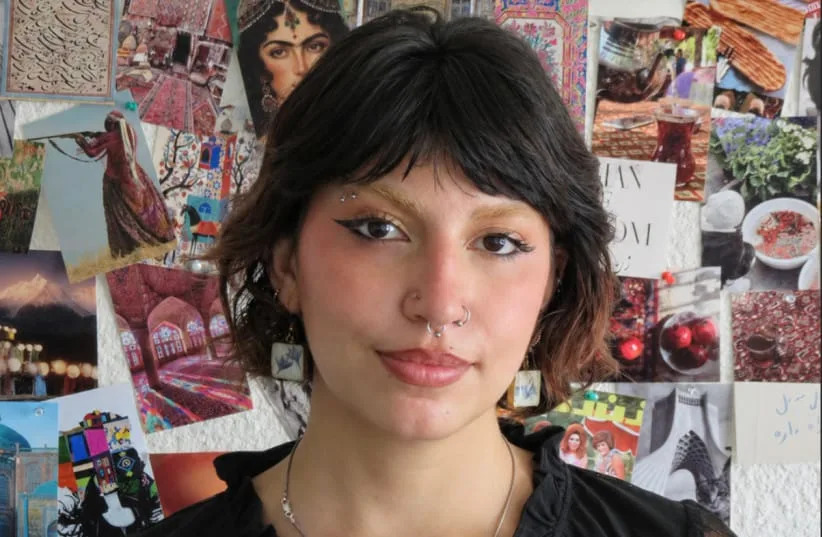
Parishad Kavyani, a human and women's rights activist, told The Media Line that despite the war and repression, the people's struggle is expanding, and their return to the streets will upend all the regime's calculations. (credit: THE MEDIA LINE)
Protests, Strikes And Human Rights Concerns
Street protests — including marches by pensioners, teachers, students and workers — are intensifying across cities, often accompanied by strikes. Activists warn that the government’s erection of public gallows and a renewed wave of executions are fueling outrage and mobilization rather than deterring dissent.
"At a time when bombs are falling, repression is intensifying, and the future is shrouded in uncertainty, people are still taking to the streets to demand freedom, justice and an end to executions," said Parishad Kavyani, a human and women's rights activist.
Economic Strain Is Deepening
Iran’s economy, already battered by conflict and sanctions, shows mounting stress. Factories and large workshops in Tehran and other major cities have closed or are running at reduced capacity because of wartime disruption, raw material shortages and frequent power cuts. Unemployment is rising as more workers lose hours or jobs.
Shahin, a skilled industrial worker, told The Media Line that during two weeks of US strikes in southern Iran, prices climbed daily — in some cases hourly — with bread rising by more than 20% compared with several weeks earlier, intensifying public anger.
Regime Strategy And The Path Ahead
A mid-ranking manager familiar with military affairs told The Media Line the government has moved into "survival mode," using military posturing both to suppress internal dissent and to gain diplomatic concessions from the West — in hopes of easing sanctions, unlocking frozen assets and attracting investment to reduce hyperinflation.
However, analysts and activists warn that an external confrontation may only delay, not resolve, the internal political crisis. Renewed waves of strikes and protests by pensioners, teachers, students and workers could derail the regime’s calculations and trigger further instability.
Outlook
With labor unrest, economic collapse indicators and an emboldened protest movement, the next phase of Iran’s crisis may hinge on whether international diplomacy can reduce external pressure without enabling a crackdown at home — or whether external conflict will become a pretext for broader repression. For many Iranians, the immediate concern remains safety, livelihoods and the right to peaceful political expression.
Help us improve.





















