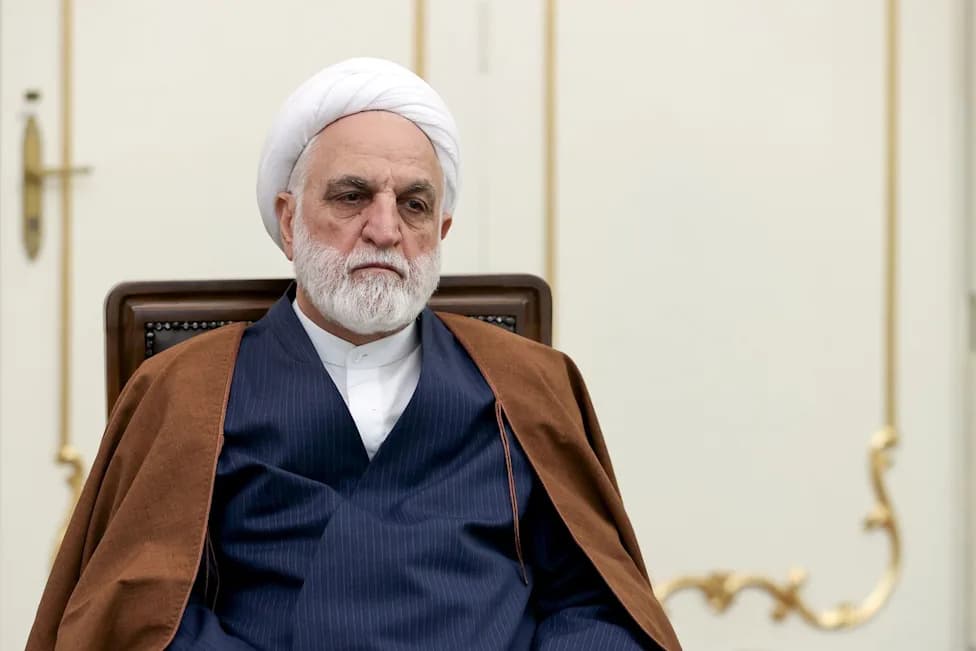
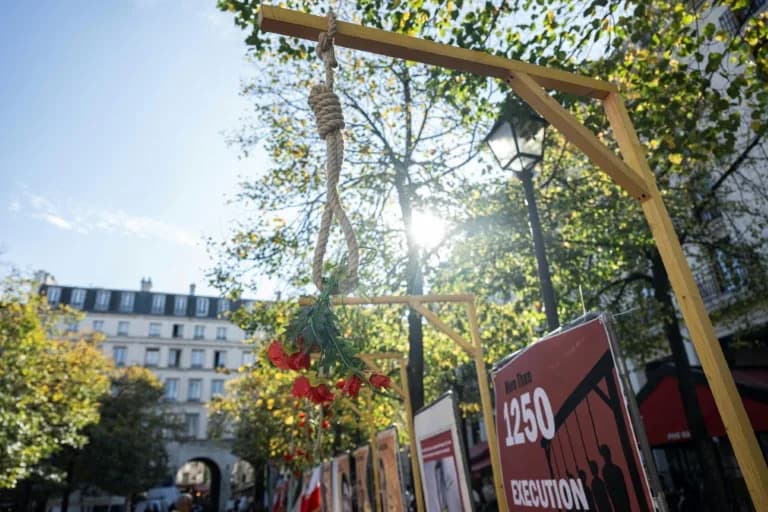
Human rights groups and relatives say Iran resumed public hangings in Isfahan as part of a widening crackdown after months of conflict and nationwide protests. Two young men were executed and a third was hospitalized after collapsing. The U.N. reports at least 56 executions since March 19, with more than 100 others at risk. Families and monitors allege torture, forced confessions and denial of proper legal counsel; Amnesty International urged urgent diplomatic intervention.
Iran Resumes Public Hangings as Postwar Crackdown Intensifies, Rights Groups Say
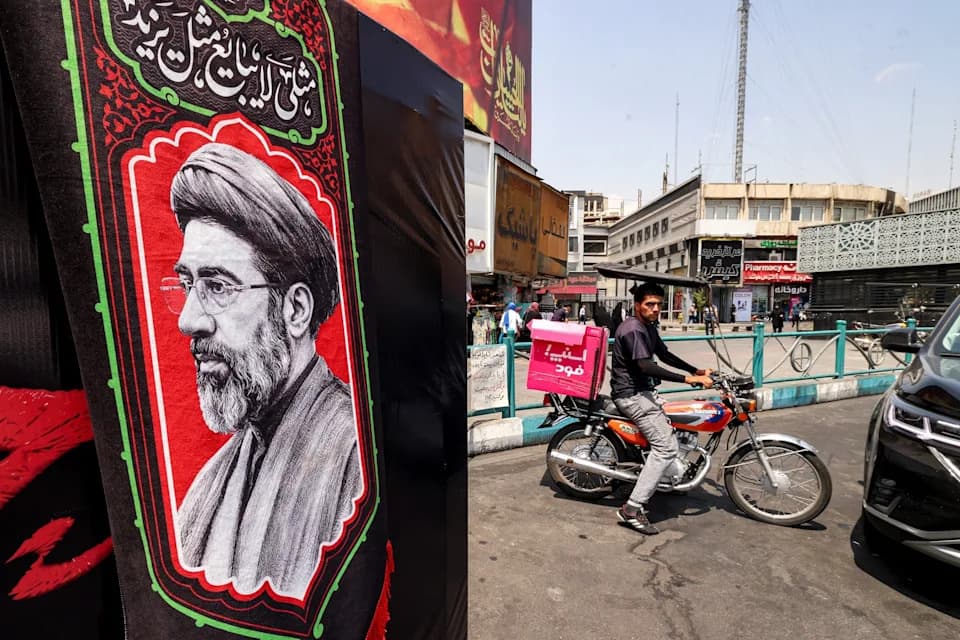
Atta Kenare/AFP via Getty Images - PHOTO: A delivery person rides a motorcycle near an image of Iran's Supreme Leader Mojtaba Khamenei at Valiasr Square in central Tehran on Aug. 8, 2026.
Public executions returned to the streets of Iran last week as authorities intensified a broader clampdown on dissent following months of conflict and nationwide protests in January, according to human rights organizations and relatives of those executed.
Authorities erected scaffolding and used a crane to install hanging ropes on Alikhani Street in Isfahan, where three young men accused of taking part in the January demonstrations were brought to be executed. Human rights monitors identified the men as Amirhossein Safari (27), Abolfazl Sepahi (23) and Alireza/Alirez(a) Sepahi (25).
United Nations human rights chief Volker Türk said in a statement that Iran has executed at least 56 people on national-security related charges since March 19, with 27 of those cases linked to the January protests. He warned that more than 100 others remain at risk of execution on similar charges.
In the Alikhani case, Iranian judiciary and rights sources say 12 young men were sentenced to death and several others received prison terms of five to 10 years. Of the 12 condemned, four have already been executed and eight remain on death row awaiting action.
Witnesses told ABC News that the defendants were brought at dawn—shortly before the morning prayer call, the hour when Iran’s laws prescribe executions—and that the van carrying them was escorted by a truck mounting a machine gun, an obvious show of force intended to intimidate onlookers. Video circulating online showed crowds chanting slogans, clashes with security forces and people fleeing as authorities moved to control the scene.
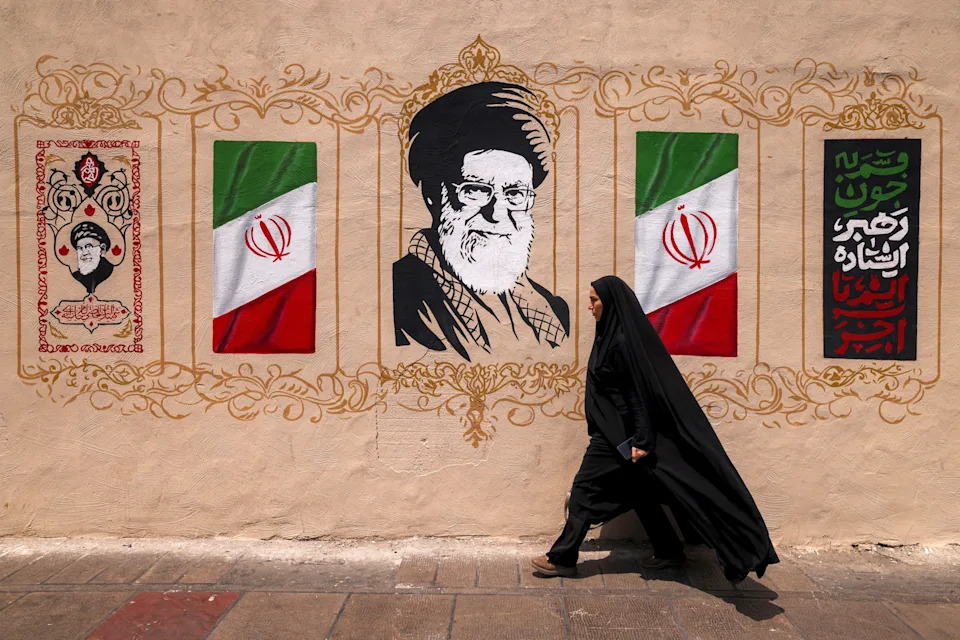
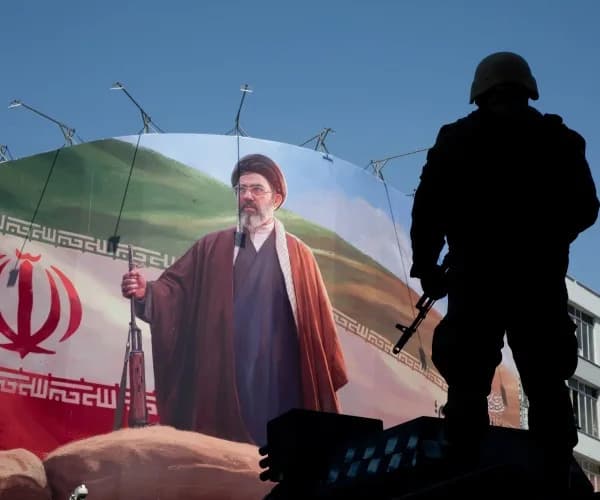
Atta Kenare/AFP via Getty Images - PHOTO: A woman walks past a mural depicting Iran's late supreme leader Ali Khamenei at Valiasr Square in central Tehran on Aug. 8, 2026.
Rights groups report that two of the men, Amirhossein Safari and Abolfazl Sepahi, were hanged. Alireza Sepahi collapsed at the site and was taken to hospital; human rights organizations said the collapse was attributed to heatstroke or a cardiac episode.
Volker Türk, U.N. High Commissioner for Human Rights: "The death penalty is incompatible with the right to life and irreconcilable with human dignity."
Relatives and lawyers inside Iran told reporters the detainees were subjected to severe physical and psychological pressure, coerced into confessions and denied access to counsel of their choosing. Families said in several instances courts rejected evidence placing defendants elsewhere at the time of the alleged incidents. For security reasons, many relatives spoke on condition of anonymity.
Amnesty International condemned the recent hangings and highlighted that some people on death row were arrested when they were children. The organization urged coordinated diplomatic action, saying a muted international response has emboldened Iranian authorities to continue executions.
Relatives described a climate of fear in which security and intelligence officials threatened family members, forbidding contact with journalists or with other defendants’ families under threat of reprisals. "The whole family's life is on fire," one relative said.
Human rights groups, legal observers and U.N. officials have called for transparent, fair legal procedures, independent investigations into allegations of torture and coerced confessions, and an immediate halt to executions in cases tied to political protest. International organizations continue to press governments and multilateral bodies to take urgent diplomatic and legal measures to protect those at risk.
Help us improve.