
The Perseid meteor shower peaks Wednesday night into Thursday morning with excellent viewing prospects across the Northern Hemisphere. NASA says up to 50–100 meteors per hour are possible under ideal skies, while the American Meteor Society expects about 30–50 per hour in rural areas. The peak coincides with a total solar eclipse over Spain, Iceland and Greenland and a six-planet alignment, though the brightest fireballs are likely after totality. Head to dark skies between midnight and dawn, give your eyes about 30 minutes to adapt, and avoid phone screens for the best views.
Perseid Meteor Shower Peaks — How to Catch 50–100 Shooting Stars in Dark Summer Skies
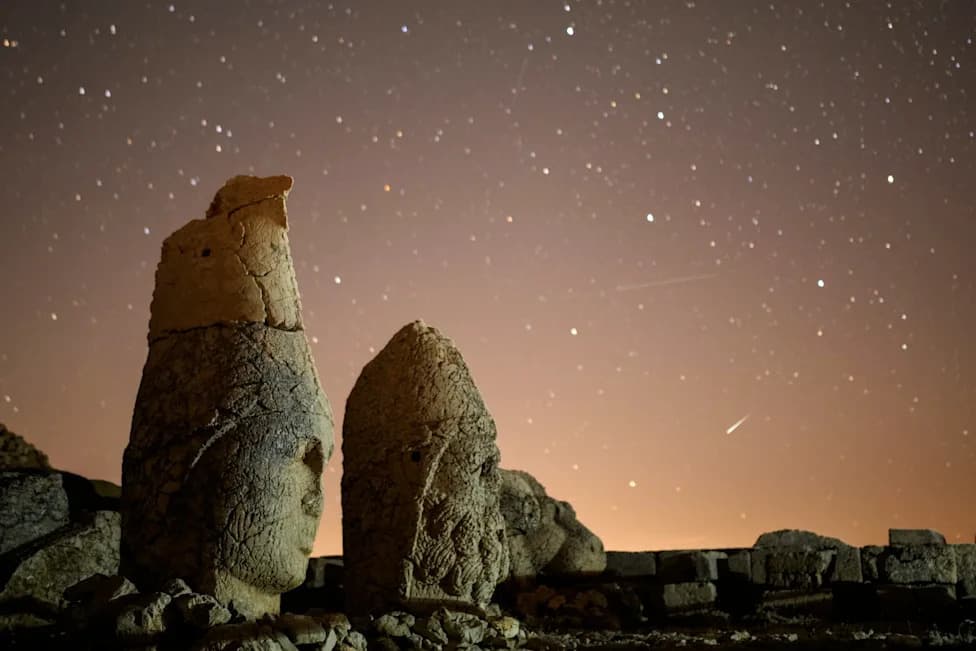
FILE - Ancient statues are seen during the Perseid meteor shower atop Mount Nemrut in southeastern Turkey, Sunday, Aug.11, 2024. (AP Photo/Emrah Gurel,File)(AP Photo/Emrah Gurel)
The Perseid summer light show has returned, and conditions look especially favorable for observers across the Northern Hemisphere. The shower peaks Wednesday night into Thursday morning, overlapping a total solar eclipse visible over Spain, Iceland and Greenland and a rare six-planet alignment. The brightest fireballs are expected after totality.
Under ideal, dark skies, NASA says observers could see as many as 50 to 100 meteors per hour. The American Meteor Society estimates roughly 30 to 50 meteors per hour in rural locations. Single meteors can appear any dark night, but meteor showers occur when Earth crosses streams of debris left by comets or, occasionally, asteroids; those fragments burn in the atmosphere and create the streaks we call shooting stars.
The Perseids originate from comet 109P/Swift-Tuttle, an icy body that orbits the sun every 133 years and is not due to return until 2125. Observations of this shower extend more than 2,000 years, and the Perseids are especially popular because they often produce brilliant fireballs and fall during warm summer nights.
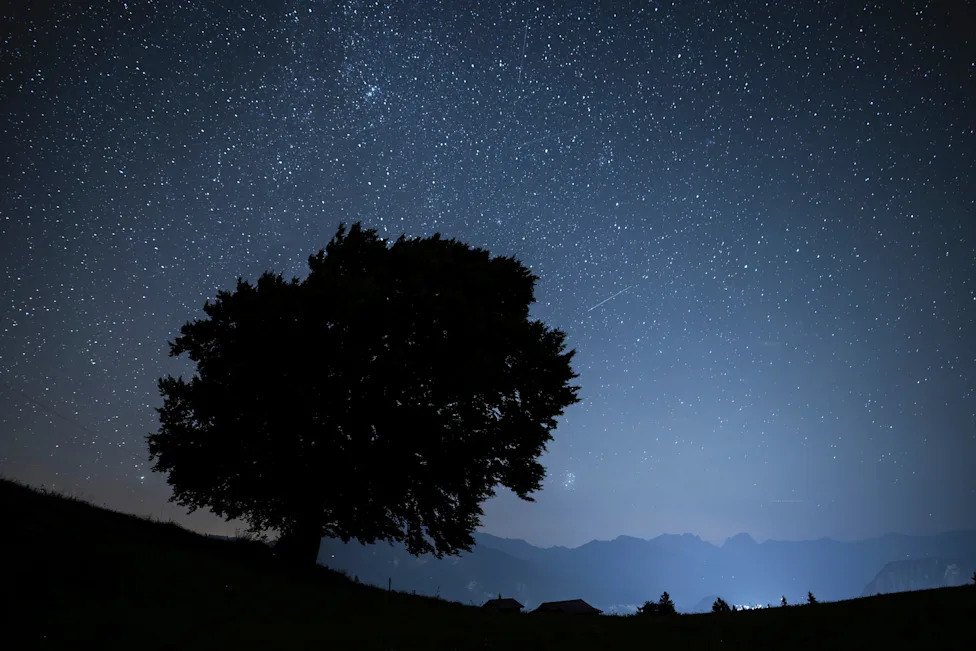
FILE - Stars and shooting stars are pictured during the annual perseids meteor shower in St. Margrethenberg, Switzerland Monday, Aug. 12, 2024. (Gian Ehrenzeller/Keystone via AP,File)(Gian Ehrenzeller/Keystone via AP)
Viewing Tips
To maximize your chances: head to a dark site away from city lights after nightfall, check the sky for clouds, and plan to watch between midnight and dawn when the constellation Perseus sits high in the northern sky. The meteors will seem to radiate from that region. Give your eyes about 30 minutes to adapt to the dark, focus on a broad patch of sky rather than chasing individual streaks, and avoid looking at your phone to preserve night vision.
'We don't have to suffer through a cold winter night to get a good view of meteors,' said astronomer Zach Vanderbosch of McDonald Observatory in Texas.
Adding to the favorable conditions, the moon will be in its new phase during the Perseids peak, minimizing skyglow and boosting visibility. Astronomer Aparna Venkatesan of the University of San Francisco sums it up: 'New moon means we don't have moonlight flooding the sky, and you tend to see way more meteors as a result.'
Whether you are a casual stargazer or a seasoned observer, sit back, look up, and enjoy what many consider one of the most reliable and beautiful meteor showers of the year.
Sources: NASA, American Meteor Society, reporting by The Associated Press.
Help us improve.





















