Study Overview: Researchers applied sensory archaeology and biomolecular analyses to two terracotta censers from Pompeii and Boscoreale to reconstruct the scents used in domestic worship about 2,000 years ago. Key Findings: Both censers contained burned woody plants (oak, laurel, stone‑fruit relatives and grasses), and one preserved an imported aromatic resin likely to be elemi, indicating long‑distance trade. Significance: This is the first direct archaeological evidence that imported resins were burned in Pompeian household rituals, offering a sensory window into ancient daily life.
Pompeii's Lost Smells: 2,000-Year-Old Ash Reveals Roman Household Scents

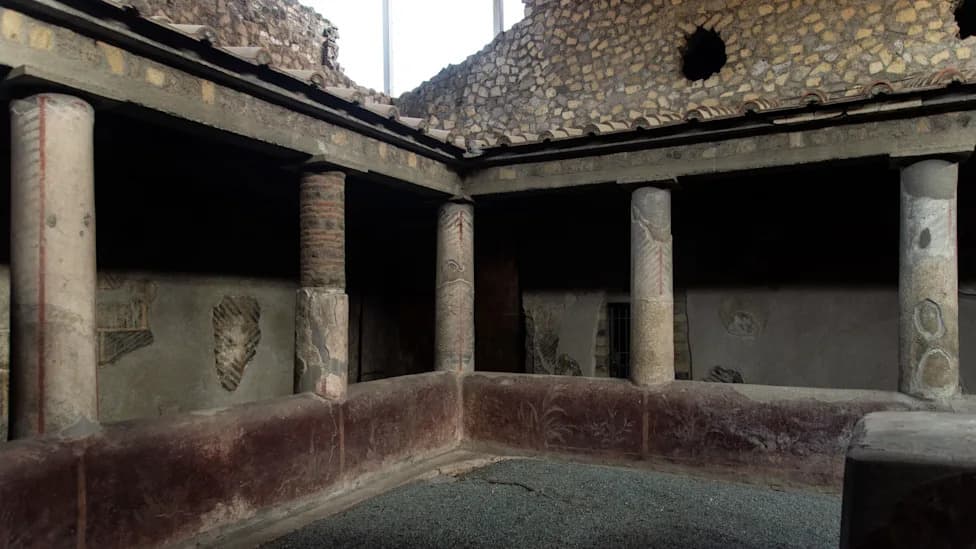
(George Pachantouris/Moment/Getty Images)
Modern biomolecular tools are letting researchers do more than probe the cosmos or peer inside cells — they can now reconstruct sensory details of everyday life in the ancient world. A European research team used techniques from sensory archaeology to identify what wealthy Romans in Pompeii and nearby Boscoreale burned in their domestic shrines nearly 2,000 years ago.
The finds and their context
The study examined two terracotta censers (incense burners) excavated decades ago: one recovered from a building being converted into an inn at the time of Vesuvius’s eruption in AD 79, and another found in situ on a household shrine in a rural villa. The vessels’ shapes, decoration and archaeological contexts strongly indicate they were used to burn fragrant offerings during domestic rites for household deities such as the Lares and Penates.
YouTube Thumbnail
Analytical approach
To avoid modern contamination, researchers sampled tiny amounts from the centers and edges of the censers (not the exposed surfaces) and used a complementary suite of analyses: microscopic searches for mineral residues from burned plants, phytolith analysis (durable silica bodies from plant tissues), and gas chromatography–mass spectrometry (GC–MS) to detect molecular residues of resins, oils and other organics.
What they found — and what they didn’t
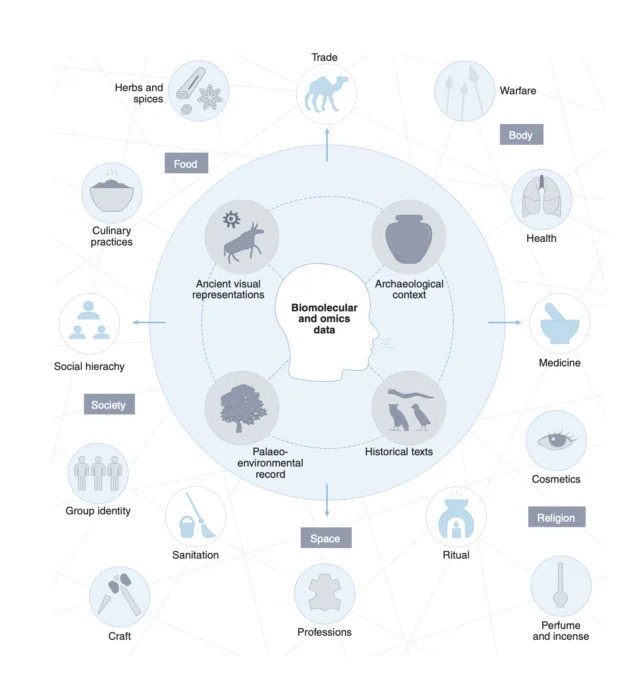
Diagram representing how biomolecular data can reconstruct ancient experience, behavior and society. (Huber et al.Nature Human Behavior, 2022.)
Unexpectedly, there was no evidence for dried animal dung as a fuel — a fuel used in some other ancient contexts. Instead, both censers preserved abundant signatures of burned woody plants. Phytolith assemblages and microscopic residues point to a mix of materials likely including oak, laurel and members of the stone‑fruit (Prunus) family, together with various grasses. These materials could have served as fuel for burning or been offerings themselves.
Only one censer preserved chemical markers of an aromatic, imported resin related to the botanical family of frankincense; molecular evidence suggests it was likely elemi. The presence of this resin indicates long‑distance trade — resins from Arabia, tropical Africa and Asia were transported north via the Red Sea, passed through Alexandria, and reached Italy and private homes such as those in Pompeii.
The same censer also yielded tentative chemical traces consistent with grape products (wine or vinegar). The authors caution that modern contamination cannot be ruled out, but if authentic, these traces align with Roman descriptions of libations poured alongside incense during domestic rituals.
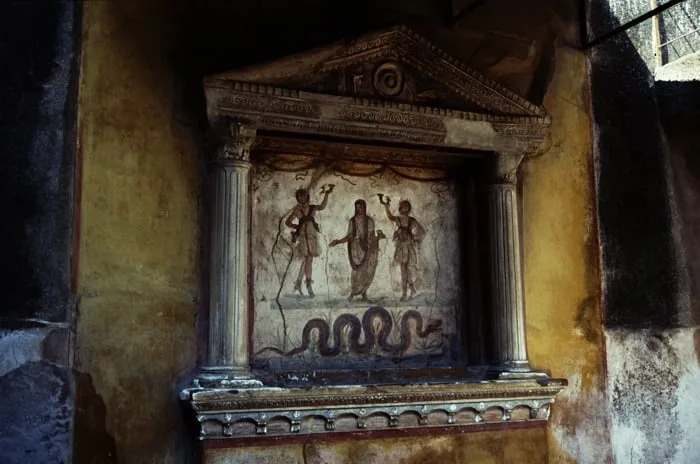
Altar of the Lares at House of the Vettii in Pompeii. Incense would have been burned as part of a daily practice to honor guardian spirits, in a bowl suited to that purpose that would have sat on the ledge of the altar. (Vanni Archive/The Image Bank Unreleased/Getty Images)
Why it matters
This study provides the first direct archaeological evidence that imported aromatic resins were burned in Pompeian domestic worship and shows that everyday local vegetation complemented prized imported scents. Reconstructing these olfactory details gives a vivid, tangible sense of private ritual life in Roman homes and highlights how trade, religion and daily practice intersected in antiquity.
Research source: Published in the journal Antiquity.
Help us improve.