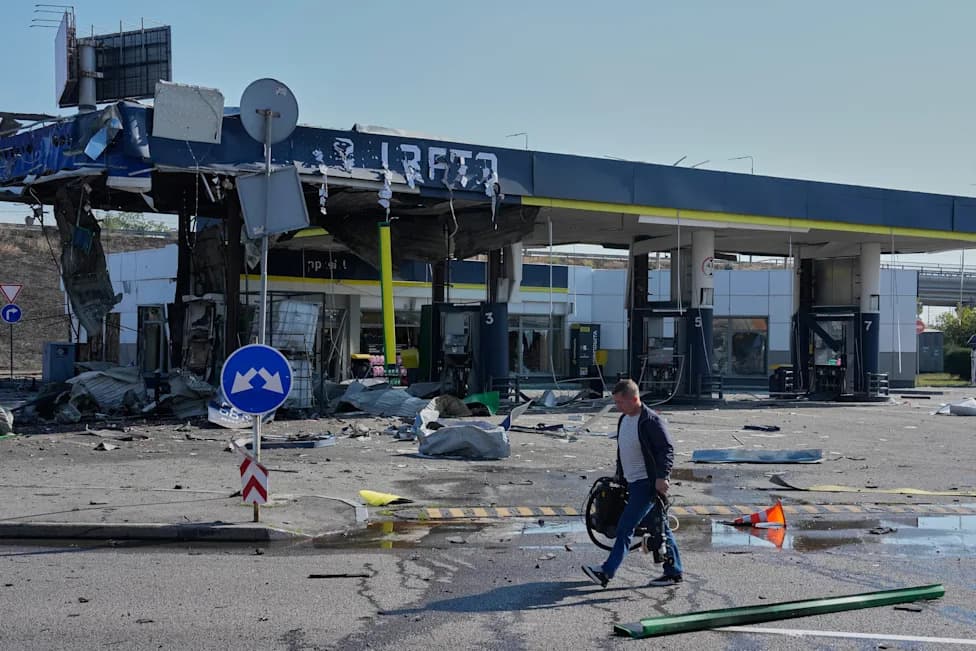
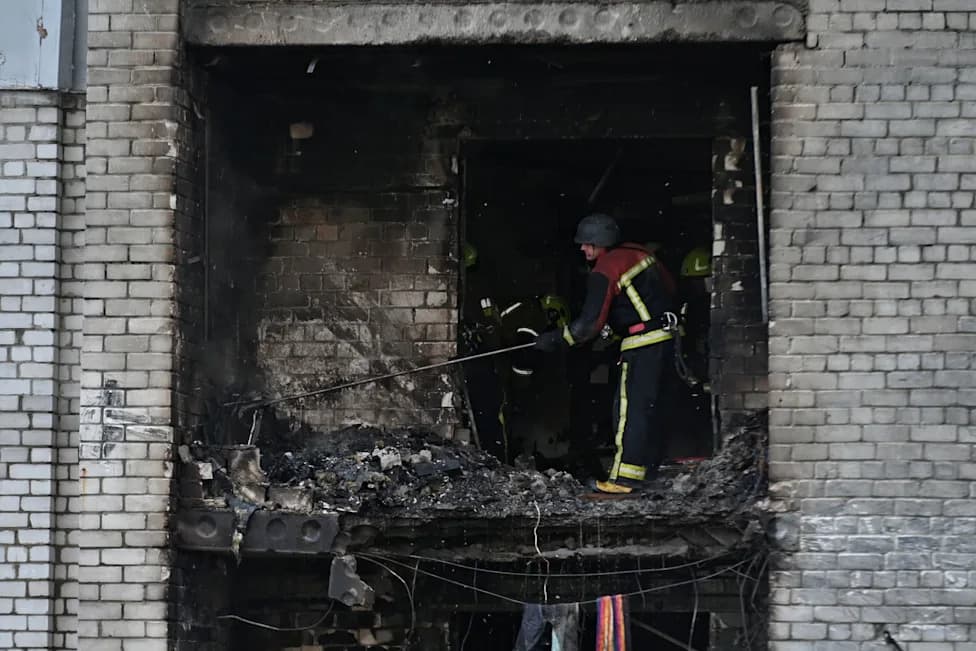
The aerial war between Russia and Ukraine has intensified while ground movement remains limited. Both sides' offensive air capabilities increasingly outpace their defences, producing more strikes on energy, logistics and commercial targets and causing rising civilian casualties. UN data record 1,396 civilians killed and 7,978 wounded in the first half of the year — a 37% rise compared with the same period in 2025. Analysts warn the trend could prolong the conflict unless air-defence capacity is bolstered or diplomatic pressure grows.
Air Campaigns Escalate Over Russia and Ukraine as Civilians Bear the Brunt
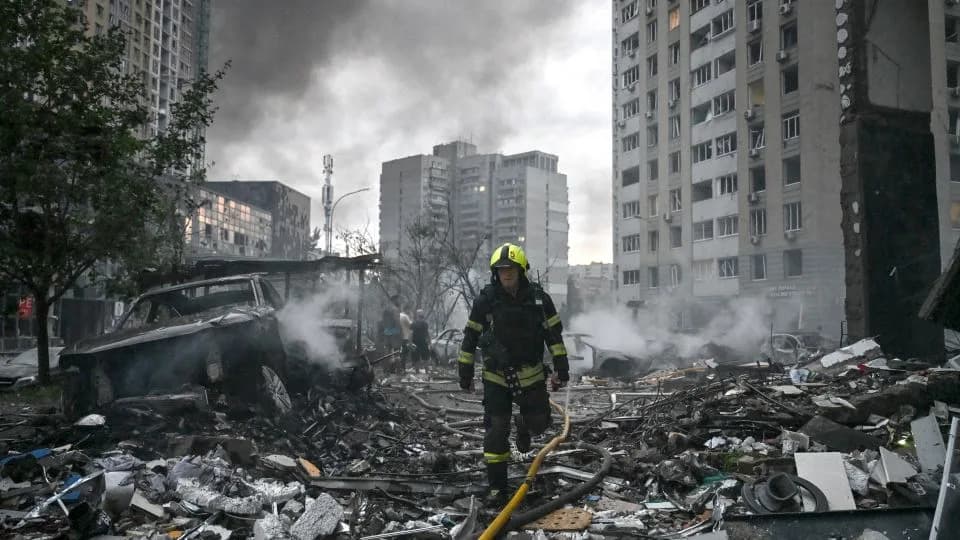
A rescuer worker walks through the rubble of a multi-story residential building damaged in a Russian ballistic missile strike in the Ukrainian capital of Kyiv on July 6. - Genya Savilov/AFP/Getty Images
The land front in Russia's invasion of Ukraine remains largely static, but the aerial dimension of the conflict has intensified dramatically. Analysts say both sides' offensive air capabilities are increasingly outpacing their air-defence systems, producing more successful strikes on energy, logistics and economic targets and driving up civilian casualties.
"We definitely see an increased number of (attack) events, an increased number of casualties as well,"
"There has been an escalation also with regard to the variety of targets that are hit,"— Olha Polishchuk, Eastern Europe Research Manager, ACLED.
Ukraine has for some time struck deep into Russian territory, and its drone technology has advanced rapidly over the past year. In late June, President Volodymyr Zelensky announced a 40-day campaign to intensify long-range drone strikes into Russia — an effort Kyiv's leadership says will continue. Analysts say the campaign exposed gaps in Russia's interception capabilities and forced Moscow to spread its air-defence systems more thinly.
Targets and Tactics
Rather than rare, singular missions, Ukrainian strikes are now more frequent and diverse: refineries, oil tankers, power substations and logistics hubs have been targeted, along with facilities the Ukrainian government says directly support Russian frontline forces, such as warehouses belonging to the retailer Wildberries.
At the same time, Russia has continued massive nightly assault waves on Ukraine. Moscow launched an average of 172 strikes per day last month compared with an average of 28 strikes launched by Kyiv, and in July Russia fired 139 ballistic missiles into Ukraine — the highest monthly total this year, according to the Center for Strategic and International Studies (CSIS).
Air-Defence Strain and Weapons Shortages
Observers note many Russian air-defence systems were designed to counter conventional aircraft and missiles, not the surge of small and low-flying drones. Russia has responded at times with improvised measures, including the use of man-portable air-defence systems (MANPADS) in urban settings.
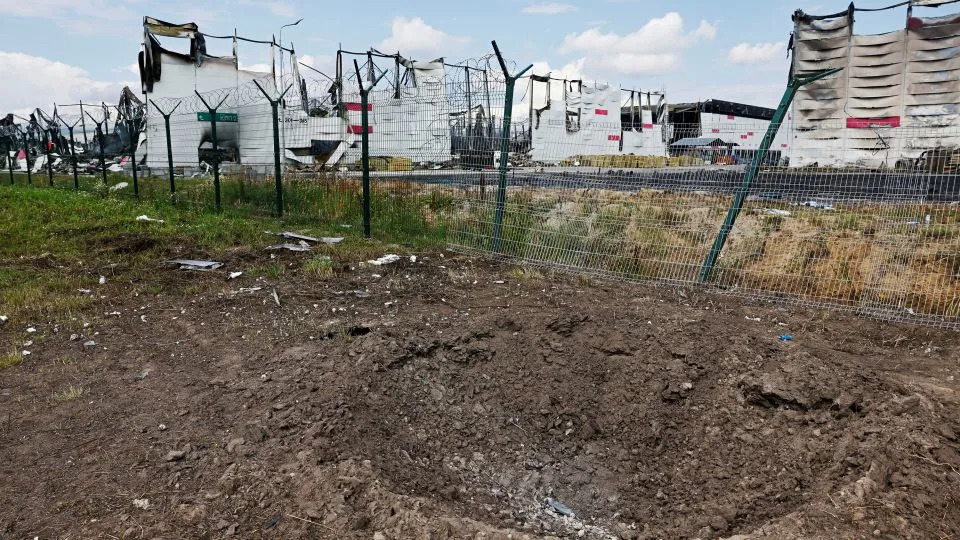
A crater near what remains of a Wildberries warehouse in the Russian city of Elektrostal, which burned down following a Ukrainian drone attack. - Reuters
Ballistic missiles remain particularly hard to intercept, often requiring US-made Patriot interceptors. Kyiv has repeatedly appealed for more Patriots and other air-defence systems. Promises and proposals — including a brief pledge at a recent NATO summit to let Ukraine manufacture Patriot interceptors domestically — have been reversed or complicated, limiting Kyiv's ability to respond to the growing ballistic and cruise-missile threat.
Civilian Toll and Reciprocal Strikes
The increase in aerial attacks is taking a steep human cost. The United Nations recorded the highest monthly total of civilians killed and injured in Ukraine since 2022 in June. UN figures show at least 1,396 civilians killed and 7,978 wounded in the first half of this year — a 37% rise compared with the same period in 2025. The majority of these casualties were recorded in areas under Ukrainian government control.
Moscow reports at least 797 Russian civilian deaths this year; independent verification of that figure is limited. Analysts also note a pattern of reciprocal targeting: Ukrainian strikes on Russian economic sites have been mirrored by attacks on commercial facilities in Ukraine.
Why It Matters
Analysts argue Ukraine's long-range campaign aims both to pressure Russian domestic audiences and to slow Moscow's offensive by forcing it to divert resources to air defence. Yet the barrage strategy from both sides risks protracting the conflict and magnifying civilian suffering unless air-defence capacity increases or diplomatic momentum emerges.
Polishchuk and other experts are skeptical about a near-term diplomatic breakthrough. They say internal Russian pressure — as the economy and elite interests feel the strain — would be the more likely trigger for a change in Moscow's calculations, though escalation remains a strong possibility.
This report draws on analysis and reporting from ACLED, RUSI, CSIS and contributions from CNN journalists Alex Leeds Matthews and Anna Chernova.
Help us improve.