The Bedouin village of Umm al-Khair held muted weddings this week amid the first anniversary of activist Awdah Hathaleen’s killing and ongoing settler harassment. Villagers report daily incursions, livestock driven onto private gardens, demolition notices and soldiers who at times do not intervene. NGOs and UN agencies document rising killings, demolitions and displacement across the West Bank since October 2023, while residents vow to remain on and defend their ancestral lands.
Muted Weddings in Umm al-Khair: Bedouin Community Marks Indigenous Peoples’ Day Amid Settler Violence
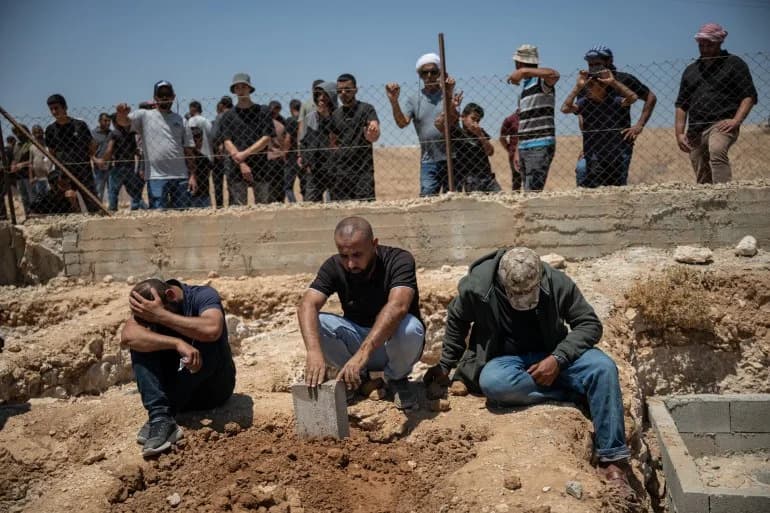
Family and friends of Awdah Hathaleen look on at his grave after his burial on August 7, 2025, in Umm al-Khair, West Bank [Tamir Kalifa/Getty Images]
Umm al-Khair, Occupied West Bank — Weddings in the small Bedouin village of Umm al-Khair this week were subdued, as the community marked the first anniversary of the killing of local activist and leader Awdah Hathaleen. Two sons from the village were married and communal cauldrons of mansaf were served, but the customary dahiyya— the opening line dance and chant—was largely absent.
Weddings and Mourning
Villagers said celebration felt inappropriate so soon after Hathaleen’s death, which they allege was carried out by Israeli settler Yinon Levi. Families spread out during the festivities rather than congregating in one place, wary of drawing attention that in the past has led to military intervention or harassment.
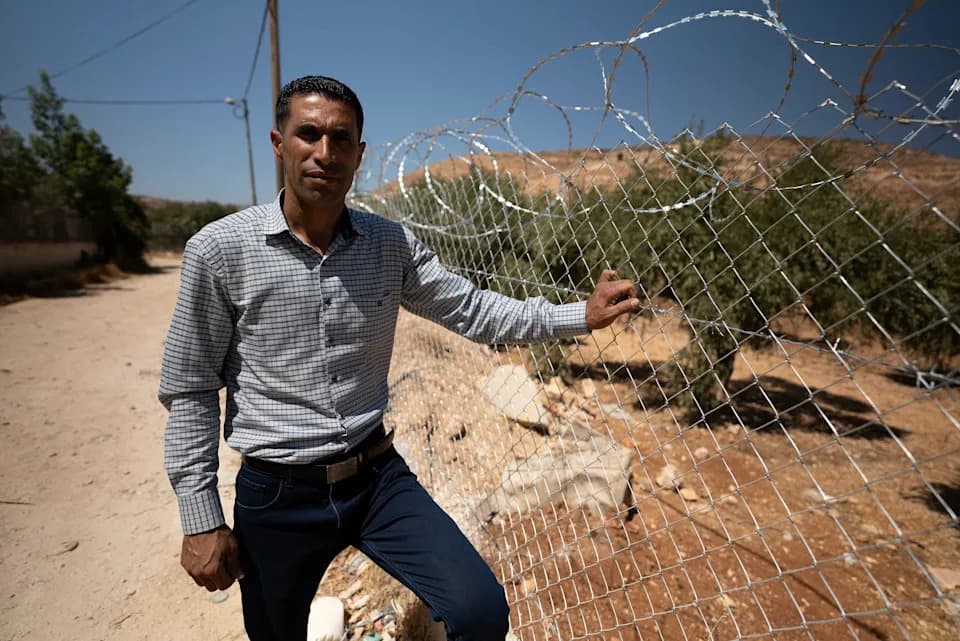
“There is a wedding, but they are not letting us celebrate quietly,” said Tariq Hathaleen, an English teacher and community leader in Umm al-Khair.
Incidents and Local Tensions
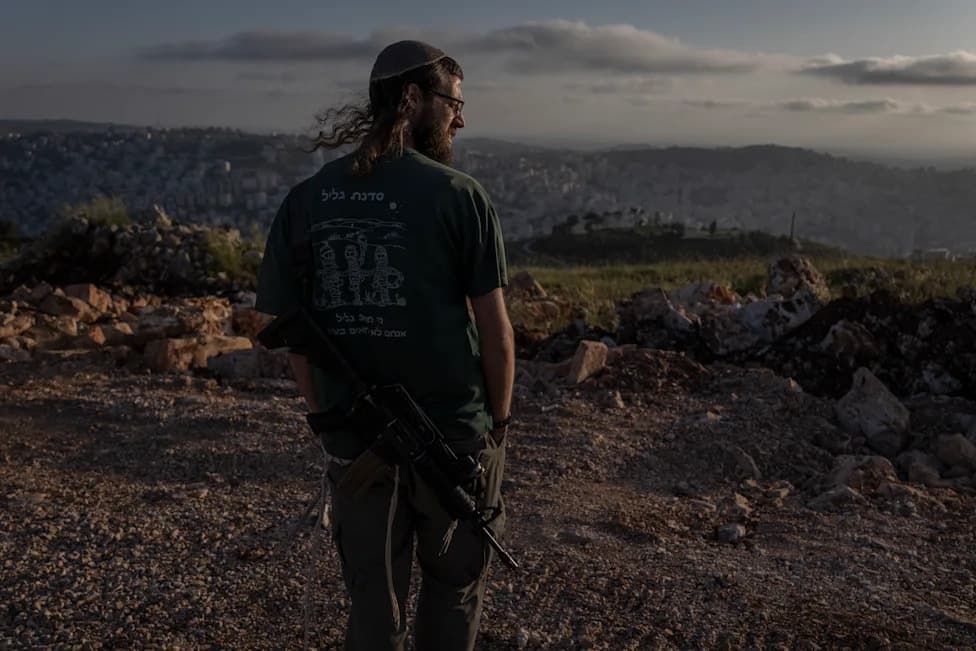
On the first day of the wedding, residents say settler Shimon Atiya—who established the Havat Shorashim outpost about 800 metres from the village in 2022 and has been under a restraining order since July 2025 for alleged harassment—drove livestock into a villager’s vegetable garden while Israeli soldiers stood by. Villagers told soldiers the land was recognised as Umm al-Khair property, but were told maps had changed and were refused access to any new maps. That night, residents reported the outpost fence facing the homes was torn down.
Days earlier, residents watched as buildings and vehicles in nearby Khirbet Tuba were set alight in what they say were settler arson attacks. Locals linked some settler provocations to the recent indictment of Yinon Levi—an uncommon instance of an Israeli charged with killing a Palestinian in the West Bank since October 2023.
Claims of Cultural and Physical Erasure
Community members and local NGOs describe dispossession as both physical and cultural. Tariq said settlers have attempted to imitate Bedouin life—pitching tents, wearing Palestinian scarves and using local dialect—while displacing the people who have lived on the land for generations.
“The occupation always tried very hard to erase the Palestinian Indigenous people and their history, their legacy, their heritage,” Tariq said, drawing parallels to the Nakba. “Back then it wasn't documented. Nowadays, it's happening, but it is documented.”
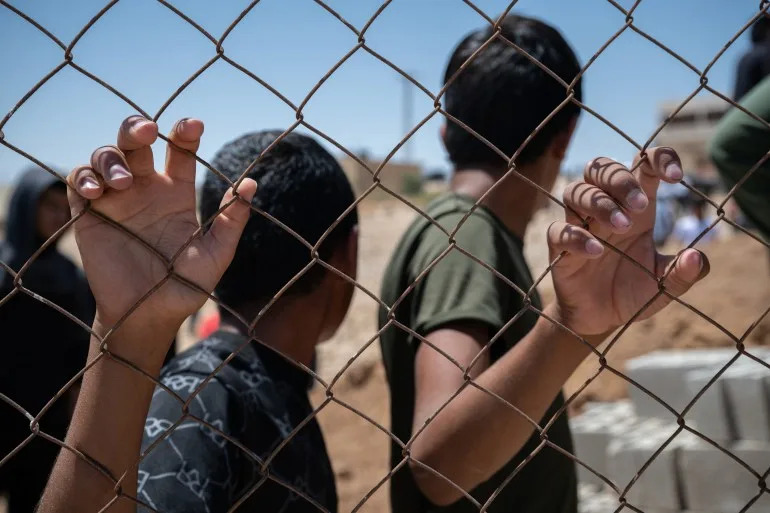
Family and friends of Awdah Hathaleen attend his funeral on August 7, 2025, in Umm al-Khair, occupied West Bank [Tamir Kalifa/Getty Images]
Wider Patterns of Dispossession
NGOs and UN agencies report escalating threats across the occupied West Bank and East Jerusalem, including detentions, killings, demolitions, movement restrictions and evictions. Since October 2023, Israeli NGO B'Tselem reports some 1,100 Palestinians killed in the West Bank, including 242 minors, and more than 3,000 homes demolished. UN OCHA says demolitions and settler violence displaced an average of 17 people per day this year—double the previous three-year rate.
A June report by the West Bank Protection Consortium (including the Norwegian Refugee Council) monitoring over 200 at-risk communities found 96% of those forcibly displaced had depended on farming or herding and largely lost access to their lands or pastures. Observers point to a system of permits, demolition orders and state land policies—combined with public funding for settlements and outposts—as driving dispossession. Israeli NGO Peace Now counts 146 illegal settlements and 390 unauthorised outposts and farms in the West Bank.
In 2024 the International Court of Justice concluded Israel's continued presence in the occupied Palestinian territory is unlawful.
Humanitarian Toll and Gaza Context
The article cites broader regional impacts: since the October 2025 ceasefire, more than 1,200 people have been killed in Gaza, adding to a cumulative toll the Gaza Ministry of Health places above 73,000 since October 2023. UN satellite analysis indicates roughly 81% of structures in Gaza were damaged, and OCHA reported that 59% of the population faced crisis-level food shortages between April and June. Observers warn that shrinking aid could deepen the crisis.
Voices of Resilience
Despite the threats, community members in Umm al-Khair expressed determination to remain on their land. “They will try a million ways to erase the Palestinian Indigenous people, but they will fail,” Tariq said. “This is our land…we always will be. One day, we will get our freedom.”
Background: In Umm al-Khair, 13 structures received demolition notices last October after 2024 demolitions left about a third of the village homeless. Residents say restraining orders and legal measures have done little to stem settler harassment and incursions.
Help us improve.