DecryptIQ is a free online puzzle from the University of Leeds that tests abstract reasoning by asking players to apply symbol-transformation rules under a timer. Sessions last about 10–15 minutes and produce a performance score calibrated so the average is 100 (most players score 85–115). The game collects anonymized performance data and optional demographics to help researchers build a large dataset aimed at improving how mathematics and computing are taught. Data sharing is optional and disabled for under-18s.
Play DecryptIQ: A Free — and Brutal — Puzzle That Measures Abstract Reasoning
(Discovery Access/Getty Images)
If you finished Wordle and want a sterner mental workout, try DecryptIQ — a free online puzzle that also doubles as a scientific experiment.
What Is DecryptIQ?
DecryptIQ (pronounced dee-kript-ik) was developed by a team led by psychologist George Gabriel at the University of Leeds. It’s designed to gather large-scale data on how people solve difficult abstract problems while offering an intense, timed puzzle experience.
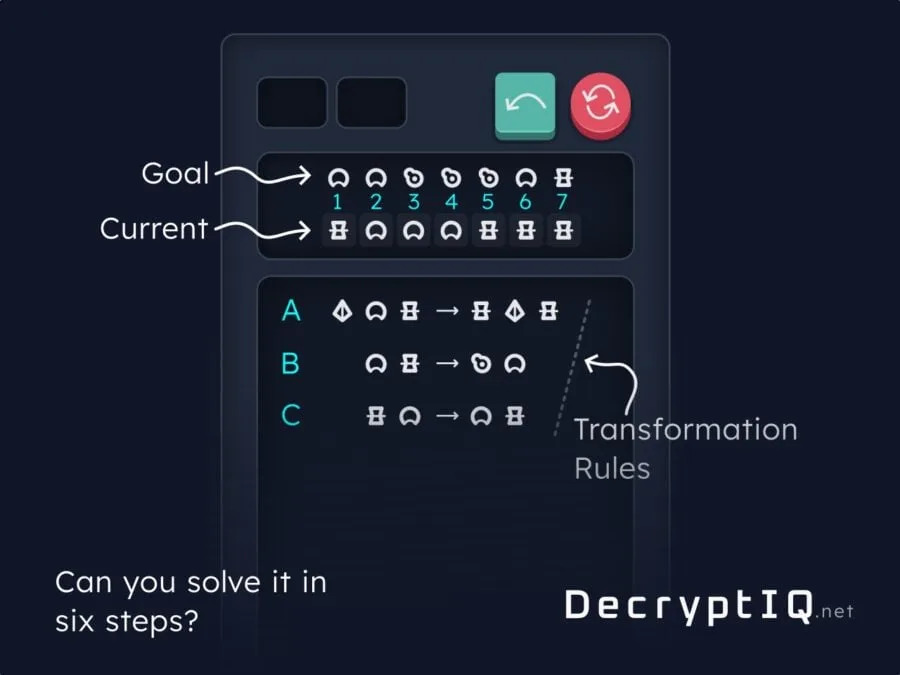
The rules seem simple enough. How tough can it be? (DecryptIQ)
How The Game Works
Each session (about 10–15 minutes) presents randomized puzzles built around a simple core mechanic: activate transformation rules that change one pattern of symbols into another. The challenge comes from discovering the correct sequence of rules and applying them efficiently under a countdown timer.
"Our goal is to produce the largest and most diverse dataset on human problem-solving behavior recorded to date," Gabriel says.
Scoring And What It Means
Players receive a DecryptIQ score based on how quickly and efficiently they reach solutions. The system is calibrated so that the average score is 100; roughly two-thirds of players score between 85 and 115, and fewer than 10% exceed 130.
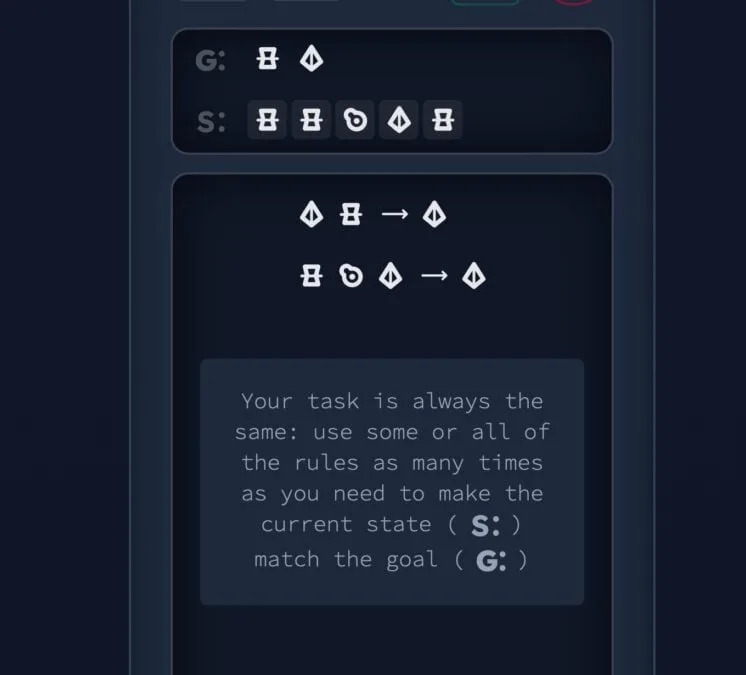
The tutorial makes sense, but individual puzzles can be very complicated. (DecryptIQ)
Researchers say higher scores tend to be associated with stronger abstract reasoning skills — similar abilities used in algebra or programming — and that the score correlates positively with working memory, reasoning, and attentional control. They stress, however, that DecryptIQ is not an IQ test.
Data, Privacy And Participation
DecryptIQ records anonymized in-game performance data and accepts optional demographic information (age, gender, education). Players can opt out of data sharing if they prefer to play privately, and data sharing is disabled automatically for users under 18.

Subscribe to ScienceAlert's free fact-checked newsletter
Feedback And Research Goals
After each game, players can rate the difficulty and frustration level and describe the strategies they used (step-by-step reasoning, pattern spotting, or trial-and-error). The research team intends to use these insights to improve methods for teaching mathematics and computer science.
What To Expect
The tutorial explains the rules clearly, but many individual puzzles are fiendishly intricate and the ticking timer amplifies pressure — expect moments of frantic clicking when time runs short. If you’re looking for a casual, relaxing game, this isn’t it; if you want a revealing challenge that contributes to research, it’s worth a try.
Try DecryptIQ: Visit the DecryptIQ website to play a session and see how your score compares to others. Even if you don’t win, your play could help shape better educational tools.
Help us improve.