Iran Human Rights documented at least 444 executions from Jan. 1 through July 31, 2026, but only 67 were officially announced. Monitors recorded 71 executions in July, including six protesters; most cases involved murder or drug charges, while 63 total cases carried national-security allegations. Rights groups warn that new laws, widespread arrests and alleged torture have expanded the scope for harsh sentences, and they call for human-rights issues to be restored to diplomatic priorities.
Executions in Iran Return to Near-Daily Pace as War Draws Global Attention Away From Domestic Repression
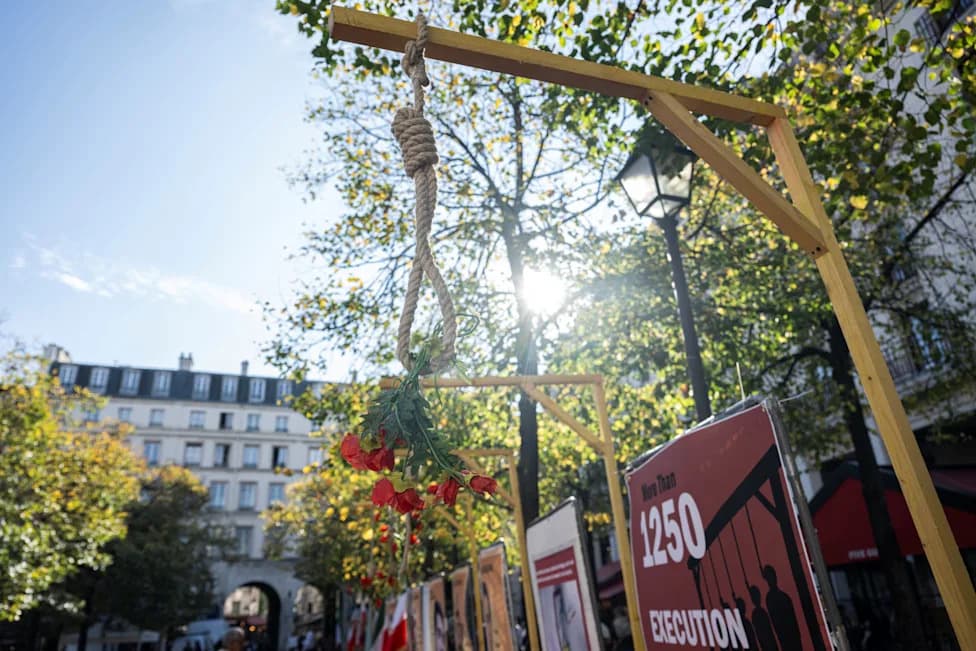
A noose with mock flowers displayed during a demonstration by Franco-Iranian associations, including the Committee to Support Human Rights in Iran (CSDHI) against the capital punishment in Iran, a day after the World Day Against the Death Penalty, in central Paris on October 11, 2025. (photo credit: MARTIN LELIEVRE/AFP via Getty Images)
Human-rights monitors say Iran has resumed near-daily executions even as international attention centers on its military confrontations with the United States and Israel. Norway-based Iran Human Rights (IHR) reported it documented at least 444 executions between January 1 and July 31, 2026, of which only 67 were announced by Iranian authorities.
Key Findings and Trends
IHR recorded at least 71 executions in July alone, including six people identified as protesters. Of those July cases, 36 were related to murder charges, 26 to drug offenses, eight to security-related charges and one to rape. The organization said 377 of the 444 documented cases were independently verified through two sources; more than 400 additional reports were excluded pending verification.
Across the first seven months of 2026, IHR documented the executions of 28 protesters (26 tied to January protests and two linked to the "Woman, Life, Freedom" movement), 13 political prisoners affiliated with banned opposition groups, and 12 people accused of espionage. In total, 63 of the documented executions involved national-security charges.
Demographics and Methods
Beyond political cases, IHR said 227 people were executed after receiving qisas (retribution-in-kind) sentences for murder and 143 were executed for drug-related offenses. Among those documented were 12 women, 17 foreign nationals and at least 80 members of ethnic minorities. Only two of the 444 documented executions were carried out publicly.
"So, it seems that we are going back to the way it used to be, that we have daily executions. Most of them are for charges such as drug trafficking or murder. But the execution of protesters also continues," said Mahmood Amiry-Moghaddam, director of Iran Human Rights.
Context: War, Domestic Repression, and International Attention
Rights advocates warn that the rise in executions and arrests has largely taken place out of public view because global media and policymakers have prioritized coverage of the military clashes, the Strait of Hormuz security standoff and the conflict's economic fallout. An anonymous source inside Iran told The Media Line that unjust executions without fair trials are longstanding, and that the more painful development is how widely known abuses have faded from international debate.
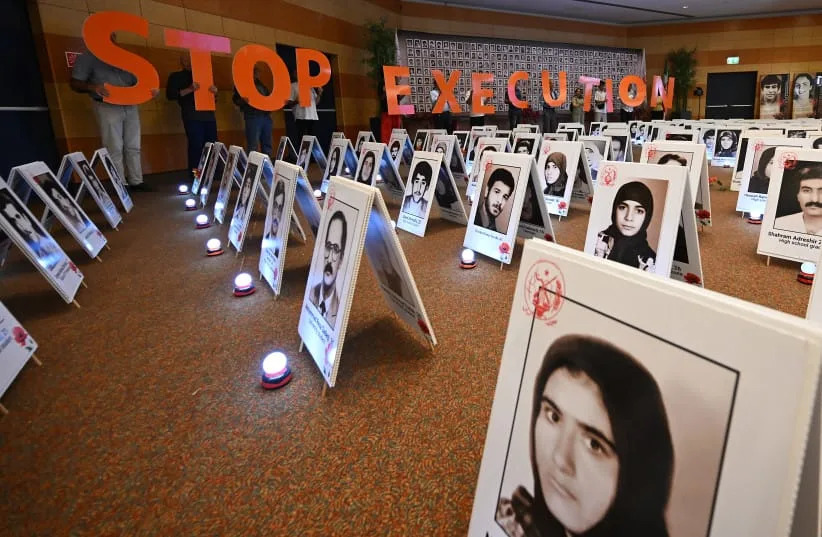
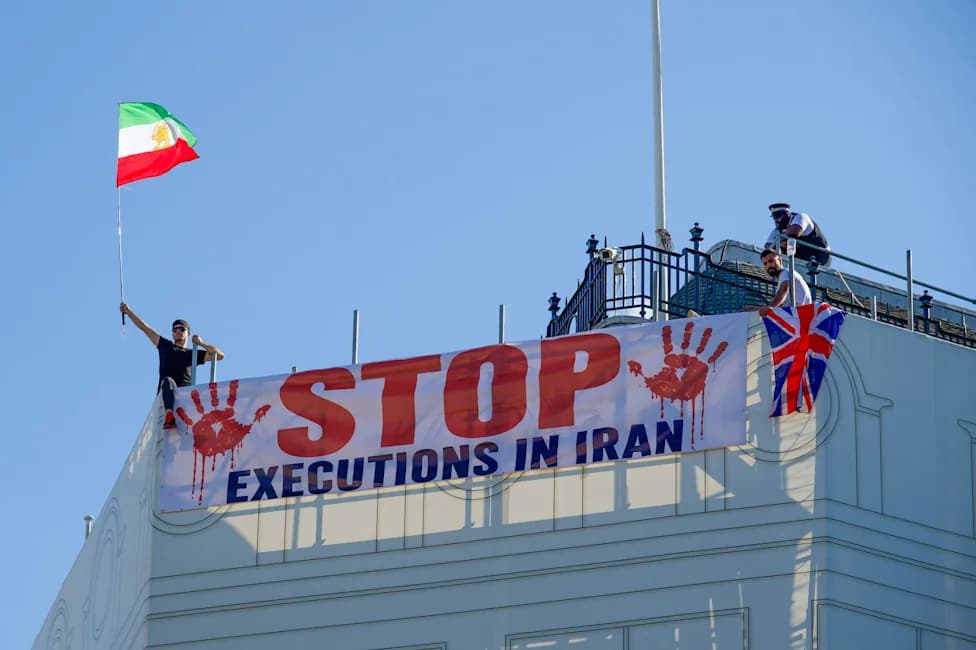
Iranian protesters hold letters spelling out ''Stop Execution'' as they gather at the Ergife Palace Hotel to condemn the silence of Western governments in the face of the growing wave of Iranian political executions, in Rome on July 16, 2026. (credit: Andreas SOLARO / AFP via Getty Images)
"Unjust executions without a fair trial have always been happening here. That's not the shocking part to us. What we hate the most is that now almost everybody knows what's going on in Iran—the crimes committed by the Islamic Republic. Every politician and news outlet is well aware [of] this, but they pretend it doesn't exist because it doesn't align with their interests," the source said.
Amiry-Moghaddam said the conflict has absorbed diplomatic and media bandwidth in ways that benefit the authorities: "The media, they go for the hottest news, and right now it's war. This is one of the reasons why the Islamic Republic actually prefers the current situation, because everything else comes under the shadow of the war." He warned that authorities have mobilized supporters and that structural problems—rising inflation, shortages and economic mismanagement—remain unresolved.
Legal Changes and Detentions
Activists say new national-security legislation passed last year broadened the authorities' ability to impose severe penalties, including death sentences, for alleged cooperation with organizations or media outside Iran. Amiry-Moghaddam estimated that thousands have been arrested since the conflict intensified, and that hundreds may be facing death sentences. He and other rights monitors also report allegations of torture in detention.
Amiry-Moghaddam emphasized the broader chilling effect of executions on freedom of expression: repeated executions, he said, create a climate of intimidation that discourages political activity and online dissent even among those never detained.
What Rights Advocates Urge
Rights activists and IHR argue that human-rights concerns must return to the diplomatic agenda independently of how the military confrontation develops. Amiry-Moghaddam suggested Europe could raise the political cost of repression and executions, while insisting that political change must come from inside Iran.
For now, according to IHR and eyewitness accounts, executions and arrests continue inside Iran with far less global attention than the country's military clash. Observers warn the war may be used as a pretext for further repression and that restoring international focus on human rights is essential to increase the political consequences for Tehran's actions.
Help us improve.