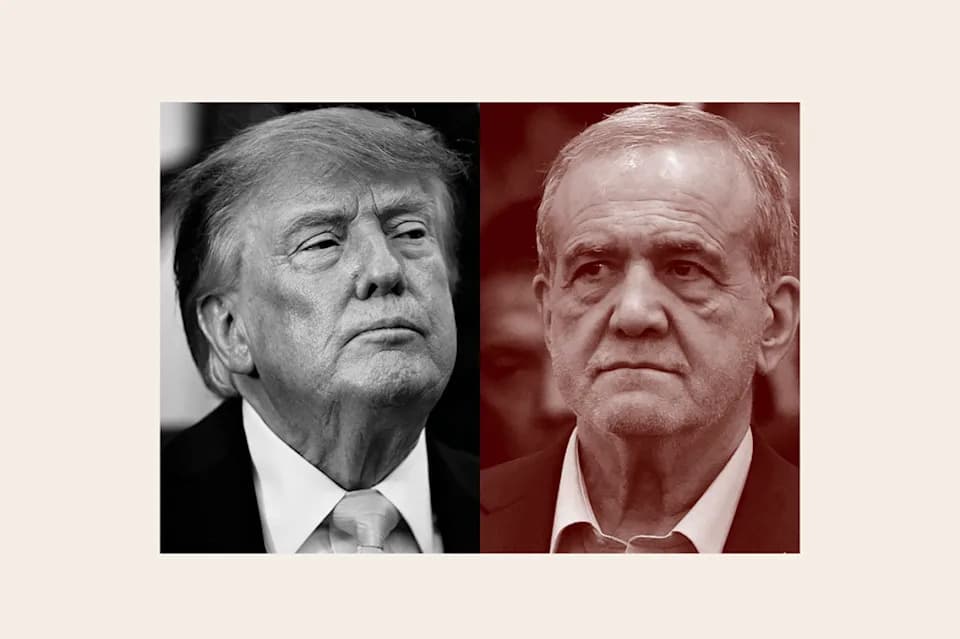
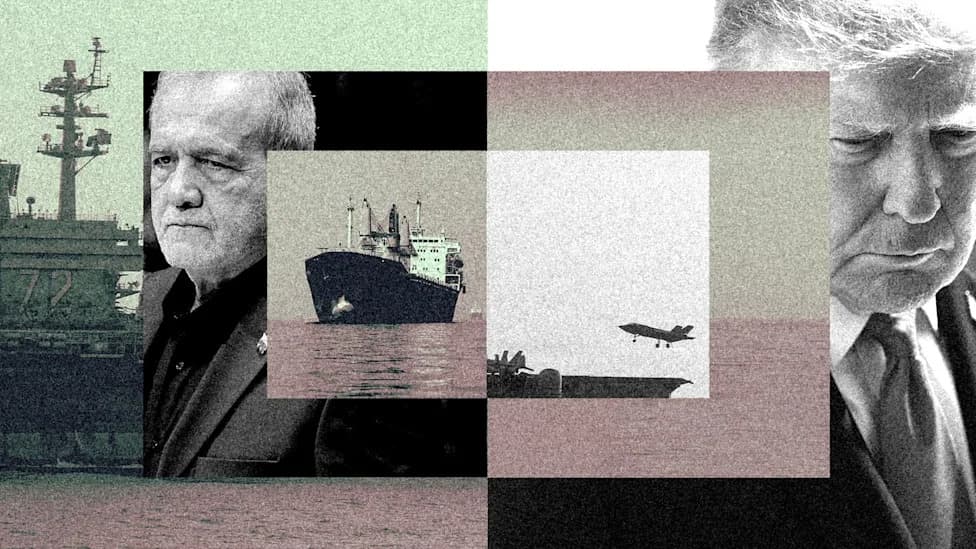
Donald Trump’s handling of the conflict with Iran has followed a recurring pattern of dramatic threats followed by abrupt retreats, prompting ridicule and concerns about strategic coherence. Analysts say the behavior reflects a mix of political calculation, emotional reactions and limited viable military options. Experts including Mehrzad Boroujerdi and Ali Vaez argue that Washington has underestimated Iran’s revolutionary elite, whose internal cohesion and motivations make them difficult to intimidate. With the Strait of Hormuz still closed and missile stock concerns growing, the cycle of bluster and backdown may persist and carry political risks at home.
Groundhog Day for Trump: Repeated Threats Against Iran Followed by Last-Minute Retreats
Illustration: Guardian Design
Being the subject of mockery is one of Donald Trump’s most acute aversions. More than five months after the US launched a military campaign against Iran, the president’s public handling of the conflict has settled into a familiar pattern: loud, apocalyptic threats followed by abrupt reversals when diplomatic openings or political pushback arise.
A Repeating Pattern
Since 28 February, Mr Trump has announced multiple plans for major strikes on Iran only to call them off at the last moment, citing diplomatic pressure, allied appeals or the prospect of renewed talks. Critics and media analysts have dubbed the sequence — ultimatum, threat, escalation, retreat — a kind of Groundhog Day repetition. One montage compiled by US television networks identified more than a dozen public assertions that peace or a decisive victory was imminent, many of which were quickly contradicted by later events.
Political Messaging, Strategic Confusion
Observers say Mr Trump’s shifting messages reveal an absence of a coherent strategy and a lack of sustained understanding of Iran’s political and security elite. Veterans of regional analysis note that a pattern of emotional, high-volume threats followed by pullbacks undermines credibility, complicates alliance management, and risks unintended escalation without delivering clear strategic gains.
"A lot of it is emotional reactions," said Ali Vaez, deputy program director for the Middle East and North Africa at the International Crisis Group. He added that much of the administration’s approach appears reactive rather than rooted in a deliberative policy process.
Why the Threats Often Stall
Practical constraints also play a role. Analysts point to concerns about depleted missile and interceptor stocks and the limited military options available without provoking a wider regional conflict. Negotiations between Iran and Oman over shipping in the Strait of Hormuz have been reported, but no comprehensive deal has reopened the strategically vital waterway, which before the war handled roughly a fifth of the world’s oil shipments.
Understanding Iran’s Leadership
Mehrzad Boroujerdi, vice-provost and political scientist at Missouri University of Science and Technology, argues that Washington has underestimated the motivations and cohesion of Iran’s revolutionary elite. Boroujerdi has spent decades compiling a database of the country’s political elite — roughly 2,700 individuals — and co-authored a 900-page handbook, Post Revolutionary Iran: A Political Handbook, which examines networks of patronage, social origins and career trajectories.
"These leaders often came from modest backgrounds and rose to prominence because of the revolution," Boroujerdi said. "Their personal stakes in the system help explain their resilience under pressure." He cautioned that aggressive rhetoric aimed at top leadership risks hardening resolve rather than producing capitulation.
Public Reaction And Risks At Home
Domestically, the pattern of bluster followed by backdown has invited ridicule from media and political opponents and could have political costs ahead of the US midterm elections. Broadcasters and commentators have highlighted the frequency of Mr Trump’s contradictory statements, turning them into a focal point for criticism of his foreign-policy competence.
What Comes Next
Experts warn the cycle is likely to continue as long as political incentives, limited military options and gaps in understanding the adversary remain. The debate in Washington now hinges on whether diplomacy can produce a durable reopening of the Strait of Hormuz and whether policymakers are willing to invest in the detailed regional expertise required to craft a consistent long-term strategy.
Key experts quoted: Mehrzad Boroujerdi (Missouri S&T), Ali Vaez (International Crisis Group), and commentators including Andrew Neil, who highlighted the repeated public reversals.
Help us improve.