
Scientists warn that proposed orbital data centers, if deployed in large numbers and in sun-synchronous orbits, could form striking ring-like constellations that sweep the sky twice daily at twilight. A preprint by Lawler, Boley and Rein models how these polar‑terminator rings could be visible to ground observers and estimates thousands to tens of thousands of objects might be seen. Exact brightness and visual impact remain uncertain because of limited public data on satellite design, prompting calls for industry transparency and phased deployments to test real-world effects.
Scientists Warn Orbital Data Centers Could Create Giant Sunlit Rings Around Earth
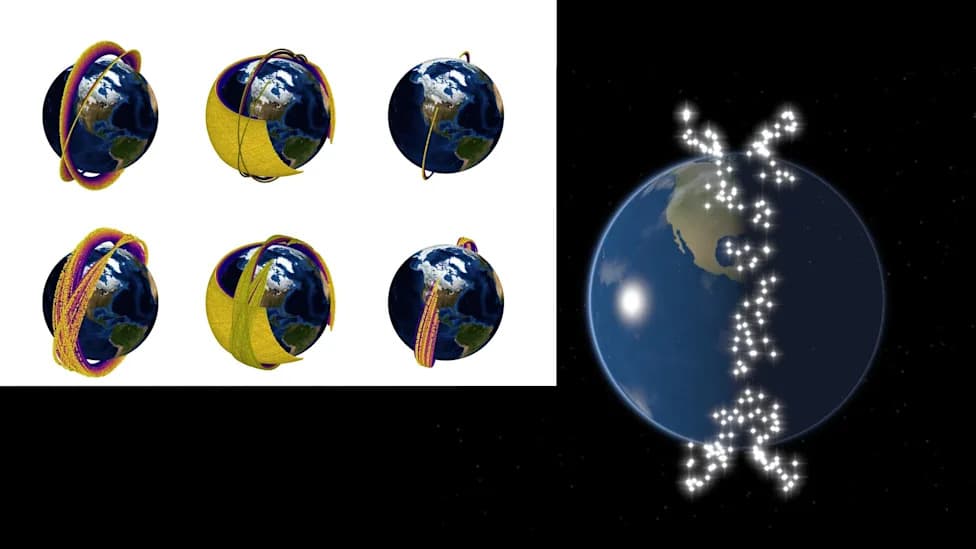
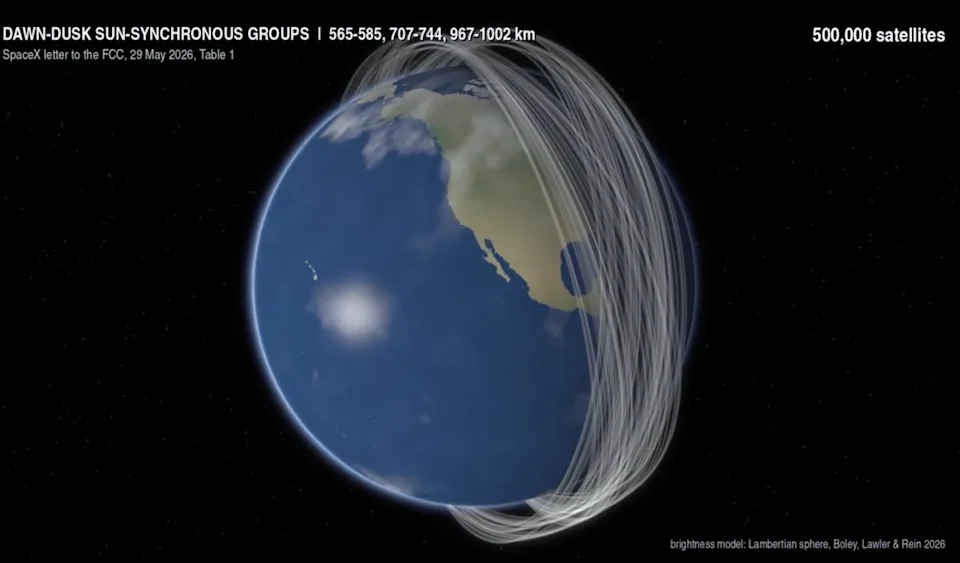
orbital ring - Research paper from Boley, Lawler, Rein/Simulation from Shane Ross
Scientists are raising alarms that plans to place data centers in orbit could produce vast, sunlit rings of satellites that would alter the night sky and increase light pollution. Researchers have simulated how sun-synchronous constellations — designed to remain illuminated along the polar terminator — might look from the ground and warn that they could be visible twice daily at twilight.
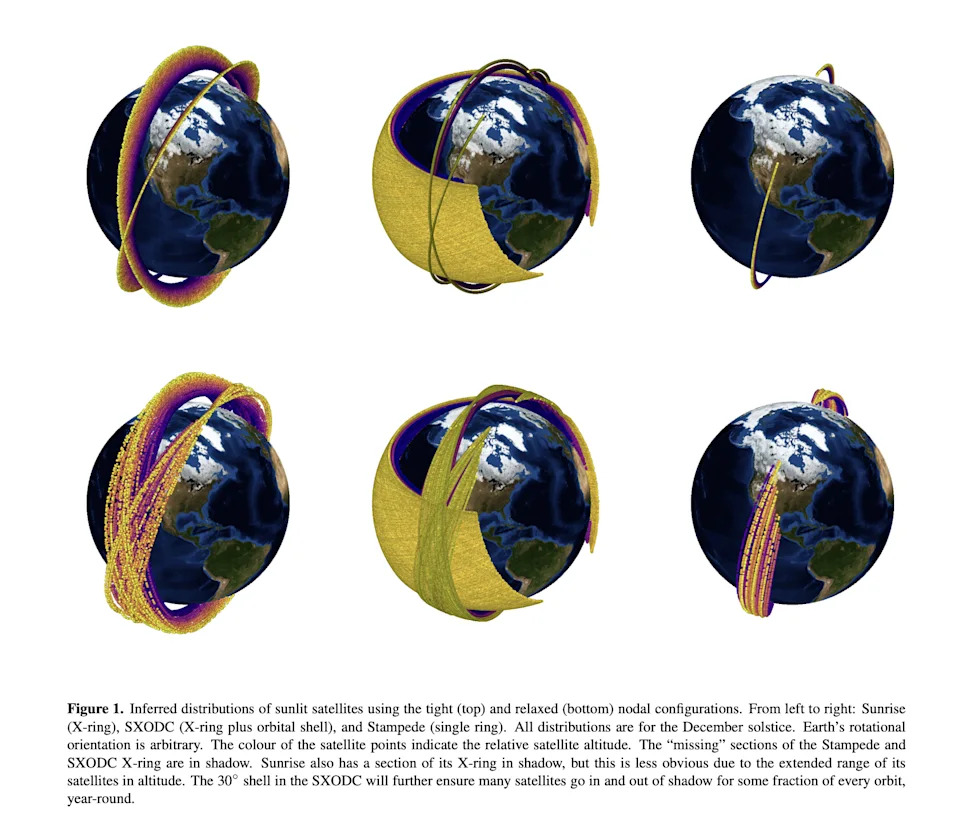
What Researchers Modeled
A preprint titled "Rings in the Sky" by Samantha Lawler (University of Regina), Aaron Boley (University of British Columbia) and Hanno Rein presents simulations of proposed orbital data-center constellations. The authors note that combined industry plans could place up to roughly 1.2 million satellites in orbit — a figure that would dwarf the ~16,000 active satellites today — and that many proposals favor sun-synchronous, polar‑terminator orbits so the satellites stay sunlit.
How Rings Would Form
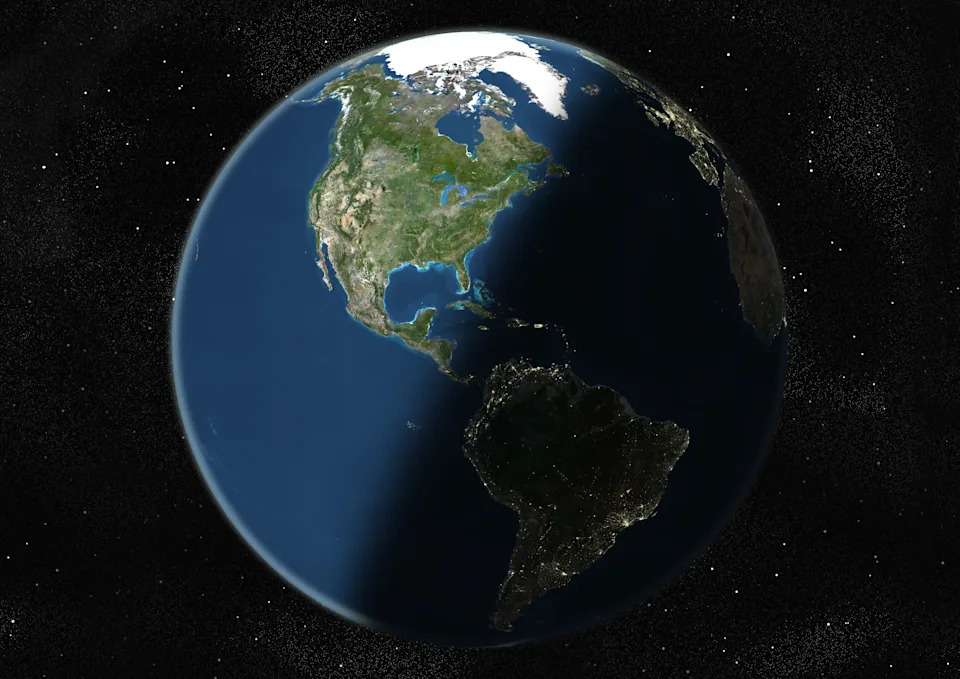
By following the moving day–night boundary from pole to pole, a densely populated sun-synchronous constellation would naturally form one or more ring-like structures encircling Earth. Those rings would sweep across the sky twice each day — around dusk and dawn — and could be especially prominent in winter and at high latitudes, according to the paper and independent simulations by other astronomers.
Brightness, Size and Uncertainty
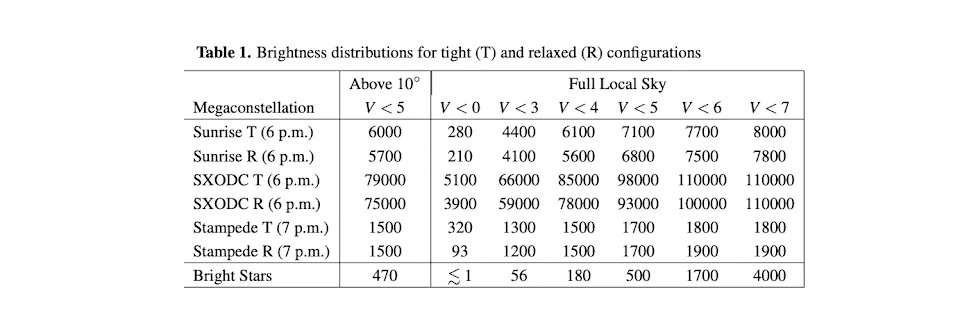
The simulations predict thousands to tens of thousands of visible objects under the authors' simplified brightness assumptions. However, the actual visibility depends strongly on satellite design, surface materials, attitude control and operational practices. The paper uses simplified models (for example, approximating satellites as spheres) because detailed, consistent public data on shape and reflectivity are not available.
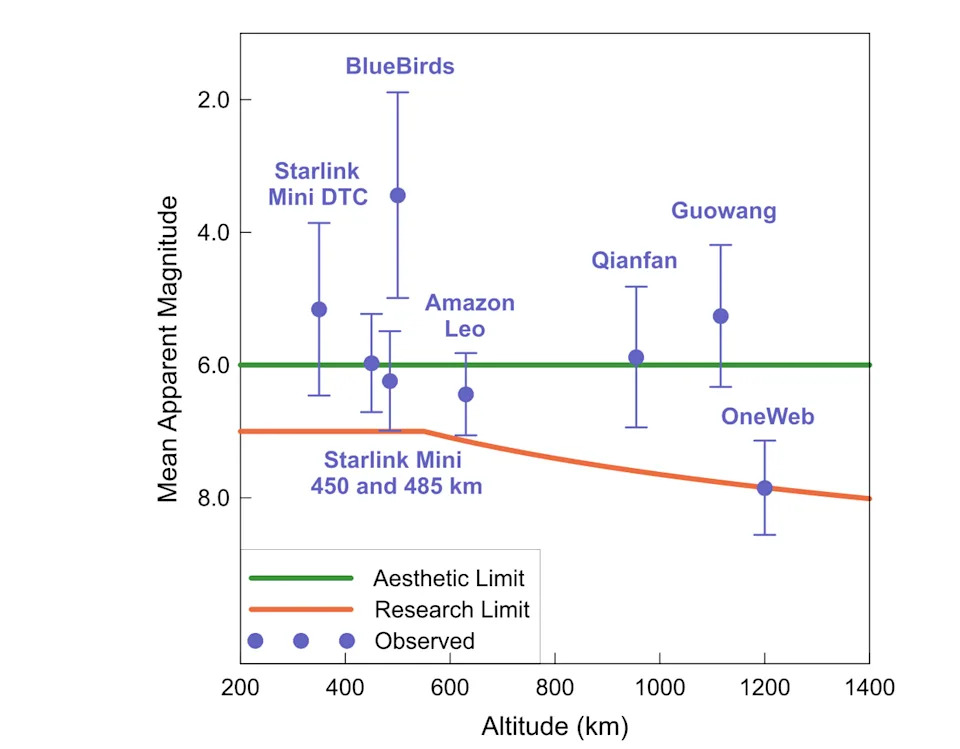
A graph showing the observed brightness of various satellites. Magnitude 6 objects are faint enough to be seen with a naked eye.
"These systems would produce large ring structures with each ring passing through the sky twice a day. The largest impacts are expected to occur during winter, where ring structures could be seen sweeping through otherwise dark skies." — Lawler, Boley & Rein (preprint)
Industry Proposals and Mitigation Efforts
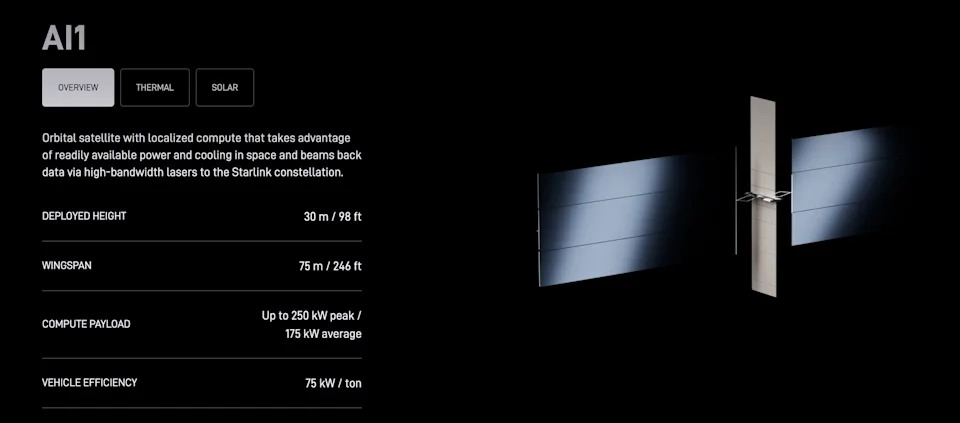
SpaceX, Blue Origin and several startups (including Starcloud and Cowboy Space) have proposed or discussed space-based, solar-powered data centers. SpaceX's first planned orbital data center, StarmindAI1, is reported to span about 246 feet and the company has filed paperwork to operate up to 1 million satellites for its proposed system. The company has also said it plans phased deployments to study environmental effects. Separately, efforts to darken satellites (as with some Starlink tests) could reduce visibility but may not fully eliminate reflections from large solar arrays, radiators and spacecraft surfaces.
Expert Views and Next Steps
Experts such as Hugh Lewis and Shane Ross warn that even modest modeling uncertainties could underestimate visual impact; consistent orientation of large, multi-surface satellites to avoid reflections is difficult in practice. The authors and other astronomers call for greater industry transparency, publicly shared design details, and phased, data-driven testing to validate environmental models and reduce unintended impacts on astronomy and the night sky.
Bottom line: Orbital data centers could create persistent, sunlit rings visible from Earth if deployed at large scale. The scale and brightness are uncertain, but the potential for significant change to night-sky visibility has prompted calls for careful study, transparency and mitigation before large-scale deployment.
Help us improve.





















