Two lion cubs, Ben Tzur and Uri—two of six cubs rescued after being smuggled into Israel—were transferred to Animal Defenders International in South Africa after a roughly 30‑hour journey. Ben Tzur was found tied to a tree and Uri was discovered in poor health; both were initially housed at Hai Park in Kiryat Motzkin. Israeli officials said the case highlights a larger illegal wildlife‑trafficking problem, with more than 560 illegally traded animals seized in 2025. Prosecutors urged using money‑laundering laws and other legal tools to target criminal networks and the financial flows behind the trade.
Rescued Lion Cubs Ben Tzur and Uri Relocated to South African Sanctuary as Officials Target Wildlife Trafficking
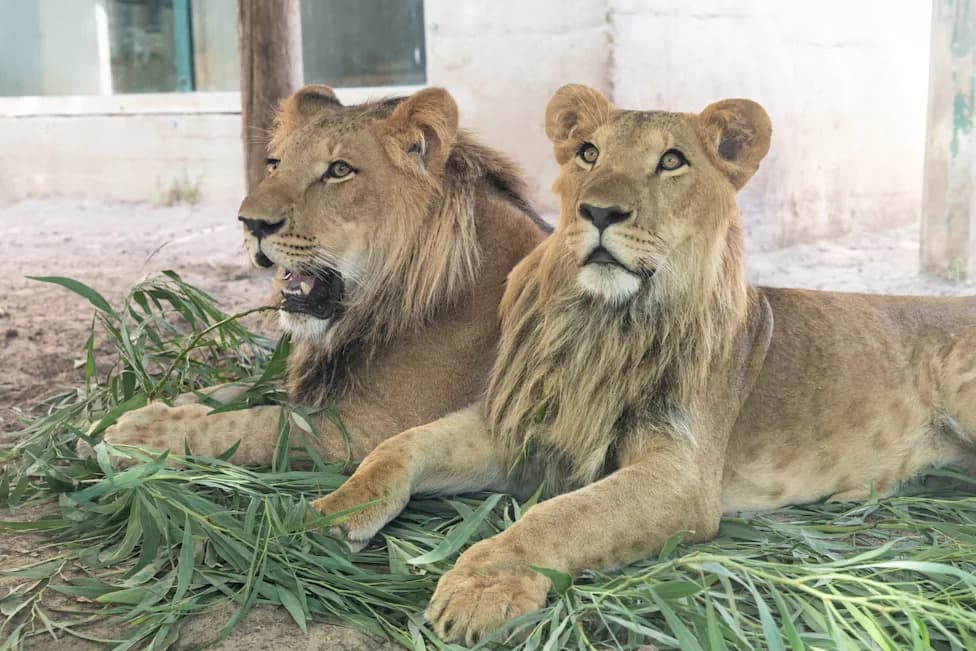
Lion cubs Ben Tzur and Uri. (photo credit: Yip Sitton Hai Motzkin Park)
Two lion cubs rescued after being illegally trafficked into Israel were flown to a large big‑cat sanctuary in South Africa this week, the Israel Nature and Parks Authority (INPA) announced.
The cubs, named Ben Tzur and Uri, arrived at Animal Defenders International (ADI) following an approximately 30‑hour transfer that included a stopover in Germany. ADI staff released them into a new, species‑appropriate enclosure on Wednesday.
Ben Tzur and Uri are two of six cubs recovered in 2025 after being smuggled into Israel and later found in areas under the jurisdiction of the Palestinian Authority. The cubs were initially cared for at Hai Park in Kiryat Motzkin while authorities arranged long‑term placement.
According to INPA, Ben Tzur—the largest of the group—was discovered tied to a tree. Uri, the youngest cub, was found in poor health by Kafr Qassem police and later stabilized before transfer.
Authorities Highlight Broader Trafficking Problem
INPA officials welcomed ADI’s cooperation and warned that these high‑profile rescues expose only a fraction of a much larger criminal trade. "The captured lion cubs have indeed captured public attention due to their unusualness, but they are only the tip of the iceberg of the disturbing criminal phenomenon," said Ben Rosenberg, Director of the Wildlife Protection Division at INPA.
Rosenberg noted that in 2025 alone, authorities seized more than 560 wild animals that had been traded illegally, including reptiles, monkeys, birds and marine species.
Shai Peretz, Chief Prosecutor at INPA, described wildlife trafficking as a "cruel criminal phenomenon" driven by organized networks and substantial profits. Peretz emphasized that enforcement must target the financial infrastructure that sustains the trade as well as the traffickers themselves.
"The illegal trade in protected wildlife and protected natural values does not amount to harming the animals - it constitutes an economic engine for criminal elements, including criminal organizations and crime families," Peretz said. She pointed to the Money Laundering Prohibition Law, which now recognizes wildlife trafficking offences and can be used alongside conservation statutes to disrupt criminal proceeds.
Authorities say the strengthened legal framework gives investigators additional tools to dismantle the financial networks behind wildlife crime and to pursue those profiting from the illicit trade in lion cubs and other protected species.
What’s next: ADI will continue to provide veterinary care and rehabilitation, and INPA and its partners will press criminal investigations and legal actions against those involved in the trafficking networks.
Help us improve.