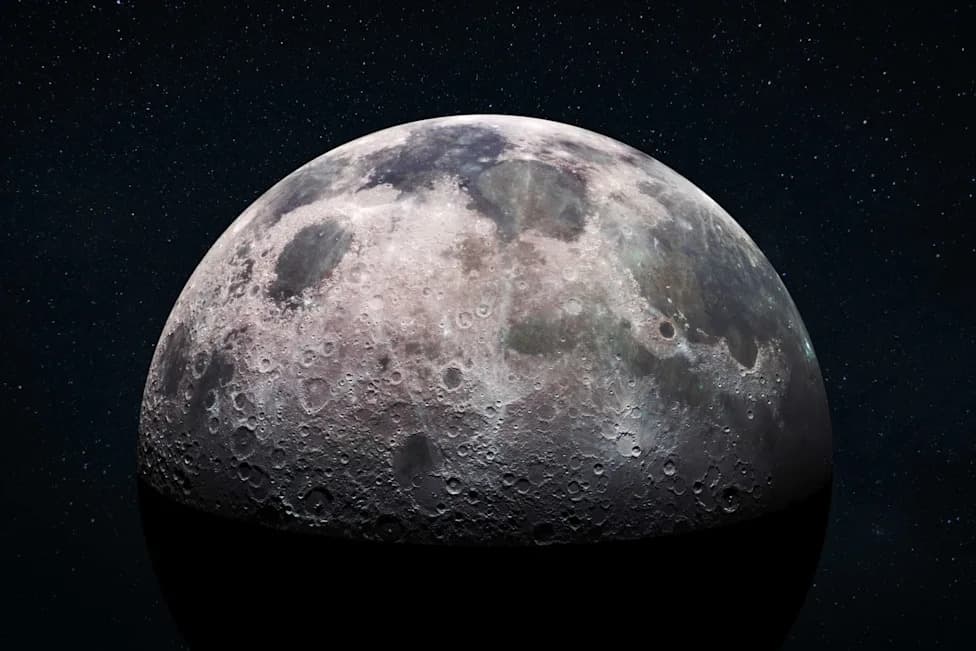
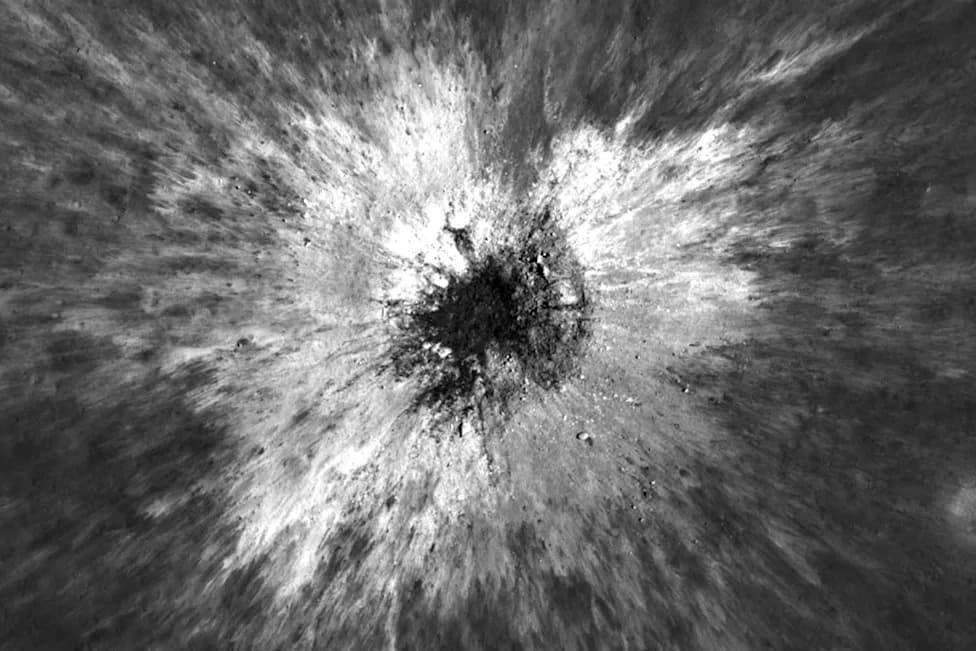
South Korea's Danuri spacecraft released before-and-after images showing where a SpaceX Falcon 9 upper stage struck the Moon on Aug. 5, 2026, near the Einstein Crater. SpaceX reports the stage impacted at about 5,400 mph (8,700 kph); the stage originated from a January 2025 lunar mission. NASA's Lunar Reconnaissance Orbiter will image the site next week to collect higher-resolution data to assess the new crater and ejecta.
First Images Reveal Where SpaceX Falcon 9 Stage Struck the Moon Near Einstein Crater
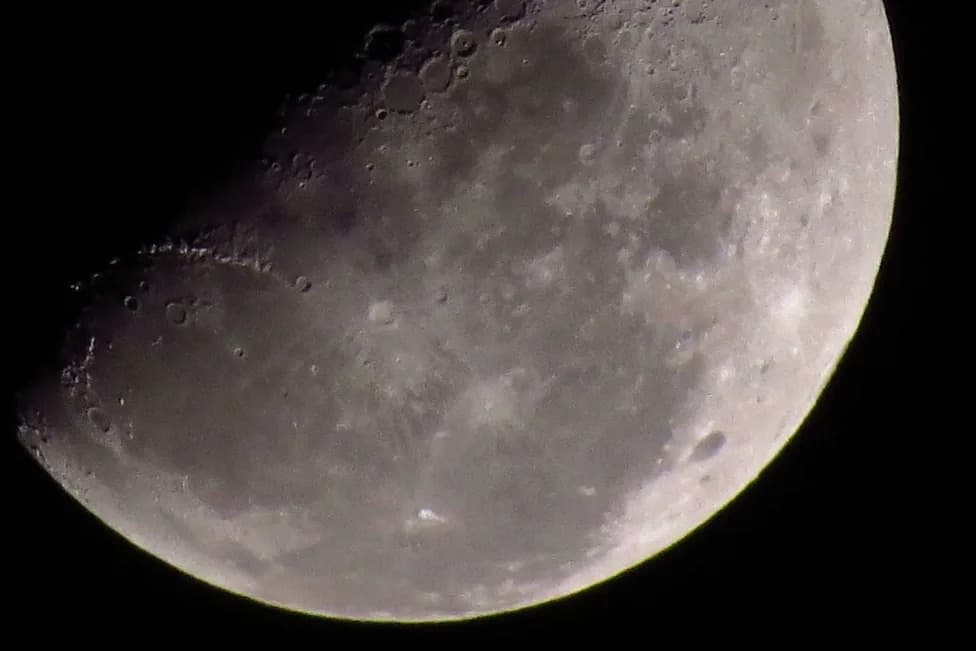
Moon in August 5, 2026Credit: Saulo Dias/ZUMA Press Wire/Shutterstock
South Korea's Danuri lunar spacecraft has released the first before-and-after images of the site where a SpaceX Falcon 9 upper stage struck the Moon on Aug. 5, 2026. The Korea Aerospace Research Institute published the photos on Aug. 6, providing the first visual confirmation of the impact near the Einstein Crater.
What the Images Show
The Danuri images show a fresh disturbance on the lunar surface consistent with a high-speed impact. SpaceX says the upper stage came from a January 2025 mission that delivered a private lunar lander and had remained in a long-lived orbit until solar activity and lunar gravity altered its trajectory. The company estimates the stage slammed into the Moon at roughly 5,400 mph (about 8,700 kph).
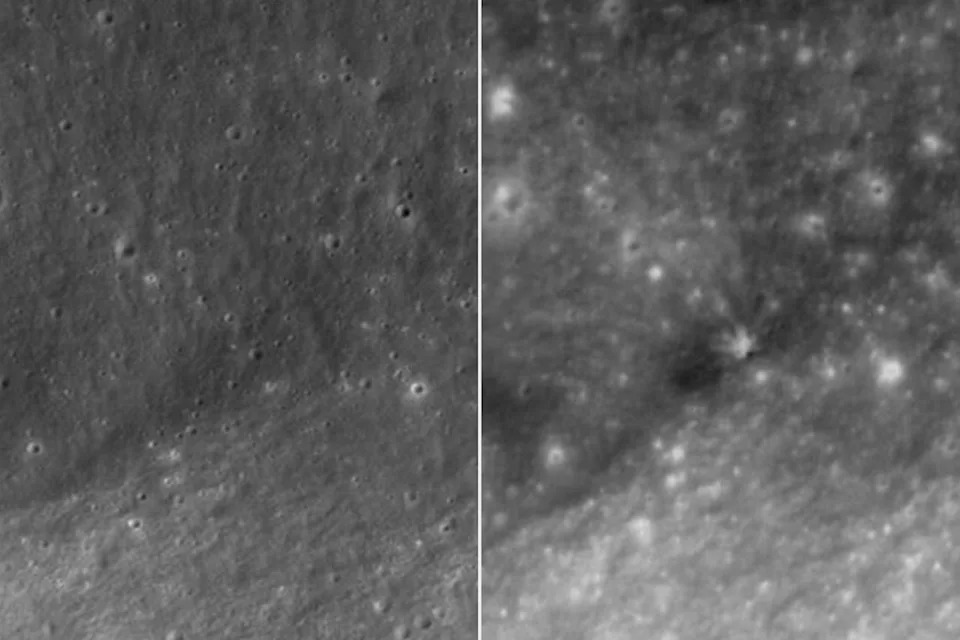
This combination of images provided by NASA and the Korea Aerospace Research Institute shows an area of the moon's surface before, left, Oct. 1, 2015, and after, right, Wednesday, Aug. 5, 2026, a SpaceX rocket segment collided with the moonCredit: NASA, Korea Aerospace Research Institute via AP
Follow-Up Observations
NASA's Lunar Reconnaissance Orbiter (LRO) is scheduled to image the same site next week to collect higher-resolution data. Scientists hope LRO's observations, combined with Danuri's before-and-after shots, will help determine the crater's size, map the ejecta plume, and improve models of how high-speed impacts alter lunar regolith.
Context and Safety
Researchers had predicted the impact would produce a visible flash and a plume of ejecta — dust, regolith and other debris — and that a new crater would likely appear near Einstein Crater. Agencies including NASA have confirmed the collision posed no hazard to people or satellites on Earth.
Details: The impacted Falcon 9 stage is reported by SpaceX to measure about 230 feet tall and 12 feet wide. Danuri was launched to lunar orbit in 2022 from Cape Canaveral and has been returning imagery and science data since entering orbit.
With Danuri's images publicly available and LRO set to follow up, scientists will compare datasets to refine estimates of the impact energy, crater morphology and how such events redistribute surface material. The event offers a rare opportunity to study a fresh artificial impact on the Moon in near real time.
Help us improve.