Researchers tagged 42 sperm whales near the Lofoten Islands and found the animals release bubbles while napping to avoid unintentionally floating to the surface. Whales resting near the surface released about 11 bubbles per 10–15 minute nap, compared with three to four releases for whales ascending from deep dives. The tags also revealed three distinct resting patterns and raised questions about whether whales sleep with part of their brain alert or consciously control bubble release.
Sperm Whales Blow Bubbles to Stay Submerged While Napping, Study Finds
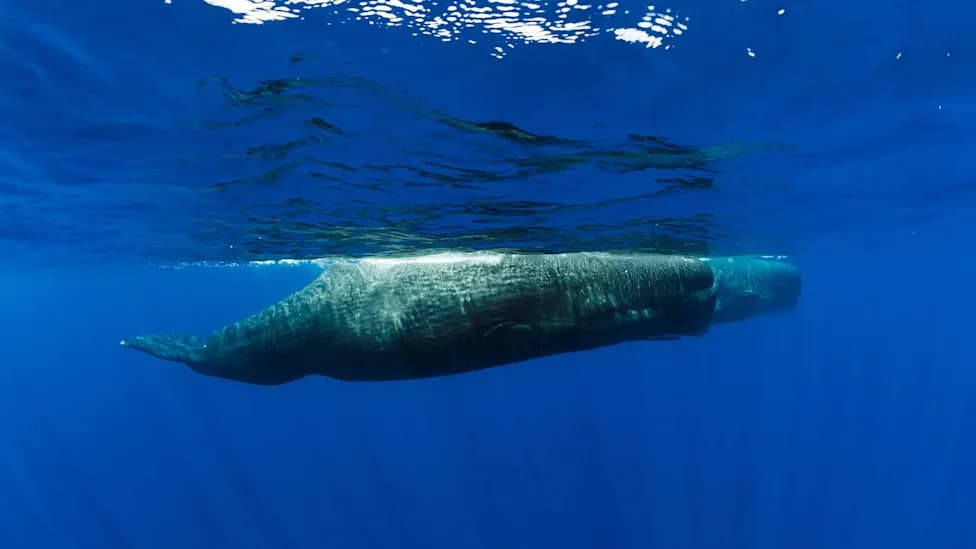
Photo Credit: iStock
Researchers working off the coast of Norway have discovered that sleeping sperm whales deliberately release bubbles to prevent themselves from drifting to the surface during short naps. The finding offers new insight into how one of the ocean's largest mammals manages rest while balancing buoyancy and the need to breathe.
How the Study Was Done
Teams from the University of St. Andrews (Scotland) and the University of Neuchâtel (Switzerland) attached suction-cup tags to 42 sperm whales around the Lofoten Islands. The devices recorded depth, body orientation and acoustic signals, including the sound of bubbles emitted from the whales’ blowholes.
Main Findings
Analysis showed a clear pattern: whales resting close to the surface released bubbles far more often during a short 10–15 minute nap—about 11 bubble releases on average—while whales ascending from deep dives released bubbles only three or four times in similar rest episodes. Researchers also identified three recurring resting patterns: a brief head-down dip before turning upward, a gentle tail-first sink of roughly 26 ft (8 m), and dozing while ascending from dives deeper than about 656 ft (200 m).
“This means they need to blow fewer bubbles to stop themselves from floating upwards,” said Professor Patrick Miller of the University of St. Andrews, a co-author of the study.
Why Bubbles Matter
Sperm whales have very large heads—nearly one-third of their body length—filled with oil, waxy tissues and air spaces that affect buoyancy. As whales dive, lung air compresses, changing buoyancy at depth; releasing bubbles provides a simple mechanical way to fine-tune their position near the surface so they can rest without being pushed up by buoyant forces or disrupted by surface waves.
Open Questions
Despite the new insights, important questions remain. Scientists do not yet know whether sperm whales sleep with one hemisphere of the brain active (as some dolphins do) or whether bubble releases are conscious adjustments or reflexive actions triggered by sensing their proximity to the surface.
“Blowing bubbles to make sure they don't come too near the surface requires the whales to sense their environment and realize that they are coming too close to the surface,” said Noémie Freymond, lead author from the University of Neuchâtel.
Broader Significance
The study highlights how modern tagging technology can reveal underwater behaviors that are invisible from the surface, improving researchers’ ability to interpret movement patterns and the environmental conditions whales need to rest and thrive.
Help us improve.