Turritopsis dohrnii, often called the immortal jellyfish, can revert from an adult medusa back to a juvenile polyp through cellular transdifferentiation, effectively restarting its life cycle within about 24–48 hours. While lab populations could theoretically persist indefinitely, most individuals in the wild are lost to predators and environmental hazards. Scientists consider this species a unique model for studying cellular plasticity and regeneration, though it does not imply practical human immortality.
How the "Immortal" Jellyfish Resets Its Life — And What That Really Means
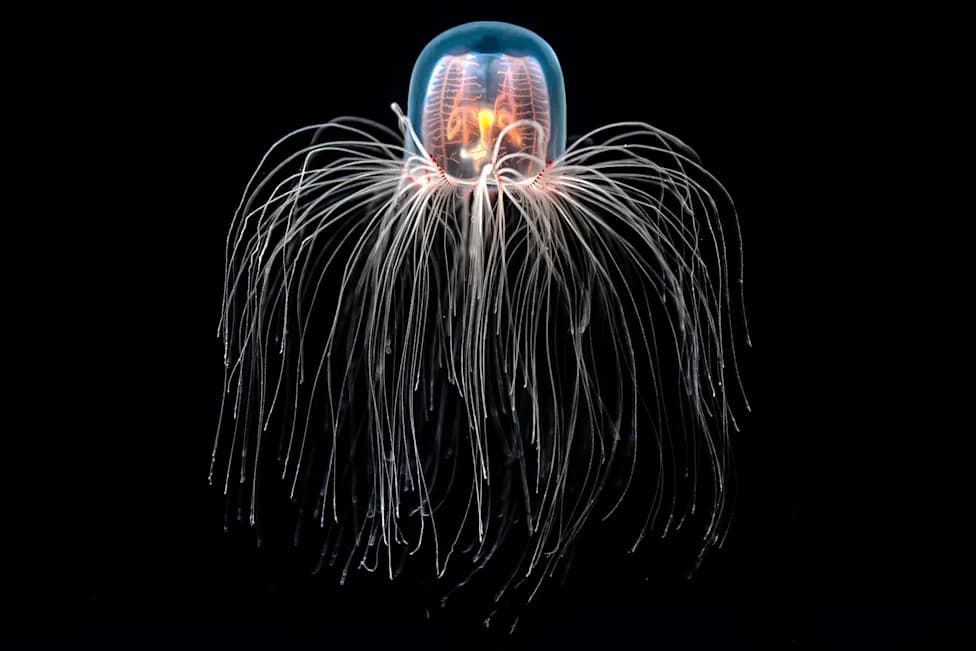
Turritopsis dohrnii, commonly known as the "immortal jellyfish," is a species of jellyfish that has a unique ability to revert its cells back to their earliest form, essentially reversing the aging processCredit: Yiming Chen/Getty
Tiny and translucent, Turritopsis dohrnii has earned the nickname "immortal jellyfish" because it can revert from an adult medusa back to an earlier, juvenile polyp stage instead of dying — essentially restarting its life cycle.
What Happens and How
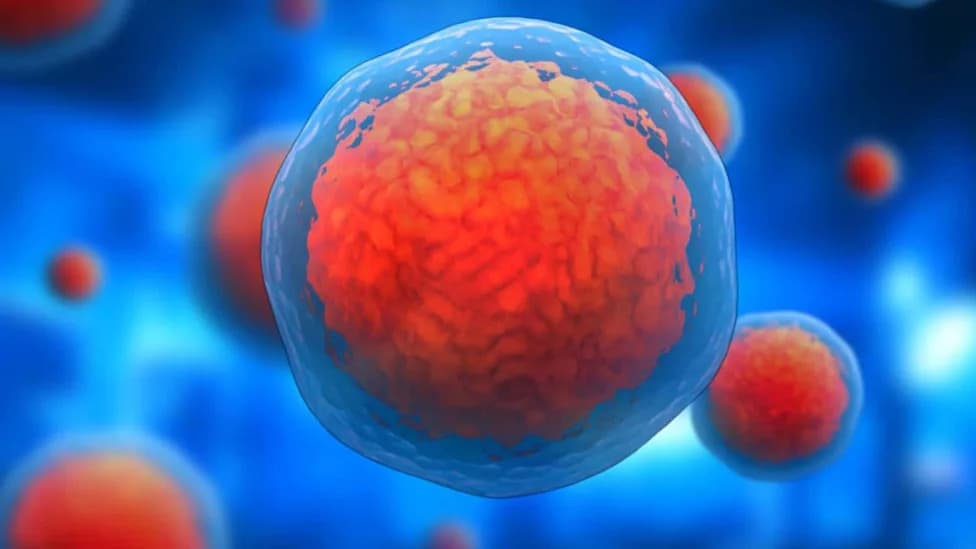
This reversal is driven by a process called cellular transdifferentiation, in which one type of mature cell transforms into another. When a Turritopsis is injured, starved or otherwise stressed, it can collapse and sink as if dying, then contract into a compact mass. Over roughly 24–48 hours it buds off a new polyp that carries the same genome as the adult that preceded it.
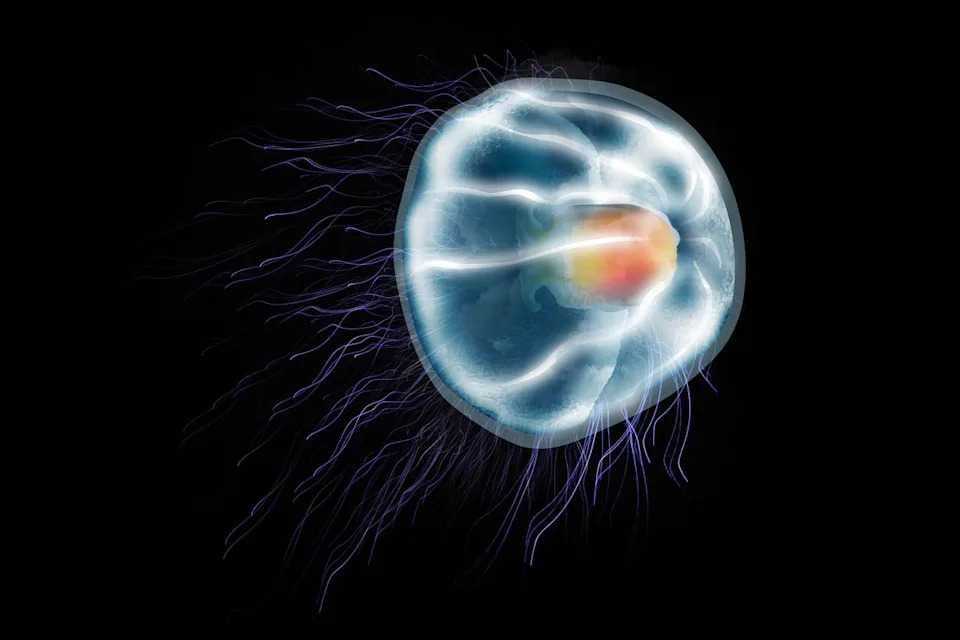
Turritopsis dohrnii jellyfish, immortal jellyfish in the oceanCredit: Alamy
"Turritopsis is unique, because when faced with unfavorable conditions — and I mean high temperature, physical cutting, starvation, chemicals in the water, you name it — when you try to kill the jellyfish, it doesn't die," said Maria Pia Miglietta, associate professor and marine biologist at Texas A&M University.
Where It Lives and How Common It Is
Individuals measure only a few millimeters across (less than a quarter of an inch). Scientists recognize eight accepted species in the genus Turritopsis, but so far only T. dohrnii is known to show this apparent life-cycle resetting. These tiny jellies have been recorded from the Mediterranean and the Atlantic to coastal waters off Japan, Panama and Brazil.
Lab Versus Wild
In controlled laboratory conditions, populations of Turritopsis can theoretically cycle indefinitely, since they avoid the usual terminal decline after reproduction. In the natural ocean, however, most individuals fall prey to predators or environmental hazards and do not live forever despite their reversal ability.
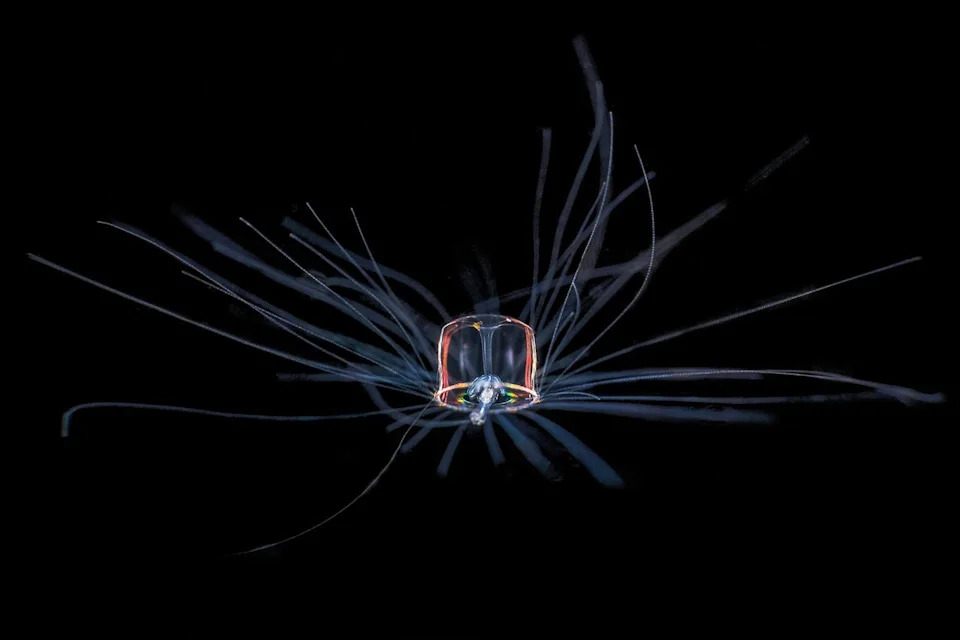
Immortal jellyfish, Turritopsis dohrnii, at night in the Pacific Ocean near the PhilippinesCredit: Alamy
Why Scientists Care
Researchers are fascinated by Turritopsis because its regeneration and cellular plasticity challenge assumptions about life-cycle irreversibility in animals. Lisa-Ann Gershwin, a jellyfish specialist, described the animal as "exquisite" and emphasized that its delicate appearance belies a remarkable capacity to regenerate.
Limits And Context
Although the jellyfish's ability is extraordinary, it is not the same as biological immortality in the strictest sense: most individuals still die from predation, disease or environmental change. The mechanism does, however, provide a valuable model for studying cellular reprogramming and regeneration across species.
Help us improve.