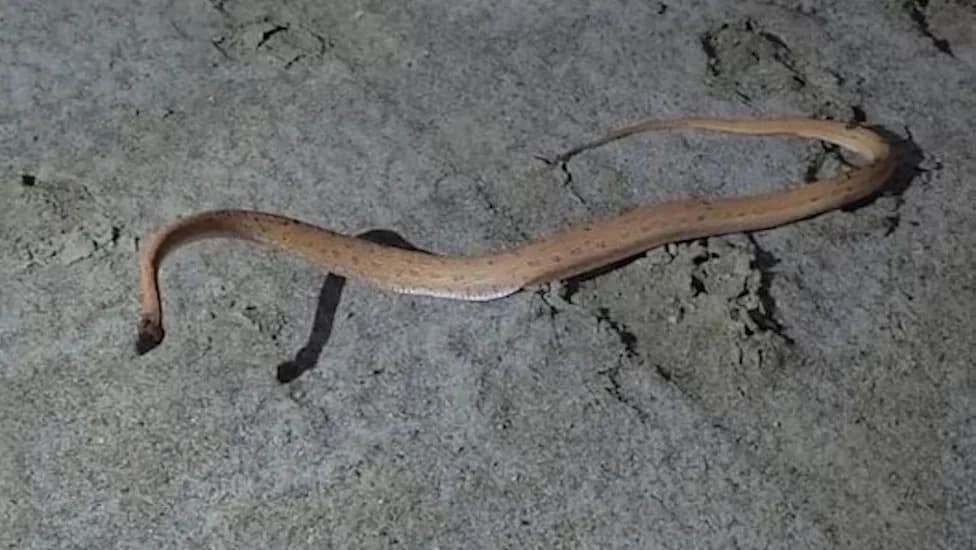
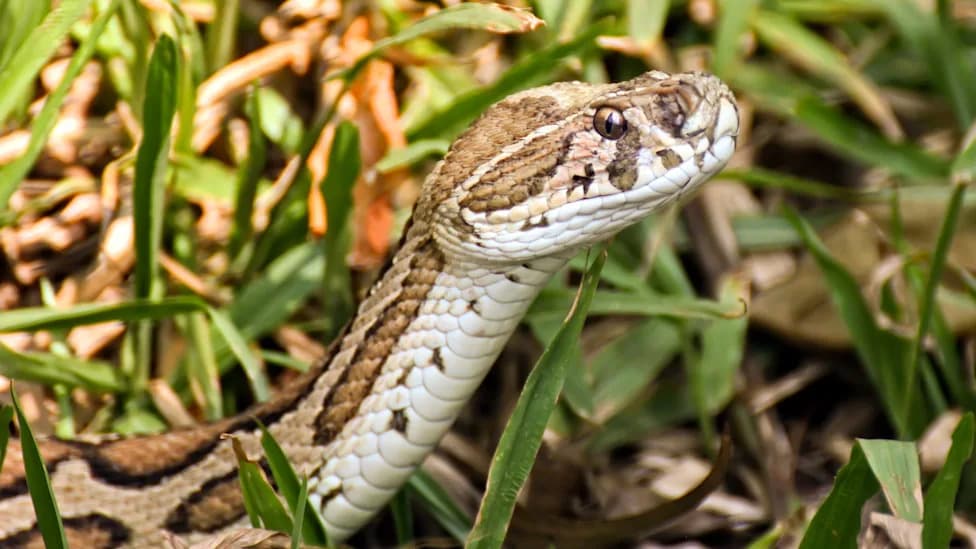
A pale snake filmed beside the Teesta River near Likhuvir, Kalimpong, may be an albino Indian rock python; confirmation by the Forest Department could make it the first documented wild record in India. Albinism prevents melanin production, making animals unusually conspicuous and vulnerable. Indian rock pythons are non-venomous constrictors that can reach about 20 feet and are protected under Schedule I of India’s Wildlife Protection Act, 1972. Conservationists urge monitoring of the roadside corridor to reduce risks from traffic, crowds and development.
Rare Albino Indian Rock Python Filmed Along Teesta River — Potential First Wild Record in India
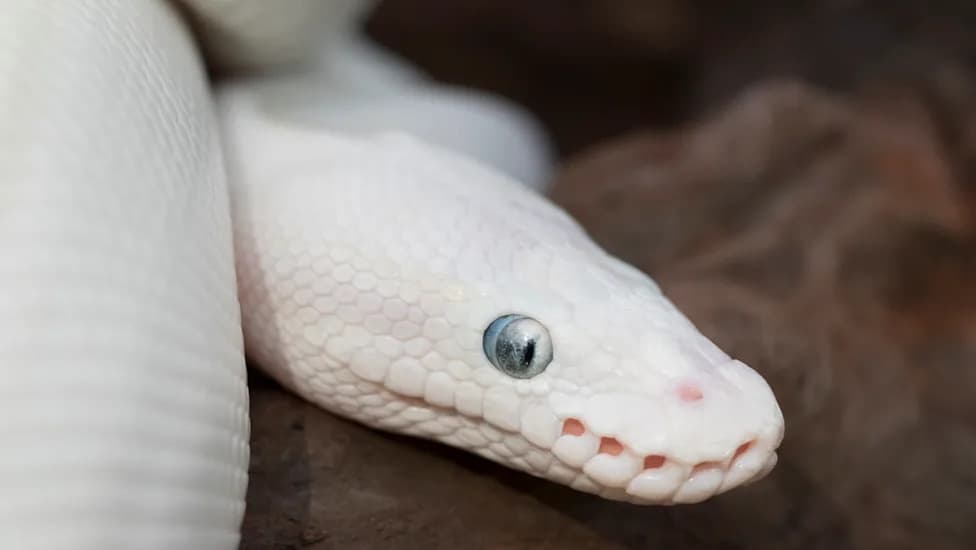
Photo Credit: iStock
A striking pale snake was filmed slithering beside the Teesta River at Likhuvir, near Kalimpong, drawing attention from local residents and wildlife specialists. Early reports identify the animal as a possible albino Indian rock python; if confirmed by authorities, this could be the first documented wild record of an albino individual in India.
Location and Identification
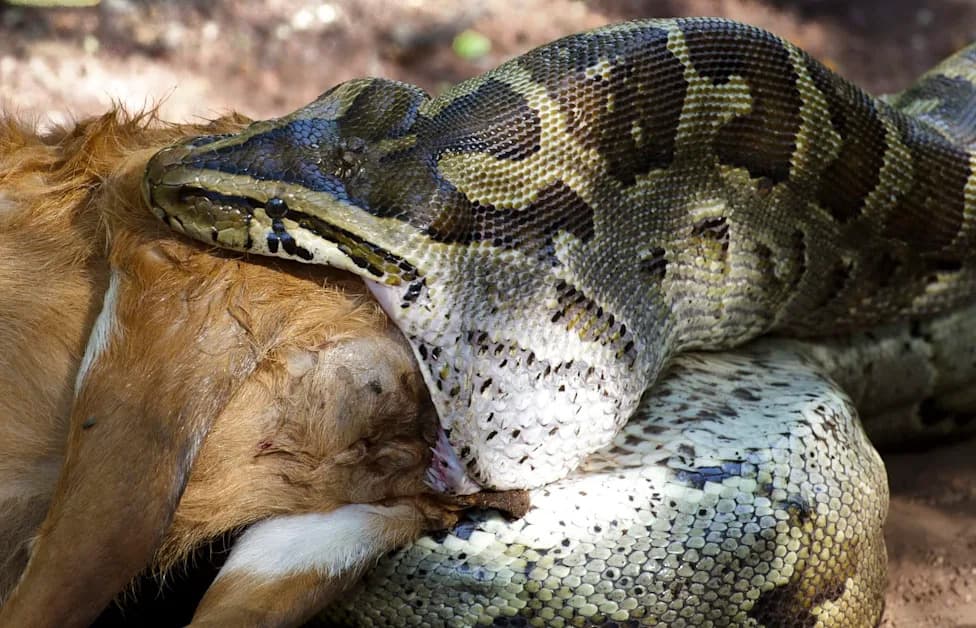
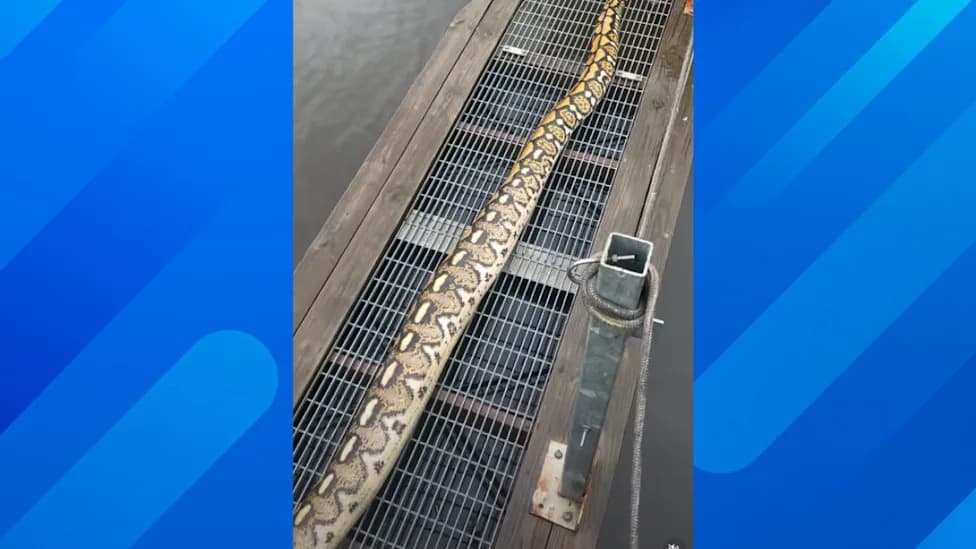
According to coverage by ETV Bharat, the snake was seen along National Highway 10 (NH10) in the Teesta basin, a region where Indian rock pythons are commonly found. However, an all-white—or albino—individual is extraordinarily rare in the wild. Indian rock pythons are non-venomous constrictors that can reach lengths of roughly 20 feet and subdue prey by coiling and squeezing.
What Is Albinism?
Herpetologist Shyamaprasad Pandey explained to ETV Bharat that albinism is "an extremely rare genetic condition that prevents the body from producing melanin pigment." This lack of pigmentation produces the pale or white appearance that makes an animal more conspicuous in its natural habitat.
Shyamaprasad Pandey: "This white colouration makes survival in the wild incredibly difficult. Lacking natural camouflage, they cannot blend into their surroundings to hide, leaving them highly vulnerable to detection by predators or humans."
Conservation and Risk
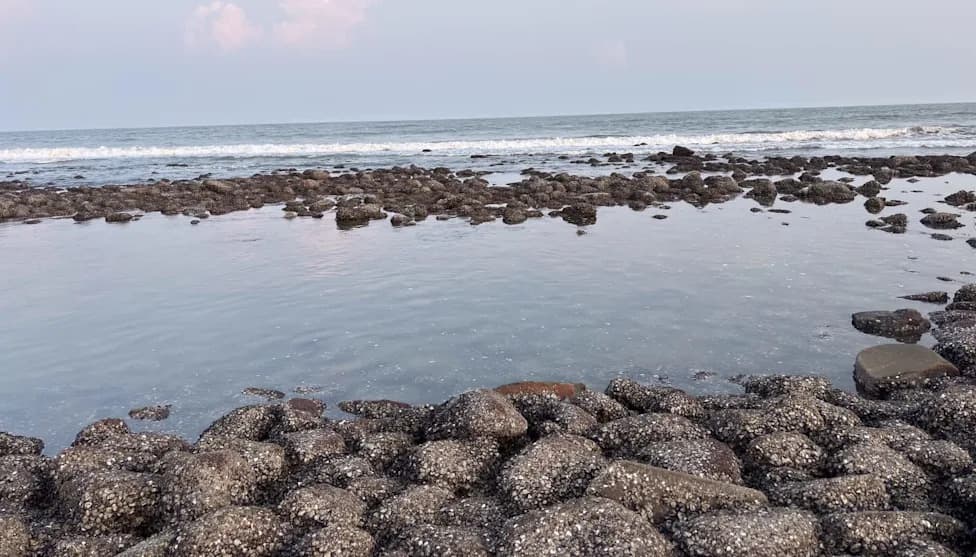
The sighting occurred in a roadside wildlife corridor that links hill areas with the plains, a landscape where animal movement intersects with traffic, development and human travel. As the BBC has noted, increasing habitat pressure and expanding human activity raise the likelihood of encounters between people and wild animals. For an albino python, these risks are amplified: the lack of camouflage can attract cameras, crowds and vehicles, and make the animal easier to spot by potential predators or poachers.
The Indian rock python is protected under Schedule I of India’s Wildlife Protection Act, 1972, which gives the species the highest level of legal protection. Local conservationists have urged the Forest Department to monitor the area closely, assess the snake’s physical condition, and manage public access to reduce stress on the animal.
Verification and Next Steps
Officials would need to verify the animal’s identity—through direct observation, photographic evidence, or, if feasible, physical examination and genetic testing—to confirm albinism. If authenticated, the record would provide important data for researchers studying how rare genetic variants persist in landscapes increasingly shaped by human activity.
Sources: ETV Bharat reporting and local expert statements; contextual reporting on habitat pressure by the BBC.
Help us improve.