
Iran has tightened internal security and stepped up enforcement by morality police, particularly in Tehran, amid unresolved tensions with the U.S. and Israel. Authorities have pursued rapid prosecutions and carried out executions tied to January’s nationwide protests, while the U.N. and rights groups warn that many more face the death penalty. Widespread internet shutdowns, media controls and closures of businesses and cultural venues accompany a visible security presence designed to deter further dissent.
Iran Tightens Internal Security Amid Lingering Tensions With the U.S. and Israel
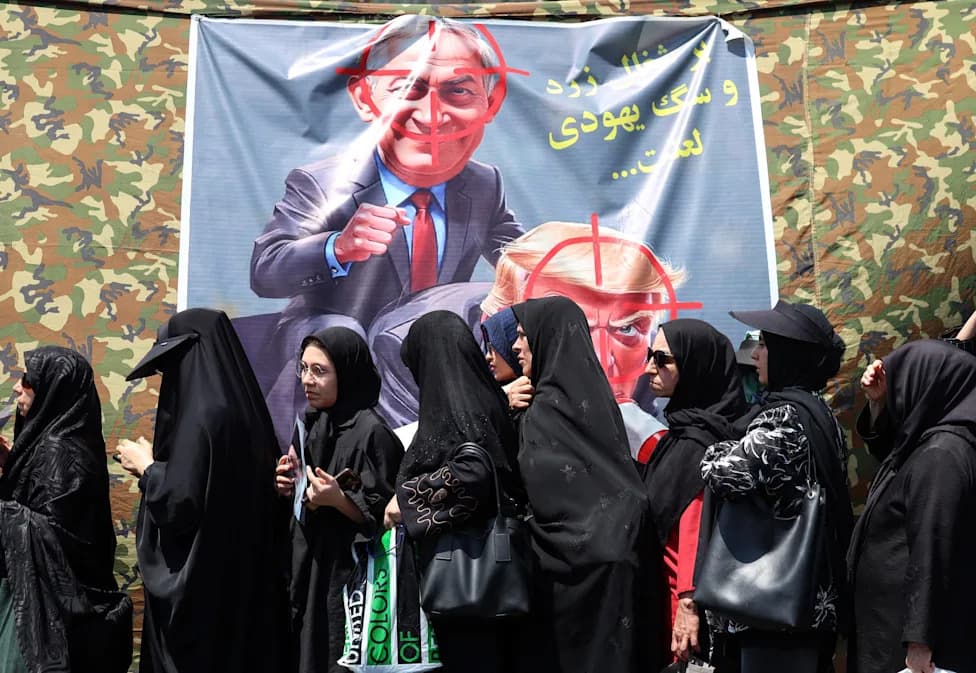
Shia Muslim devotees walk past a banner calling for revenge against the US president and the Israeli prime minister during an Arbaeen mourning procession in Tehran on August 4, 2026 [AFP]
Iranian authorities have intensified internal security measures nationwide, especially in Tehran, as diplomatic outcomes remain uncertain amid ongoing tensions with the United States and Israel. In recent weeks security forces and the morality police have increased arrests, fines, business closures and other penalties for behaviour the state deems immoral or un-Islamic.
Crackdown and Enforcement
Clerical, political and security officials have repeatedly called for unity on the 'internal front,' urging citizens to stand together against what they portray as foreign threats while showing reduced tolerance for dissent. The morality police have reinforced enforcement of the compulsory hijab, prompted temporary or permanent closures of cafes, gyms and cultural venues, and stepped up pressure on students, lawyers, artists and other groups.
Protests, Trials and Executions
The country remains overshadowed by the nationwide anti-establishment protests in January. The government reports 3,117 people were killed during that unrest, with most deaths occurring on the nights of January 8–9; it rejects higher casualty estimates circulated by rights groups and foreign officials. Authorities have pursued rapid prosecutions for those accused of involvement in the unrest, combining arrests, asset freezes and death sentences in some cases.
On July 28, authorities publicly hanged two young men in Isfahan's Alikhani Square after convicting them on charges including 'moharebeh' (often translated as 'waging war against God') and 'corruption on Earth,' allegations linked to arson and the deaths of security personnel. Relatives and residents who attempted to intervene were dispersed by force; circulating videos appear to show gunfire, though the judiciary denied reports of additional deaths.
Rights groups and U.N. officials report a wider pattern: U.N. human rights chief Volker Türk said at least 56 people have been executed on national security-related charges since March 19, including 27 connected to the January protests, and warned that more than 100 people face the risk of execution. Oslo-based Iran Human Rights (IHR) has reported a sharp rise in executions, noting a 68% increase in 2025 to more than 1,600 — the highest annual total since 1989.
Information Controls and Public Presence
Authorities have also restricted digital communications and media: the government ordered a near-total global internet blackout for roughly three weeks during the January protests and again for about three months after the start of the current conflict on February 28. Although some connectivity has been restored, many international messaging platforms and websites remain slow or blocked.
Heavily armed security forces and pro-establishment groups have been a regular night-time presence on city streets to project control and counter dissenting narratives.
Targets and Social Impact
Hundreds of businesses, cultural centres, cafes, gyms, bookstores and online pages have been shuttered or suspended recently for allegedly breaching 'Islamic norms,' violating guild rules or for other stated pretexts. Opposition and civil-society sources report doxxing of students, summons and arrests of teachers and activists, and pressure on families to remain silent. The Coordinating Council of Iranian Teachers' Trade Associations and other grassroots groups say students and educators have been targeted on security-related grounds.
Prominent cultural figures have spoken out despite the risks: actor Reza Kianian reposted a widely shared message opposing the January protest killings and the continuing executions, saying, 'I cannot pretend that everything is normal. Our shared pain must not get lost amid the bustle of everyday life.'
International Response
U.N. experts and international rights organizations have urged Tehran to halt executions and to ensure fair, transparent judicial procedures. Seven U.N. experts and special rapporteurs warned that current laws make it effectively impossible to participate in critical protests without risking reprisals, calling for the reopening of civic space and the protection of peaceful assembly and expression.
Context: Iranian officials frame the measures as necessary to deter violence, protect national security and counter foreign conspiracies. Critics counter that widespread repression, secretive trials and public executions deepen grievances and risk further instability.
Help us improve.





















