March 2026 findings called the deportation and forcible transfer of Ukrainian children "crimes against humanity." Estimates range from 20,000 to 35,000 children moved to Russia or Russian‑controlled areas, while about 1.6 million children live under occupation measures that replace Ukrainian language, curriculum and legal status with Russian systems. The U.S. pledged US$25 million to trace, return and rehabilitate affected children, but reunification is hampered because Russia controls records and access. Experts urge sustained international action to prevent permanent loss of Ukrainian identity.
Russia's Campaign To Erase Ukrainian Childhoods: Deportation, Reeducation and the Race to Bring Children Home
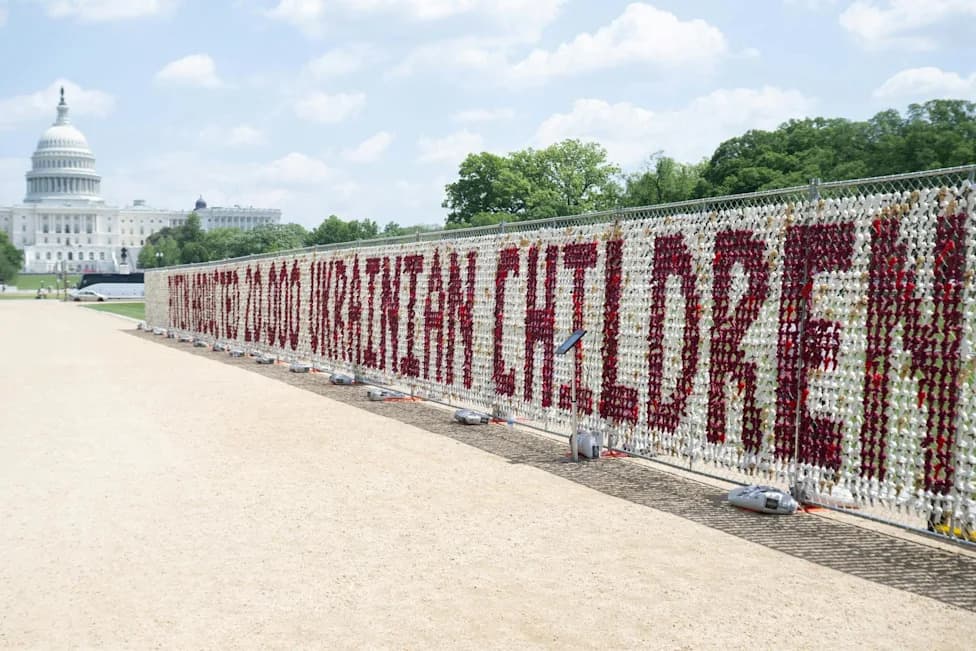
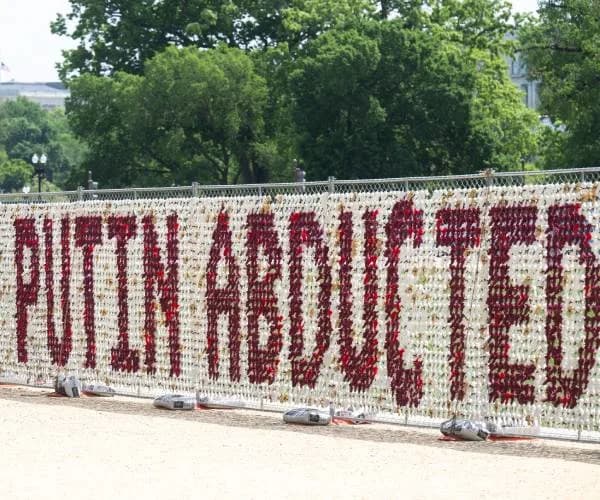
A fence featuring 20,000 stuffed teddy bears, each representing a Ukrainian child abducted by Russia, on the National Mall in Washington, D.C., on April 23, 2026.Saul Loeb/AFP via Getty Images
In March 2026 an independent inquiry described Russia's deportation and forcible transfer of Ukrainian children as "crimes against humanity," documenting that thousands of children have been moved to the Russian Federation or to Russian‑controlled areas of Ukraine. The same month, the U.S. State Department announced a US$25 million program to help identify, return and rehabilitate children who were forcibly transferred or otherwise separated from their families.
A Strategy That Reaches Beyond Borders
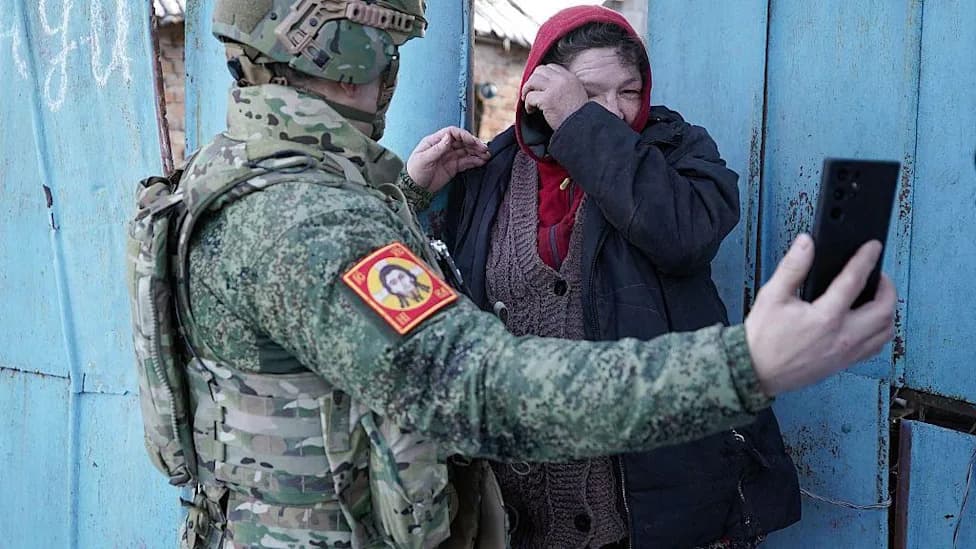
This campaign is more than relocation: it is an effort to remake identity. Since the 2014 occupation of Crimea and parts of Donbas, Russian authorities have steadily reshaped education, legal status, language and daily life for children under occupation. That process intensified after the 2022 full‑scale invasion and now affects children who never crossed an international border as well as those taken to Russia.
Numbers, Evidence and Obstacles
Estimates differ: Ukraine's Bring Kids Back UA lists more than 20,000 potential cases of forcible deportation or transfer, while Yale's Humanitarian Research Lab estimates the figure at roughly 35,000. Only a fraction of these children have returned. Precise accounting remains elusive because Moscow has not provided comprehensive, verifiable information about who was taken or where children are now located.
International humanitarian law generally forbids the forcible transfer or deportation of children from occupied territory except in narrowly defined emergency circumstances; even then, evacuations must preserve family unity, maintain records and, where possible, relocate children to neutral territory rather than into the occupying power's domain. Many reported cases fail those standards: children have been placed in camps, institutions, foster or adoptive arrangements or subject to altered legal documents and citizenship.
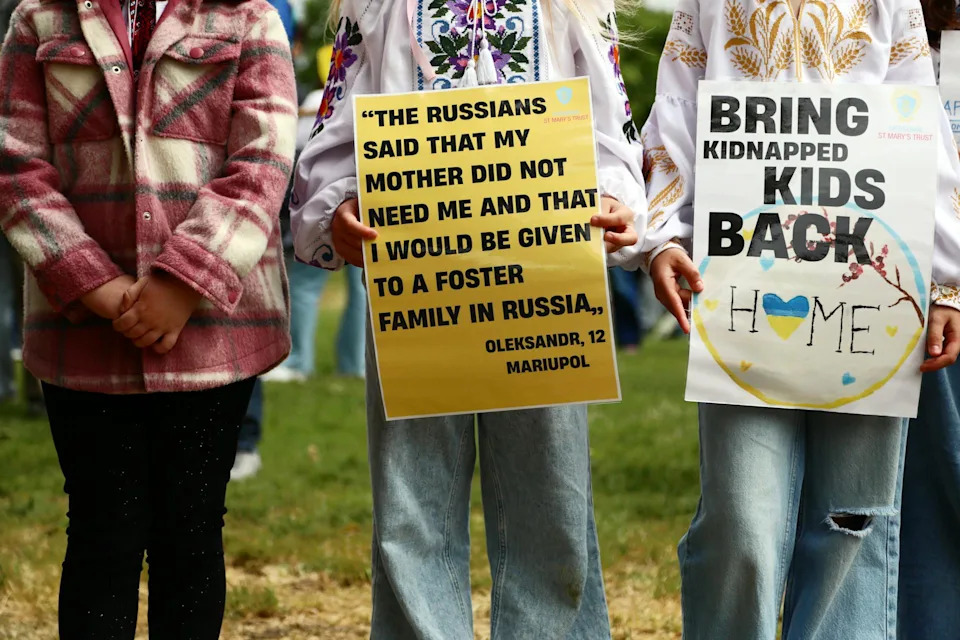
Protesters gather in London on May 24, 2025, to demand the return of the Ukrainian children abducted by Russia.Alishia Abodunde/Getty Images
Methods Of Identity Removal
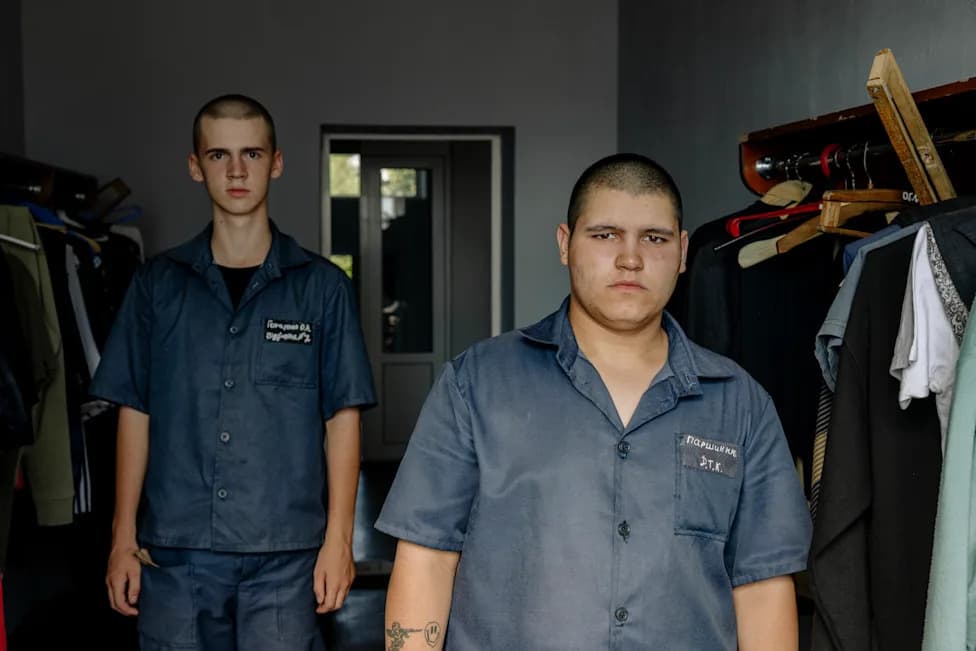
Authorities have used language that sounds benign—"evacuation," "child protection," "recreation camp," "guardianship," "foster care," "adoption"—to describe practices that often operate within a coercive system. Children were removed from orphanages and residential care, separated during attacks and chaotic evacuations, or passed through Russia's so‑called "filtration" procedures. In many cases, names, records and legal statuses were changed, and temporary placements became permanent.
Inside occupied areas, roughly 1.6 million Ukrainian children are reported to live under measures that replace Ukrainian curricula and language with Russian equivalents, require Russian documentation and expose youth to expanded "military‑patriotic" education. These changes aim to normalize a Russian identity and to shape how a generation understands its history, citizenship and civic duty.
Legal Responses And Practical Limits
The International Criminal Court issued arrest warrants in 2023 for President Vladimir Putin and Russia's commissioner for children's rights, Maria Lvova‑Belova, over the alleged unlawful deportation and transfer of Ukrainian children. Yet legal recognition has not translated into large‑scale reunifications: Russia controls much of the information and access needed to trace children, and international organizations have limited independent reach into occupied areas and Russian institutions.
Consequently, tracing and reunification have largely depended on Ukrainian families, government agencies and civil society. The new U.S. funding can strengthen those efforts, but identifying a child, reconstructing documents and arranging safe returns can take months; recovery and reintegration often take years. Returned children typically need help restoring identity documents, reentering education, reconnecting with relatives and rebuilding trust.
Why Rapid, Sustained Action Matters
As names change, records are lost and years of forced assimilation accumulate, the damage to Ukrainian identity becomes harder — and in some cases perhaps impossible — to reverse. Advocates warn that short-term efforts will not be enough: long-term, well‑resourced tracing, legal, social and psychological services are required to restore children's rights and family ties.
Author: Thom Reilly, Arizona State University. The research draws on more than 50 interviews, official reports, international legal materials and open‑source investigations. A forthcoming open‑access book, Child Abduction in the War in Ukraine: Erasing Ukrainian Identity as a Tool of War, will be published by Routledge in late fall 2026.
Help us improve.