
Taiwan President Lai Ching‑te was moved by armoured personnel carrier to a command centre during the opening of the 10‑day Han Kuang war games, which test how government and military functions would continue in wartime. The drills reviewed command structure, inter‑agency coordination and emergency‑response systems, while also deploying Tien‑Kung III air‑defence batteries and mounting missile launchers on Anping‑class coast guard vessels. Taiwan will test deliberate mobile internet slowdowns to simulate communications strain, and its defence ministry reported detecting 14 Chinese aircraft and nine warships near the island.
Night Drill: Taiwan’s President Transported by Armoured Carrier to Command Centre as Han Kuang War Games Begin
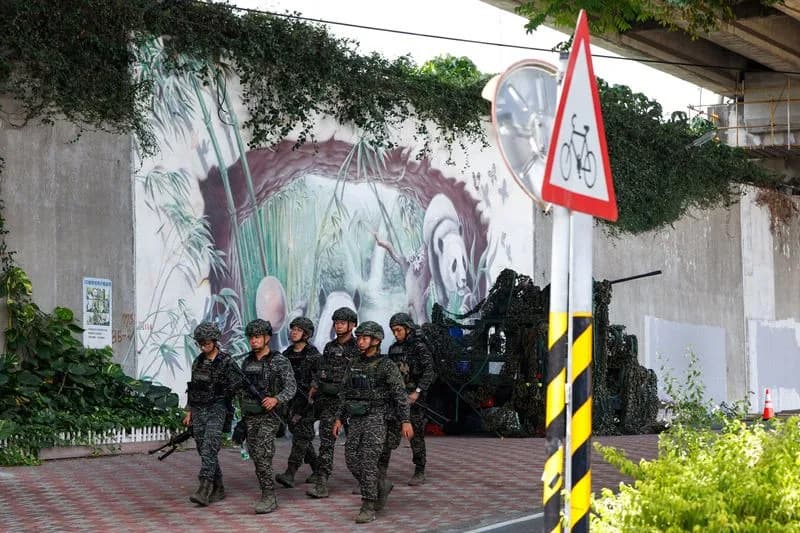
Soldiers walk past a camouflaged military vehicle during the annual Han Kuang military exercise in Taipei, Taiwan, August 6, 2026. REUTERS/Ann Wang
Taiwan President Lai Ching‑te was transported late at night in the back of an armoured personnel carrier to a secure command centre as part of the island’s annual Han Kuang war games, officials said. The 10‑day exercises are designed to demonstrate how government functions and defenses would be sustained in the event of a conflict.
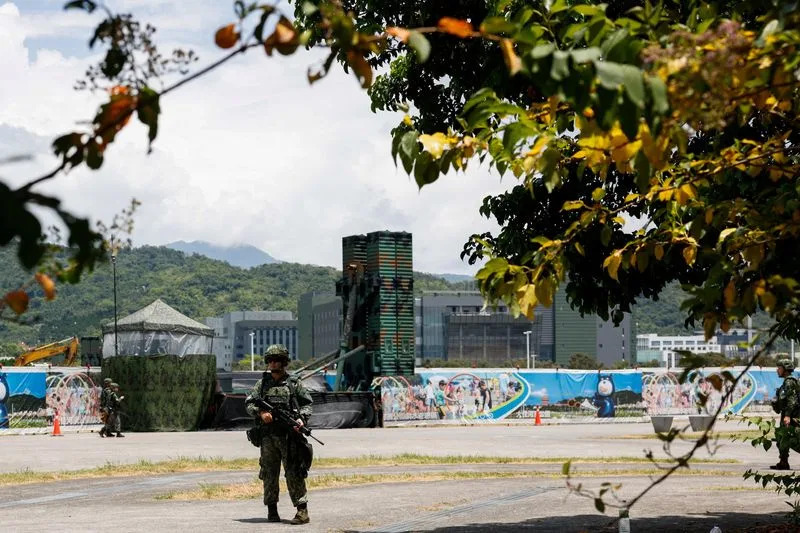
A Sky Bow III surface-to-air missile launcher is deployed at a local park during the annual Han Kuang military exercise in Taipei, Taiwan, August 6, 2026. REUTERS/Ann Wang
The Presidential Office released images showing Lai wearing body armour and a helmet as he entered the armoured vehicle. His spokesperson, Karen Kuo, said Lai and senior officials "conducted drills on commanding defensive operations and maintaining the continued functioning of government during emergency situations." The manoeuvre was intended to test command procedures, inter‑agency coordination and emergency‑response mechanisms.
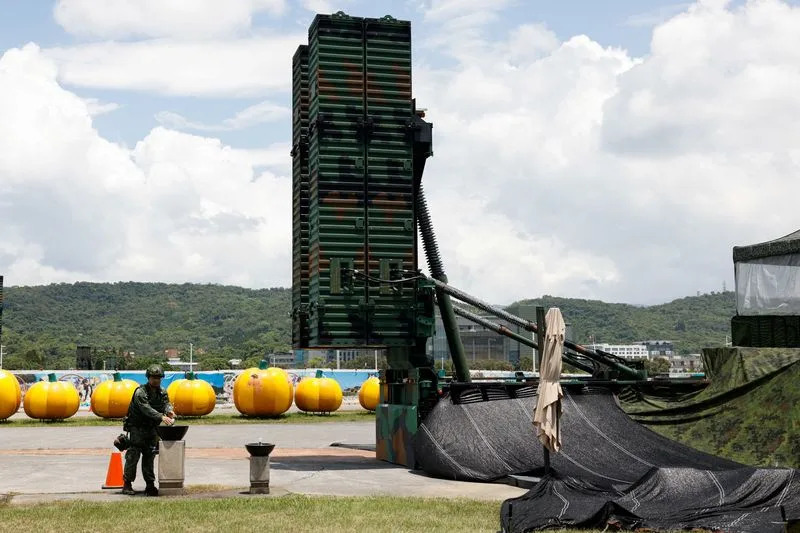
Sky Bow III surface-to-air missile launchers are deployed at a local park during the annual Han Kuang military exercise in Taipei, Taiwan, August 6, 2026. REUTERS/Ann Wang
Cold War‑Era Contingency
The specific evacuation procedure — known by the government as "Wan Chun," a phrase that roughly translates as a tremendous weight — dates to the Cold War. It was developed amid fears in the 1940s and 1950s that mainland China might attempt to eliminate island leadership in a conflict. Chiang Kai‑shek and the Republic of China government retreated to Taiwan in 1949 after Mao Zedong’s forces won the Chinese civil war; no formal armistice or peace treaty was signed.
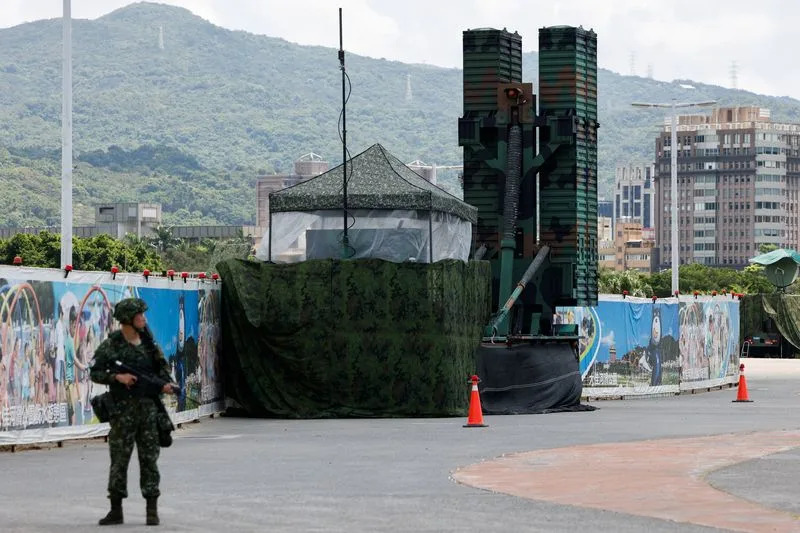
Sky Bow III surface-to-air missile launchers are deployed at a local park during the annual Han Kuang military exercise in Taipei, Taiwan, August 6, 2026. REUTERS/Ann Wang
Taiwan has long feared a so‑called "decapitation" strike aimed at key political and military leaders. Chinese state media said in 2023 that one scenario practised in drills involved precision strikes described as a "beheading" mission.
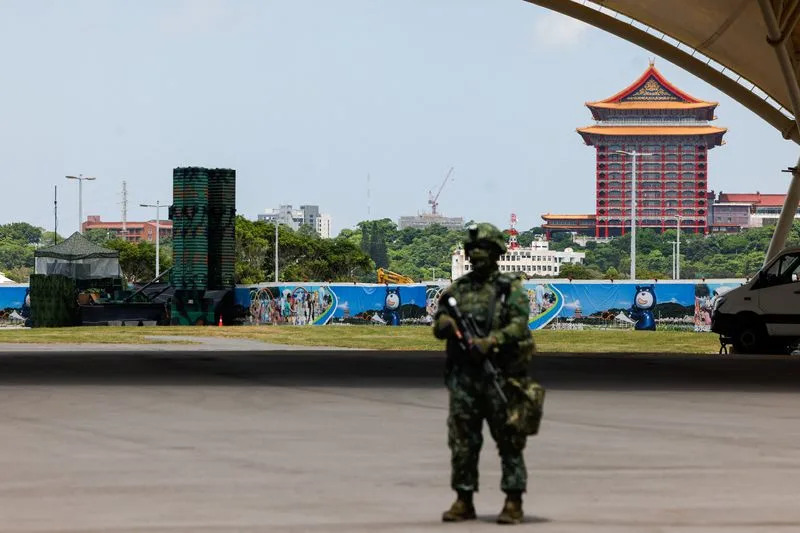
A Sky Bow III surface-to-air missile launcher is deployed at a local park, with the Grand Hotel in the background, during the annual Han Kuang military exercise in Taipei, Taiwan, August 6, 2026. REUTERS/Ann Wang
Missile Systems, Coastal Defence And Civil Preparedness
Troops and equipment were deployed across Taiwan as part of Han Kuang, which is also testing new systems and tactics. Lai observed missile launchers being fitted to an Anping‑class coast guard catamaran — vessels adapted in wartime to carry weapons and based on the navy’s Tuo Chiang fast‑attack design.
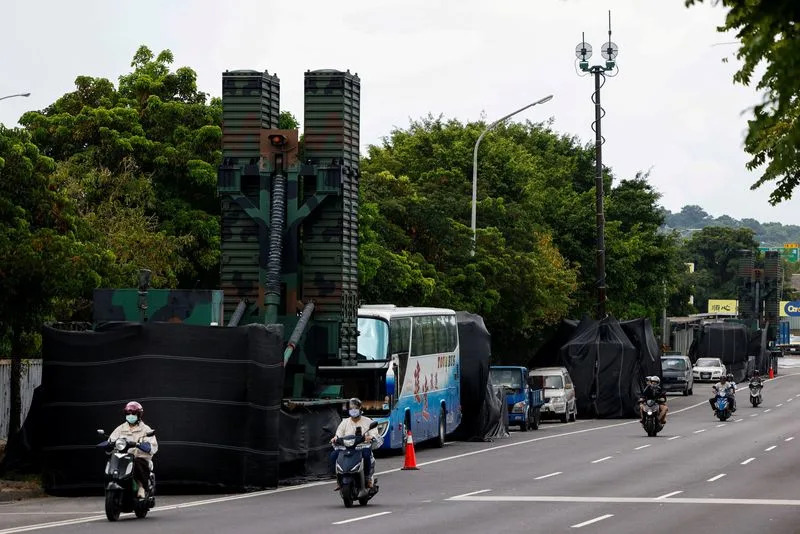
A Sky Bow III missile system is deployed on a roadside during the annual Han Kuang military exercise in Taipei, Taiwan, August 6, 2026. REUTERS/Ann Wang
Reporters saw domestically developed Tien‑Kung III surface‑to‑air missile systems positioned in Taipei near Songshan Airport and close to the defence ministry. The Defence Ministry said the exercises use a "continuous‑scenario format to sharpen units' ability to respond in a realistic combat environment," with training objectives that include counter‑blockade and coastal strike operations, protection of critical targets, and broader "whole‑of‑society" preparedness.
As part of civil‑resilience testing, Taiwan plans to deliberately slow mobile internet speeds for the first time next week to simulate communications strain during large‑scale emergencies — from natural disasters to a potential invasion. The Defence Ministry also reported detecting 14 Chinese military aircraft and nine warships operating around the island during the drills.
Beijing has labelled President Lai a "separatist" and has declined his offers for talks. Lai maintains that only the people of Taiwan can decide their future.
Reporting: Ben Blanchard, Yimou Lee and Ann Wang. Editing: Kate Mayberry.
Help us improve.





















