Chinese scientists propose a two‑stage asteroid‑deflection mission: first create a deep cavity with a penetrator, then detonate a nuclear device below the surface to fragment or redirect the rock. Simulations in Space: Science & Technology suggest a 3‑megaton subsurface blast could destroy a 100‑meter asteroid and that a ~30‑meter burial can more than triple velocity change versus a surface burst. The study highlights engineering practicality but notes technical, legal and fragmentation risks.
Chinese Team Proposes Two‑Stage Buried Nuclear Strike To Better Deflect Hazardous Asteroids
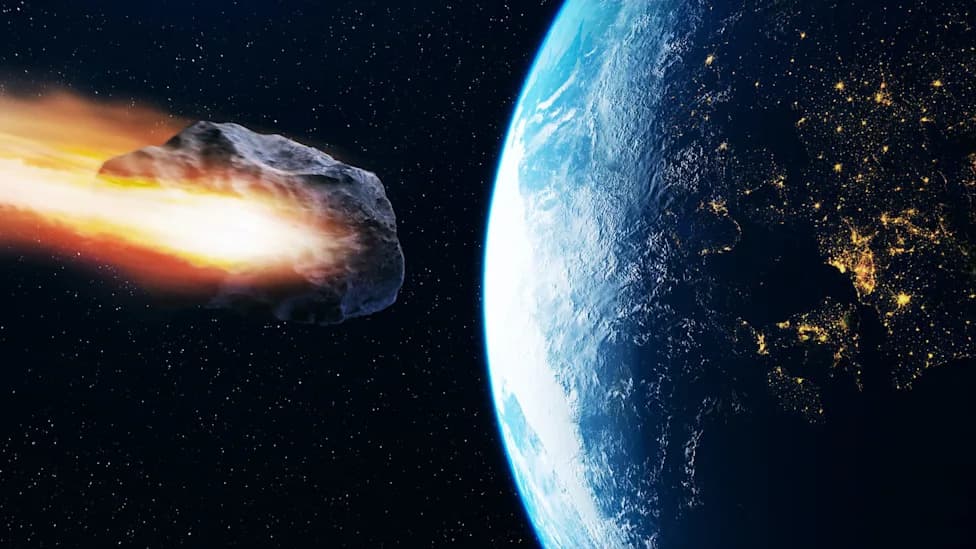
Photo Credit: iStock
Chinese researchers have proposed a two-stage spacecraft mission that could improve humanity's chances of stopping an Earth‑threatening asteroid: first create a deep cavity in the rock, then place and detonate a nuclear device below the surface to either fragment or deflect the body.
What the Team Proposes
The plan, led by scientists at the China Academy of Launch Vehicle Technology in Beijing, envisions one spacecraft driving a metal penetrator into an asteroid to form a deep cavity and a second vehicle delivering a nuclear charge into that hole for a controlled subsurface detonation.
Key Simulation Results
Simulations published in the journal Space: Science & Technology indicate that a 3‑megaton subsurface explosion could completely destroy an asteroid roughly 328 feet (100 meters) across — a yield comparable to about 200 Hiroshima bombs. The researchers report that placing the device about 98 feet (30 meters) below the surface, rather than detonating it at or near the exterior, can more than triple the resulting change in the asteroid's velocity, making a deflection attempt far more effective.
Engineering Rationale
Instead of a single high‑speed strike with uncertain contact point and energy coupling, the two‑step method aims to give mission planners more control over where force is applied and how deeply explosive energy is delivered. The study emphasizes engineering practicality, arguing that a subsurface detonation could improve effectiveness while reducing some technical uncertainties of a surface blast.
Limitations, Risks, and Broader Issues
These results come from simulations and depend strongly on the asteroid's size, composition, porosity and internal structure. Subsurface nuclear detonations could fragment a target into multiple hazardous pieces rather than producing a single clean deflection, and those fragments could still threaten Earth. There are also significant political, legal and ethical issues: the use of nuclear devices in space is restricted by international agreements and would require global coordination and clear planetary‑defense protocols.
Reporting notes: the proposal and simulations were described by the China Academy of Launch Vehicle Technology and reported in the South China Morning Post; findings appear in Space: Science & Technology.
Ultimately, the team’s proposal adds an engineering‑focused option to an expanding international conversation about planetary defense. Early detection and continuous tracking remain essential: the more warning time available, the more and safer the available mitigation options.
Help us improve.