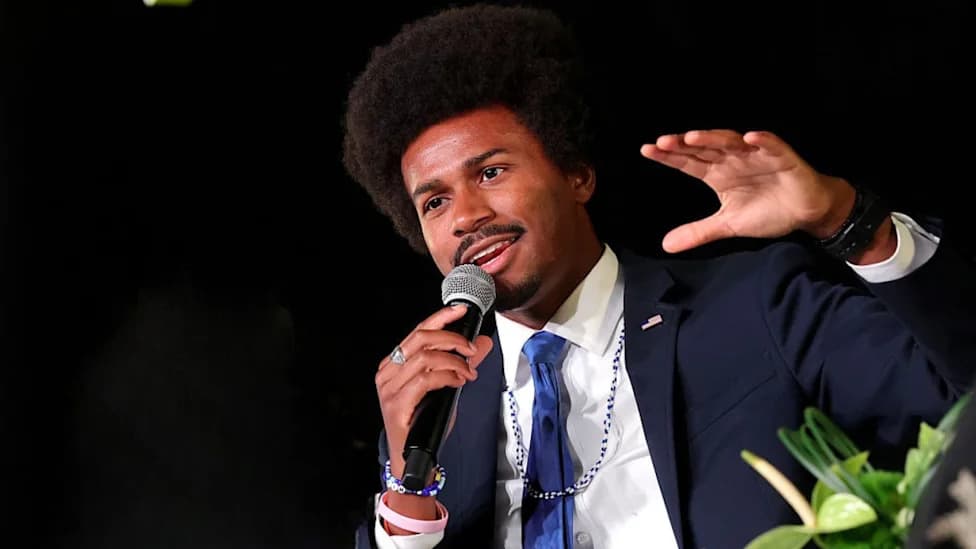
Justin Pearson, a 31-year-old Tennessee state lawmaker from Memphis, is continuing his campaign for the U.S. House after Republican-led redistricting split majority-Black Memphis across three districts, making the 9th District likely to favor Republicans. The April Supreme Court ruling weakened parts of the Voting Rights Act and spurred rapid map changes in several Southern states. Pearson says his district expanded from "1.5 counties to 15," forcing extensive travel and new outreach, while Democrats face an uphill turnout challenge — roughly 75% needed versus 34% turnout in Shelby County in 2022.
Justin Pearson Keeps Fighting After Tennessee Redistricting Splits Memphis
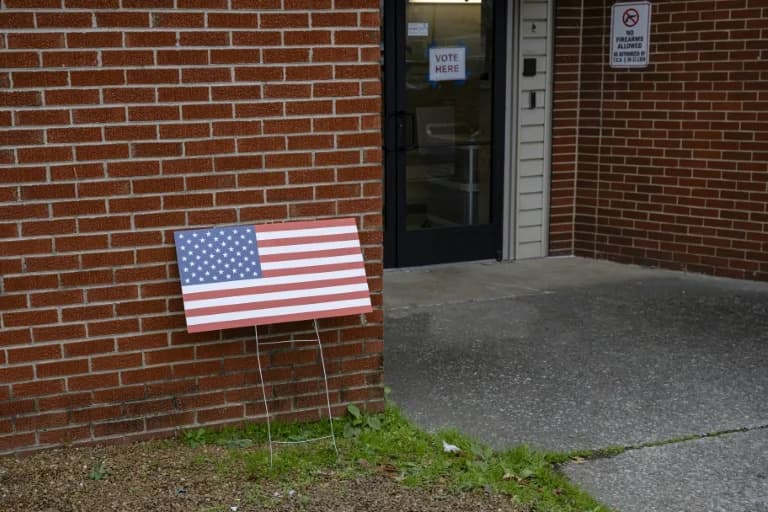
An American flag yard sign is seen in Nashville, Tennessee in 2025 (Jon Cherry)
Justin Pearson, a 31-year-old Tennessee state lawmaker from Memphis, has decided to remain in the race for the U.S. House after a Republican-led redrawing of Tennessee's 9th Congressional District significantly reshaped his constituency.
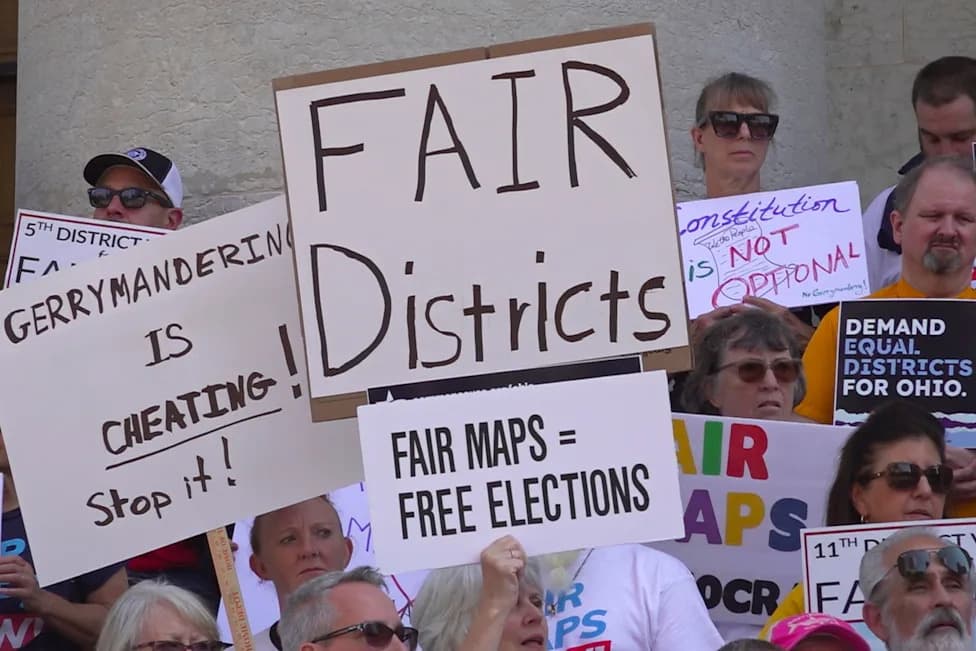
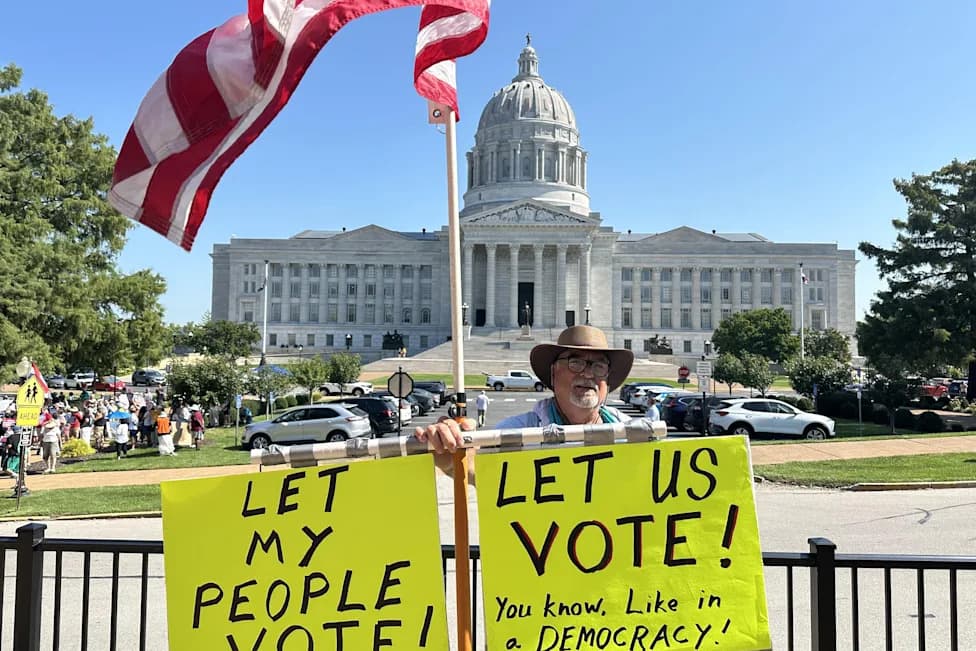
In April, a conservative-majority U.S. Supreme Court ruling weakened aspects of the Voting Rights Act, and within weeks Republican legislatures in several Southern states — including Tennessee, Louisiana and Alabama — moved quickly to redraw congressional maps. In Tennessee, majority-Black Memphis was divided into three districts that now reach across much of the state, a change critics say dilutes Black voting power and undercuts the city’s long-standing influence in federal elections.
Facing an altered political map, Pearson asked himself:
"Do I quit or stay in the fight?"
Pearson chose to stay. He says the new 9th District’s boundaries transformed the area he represents from roughly "1.5 counties to 15 counties," forcing him to campaign far beyond his Memphis base and to engage with communities he had rarely visited before. That includes meeting farmers in Savannah one day and traveling about 150 miles to conservative Giles County the next — an area historically associated with the founding of the Ku Klux Klan in the 1860s.
From 1.5 Counties To 15
Raised in Westwood, a predominantly Black neighborhood in southwest Memphis, Pearson now spends long stretches traveling the enlarged district. Data from the University of Tennessee note that 78 of the state’s 95 counties are rural and typically lean Republican, while Democrats have drawn most of their recent statewide support from Nashville and Memphis.
"A Function Of Politics"
Steve Hickey, chairman of the Williamson County Republican Party who lives near the far edge of the redrawn district, rejected claims that race was the primary motive for the changes. He described redistricting as a routine, partisan practice: "This is just a function of politics, and the party that is in power can make these rules." Hickey added that Tennessee Democrats once drew maps to their advantage when they controlled the legislature.
Hickey acknowledged the political benefit for Republicans: "As a Republican, obviously I’m happy because we’re hoping that we can provide another seat in the House of Representatives in Congress to support President Trump and the Republican majority in the House."
Whether Democrats can overcome the new map will hinge heavily on turnout. Several voter outreach groups in Memphis told AFP that electing a Democratic representative under the new configuration would likely require turnout near 75 percent. That is a steep benchmark: turnout in Shelby County, which includes Memphis, was only 34 percent in the 2022 midterm elections.
The redistricting fight in Tennessee highlights broader national tensions over how maps are drawn, who gets represented, and the future of minority voting power in the United States as both parties use legislative control to shape electoral advantage.
Help us improve.