ORRCA drone pilot Alexander Forrest filmed a female humpback whale giving birth on July 28 near Kingscliff, New South Wales — about 0.4 miles (700 m) from shore. The footage, believed to be the first full drone recording of a humpback live birth and only the fourth filmed instance overall, shows the newborn surfacing for its first breath before reuniting with its mother. Researchers will analyze the video for a peer-reviewed report to learn more about birthing behavior and early calf development as humpback numbers rebound along the New South Wales coast.
Drone Captures Rare Humpback Whale Birth Off New South Wales — Possible First Full Drone Video
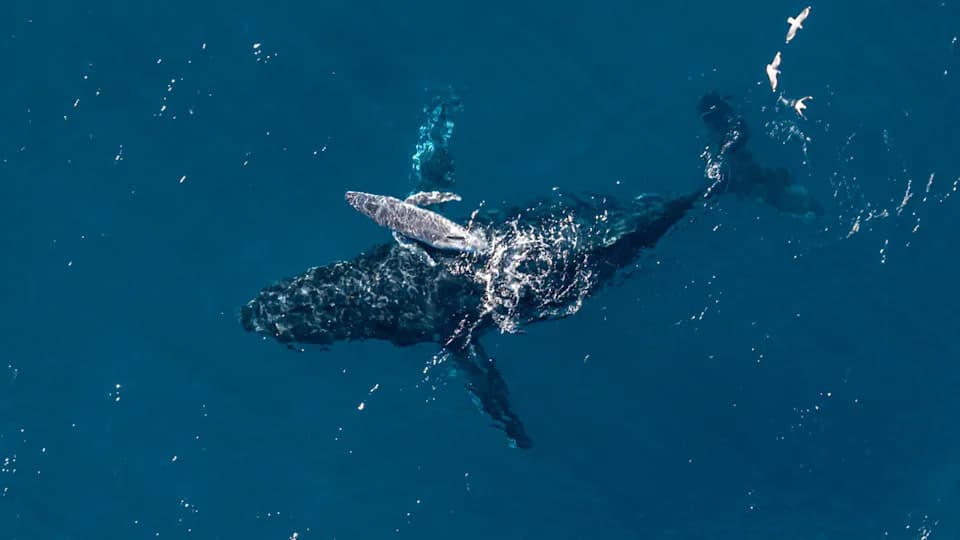
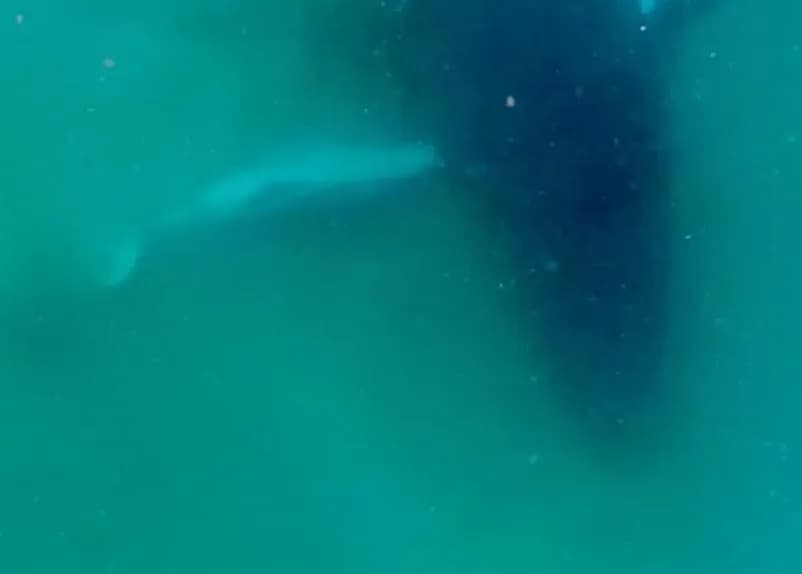
New drone footage filmed a female humpback whale giving birth off the coast of Australia. | Credit: Alexander Forrest/ORRCA (@forrestfov)
A commercial drone pilot with the Organisation for the Rescue and Research of Cetaceans in Australia (ORRCA) recorded a female humpback whale giving birth on July 28 off the north coast of New South Wales. The footage was captured near Kingscliff, roughly 0.4 miles (700 meters) from shore, and shows the newborn surfacing for its first breath before reuniting with its mother.
Alexander Forrest, a professional drone operator conducting routine aerial monitoring of migrating humpbacks, noticed an individual whale lagging behind her pod and moving unusually slowly. He then observed the whale deliver a calf and captured the entire sequence on drone video.
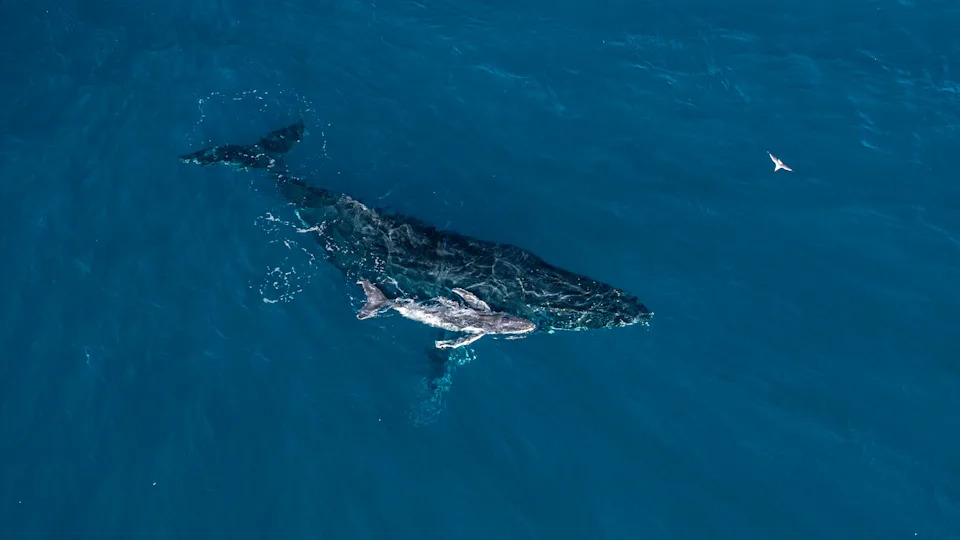
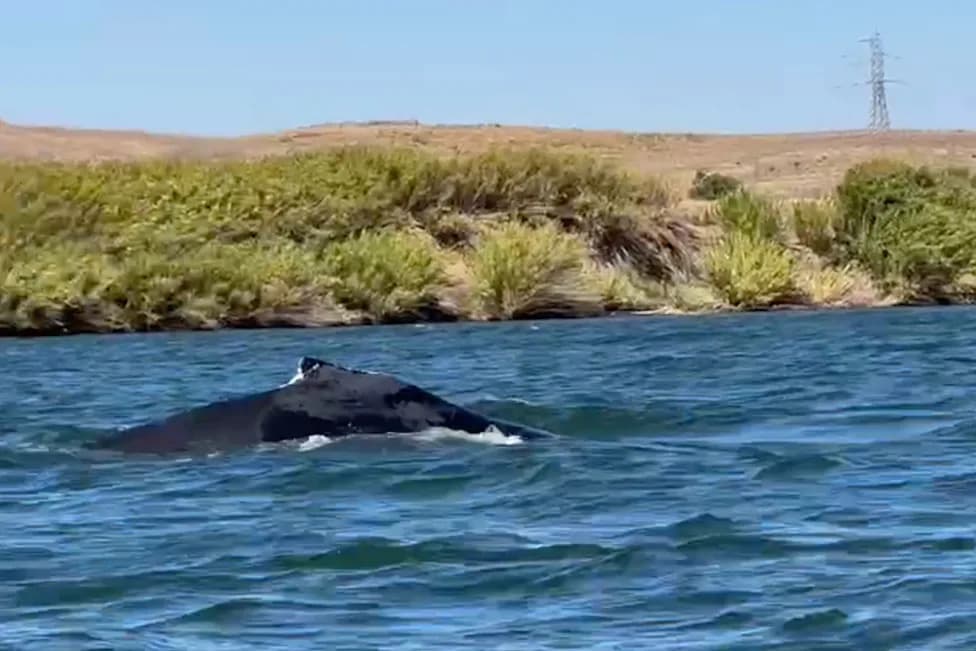
The expectant humpback whale mother swam behind her pod, eventually giving birth by herself. | Credit: Alexander Forrest/ORRCA (@forrestfov)
'It's incredibly rare to see a moment like this in the ocean. It's a very rarely documented encounter,' Forrest told Live Science. 'It's the first drone video as far as we know of a full humpback whale live birth. It gives critical inside moments in the first moments of a calf's life, and also reveals the behaviour of a new humpback whale mother and her freshly newborn calf.'
ORRCA says this is only the fourth time a humpback birth has been filmed overall. Scientists have previously recorded live births of other whale species, including a gray whale off California and a sperm whale in the Caribbean.
What the Footage Shows
The drone video shows the newborn surfacing from blood-reddened water to take its first breath. After the calf surfaces, the mother turns back and reunites with it before returning toward the main pod. The scene offers rare, close-up insight into the very first moments of a calf's life and the mother–calf interaction immediately after birth.
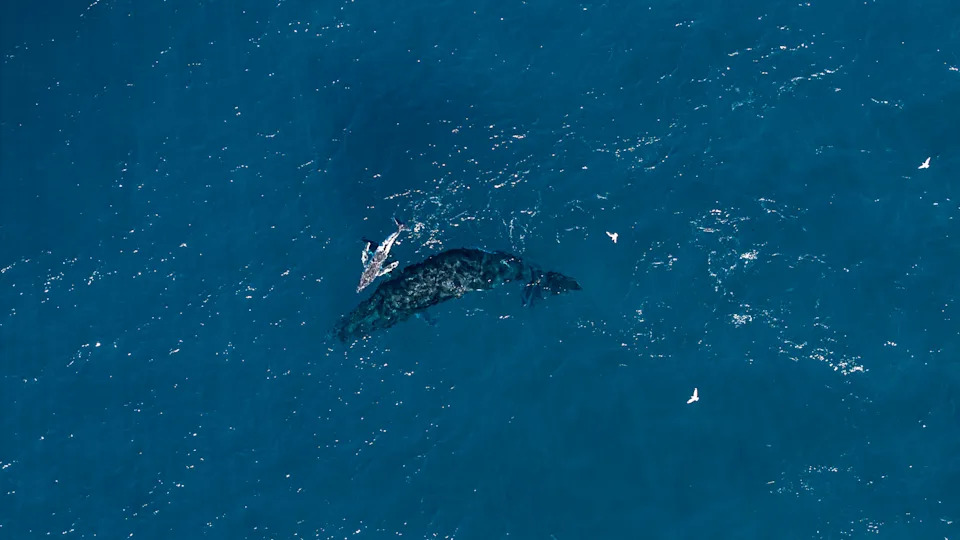
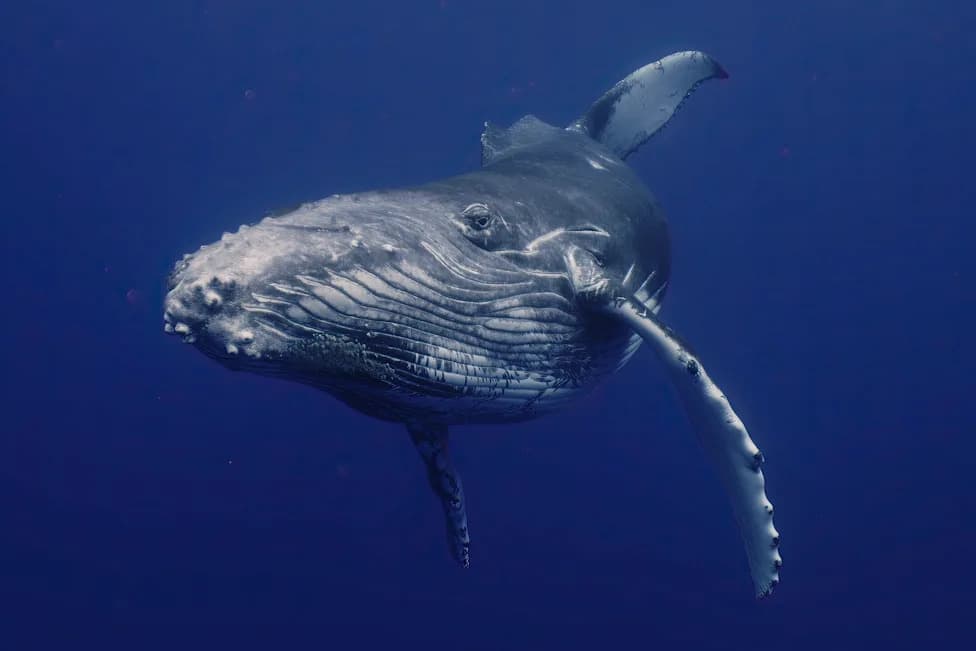
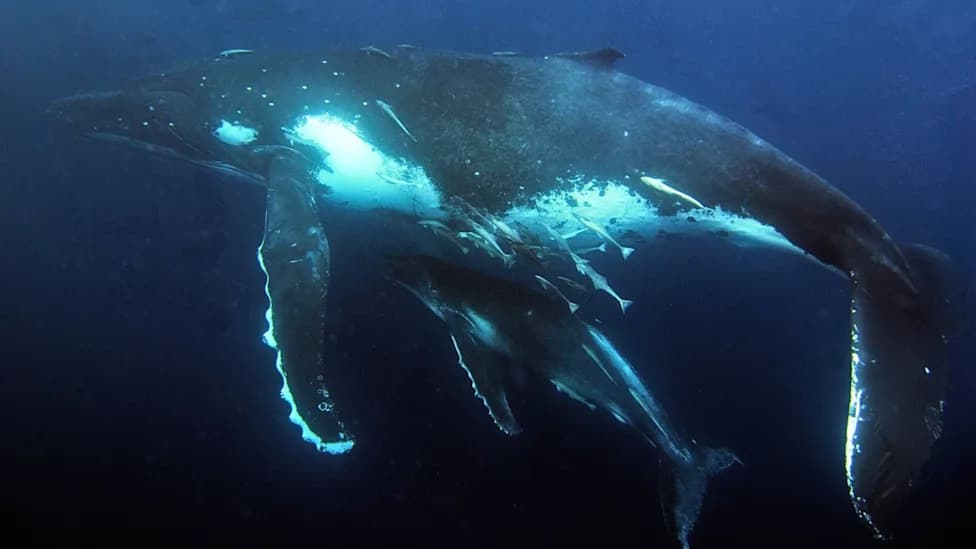
Humpback whale calves stay with their mothers for their first 11 months. | Credit: Alexander Forrest/ORRCA (@forrestfov)
Scientific Value and Conservation Context
The team will analyze the footage and prepare a report for peer review and publication in a scientific journal. Biologists are particularly interested in the detail that the mother trailed behind her pod and gave birth alone; they will compare this solitary birth with other documented cases in which pod members assisted the mother. For example, 2023 drone footage of a sperm whale birth showed about 10 adult females forming a protective circle and taking turns lifting the calf so it could breathe at the surface.
Forrest described the sighting as symbolic of major conservation progress: humpback populations have rebounded from near extinction to nearly 50,000 individuals along the New South Wales coast. Gathering observational data on where and how humpbacks give birth helps researchers better understand maternal strategies and early calf survival.
Calf Development and Migration
Newborn humpback calves typically weigh between 1 and 1.5 tons (900 to 1,360 kilograms) and measure about 10 to 16 feet (3 to 5 meters) long. During nursing, a calf can gain roughly 100 pounds (45 kilograms) per day as it consumes nutrient-rich milk. Calves stay with their mothers for approximately 11 months, learning critical behaviors such as surfacing to breathe and building the strength needed for the first long migration between polar feeding grounds and tropical breeding waters.
This rare aerial record provides valuable observational data for researchers and a striking reminder of the value of ongoing marine conservation and monitoring efforts.
Help us improve.