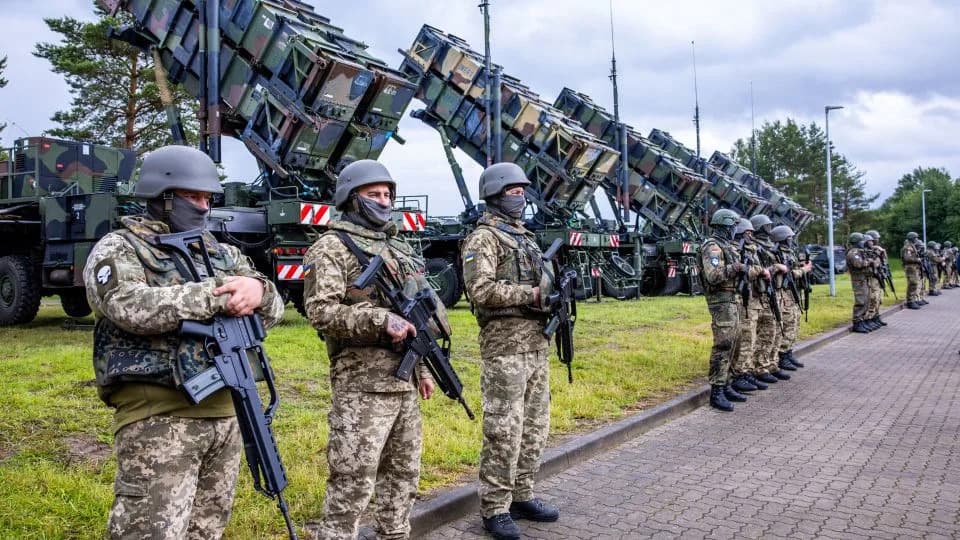
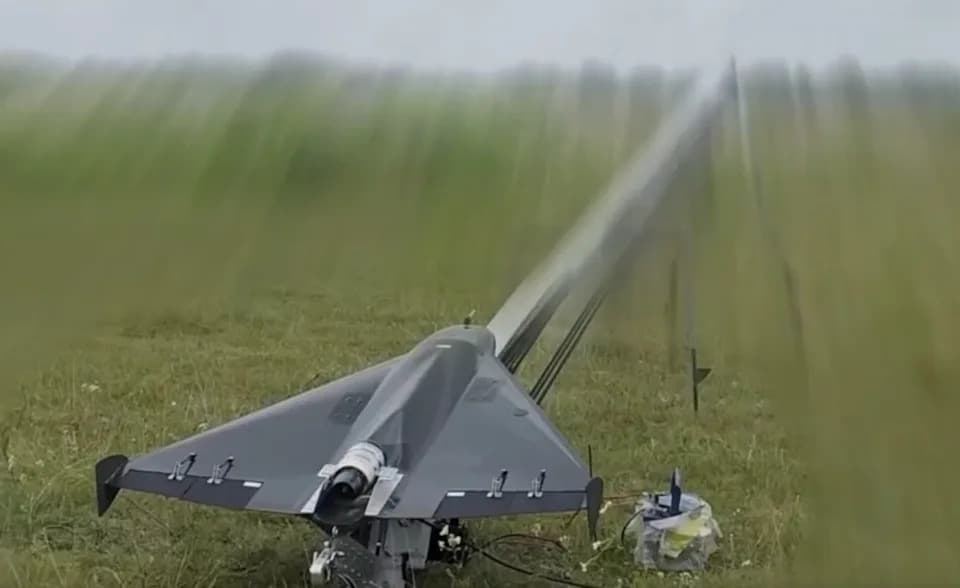
Ballistic missiles reach targets on very steep, supersonic or hypersonic trajectories, giving air-defence systems only minutes or seconds to react. Ukraine says U.S.-supplied Patriot PAC‑3 batteries are the only reliably effective systems against weapons such as Iskander‑M, S‑400 and Zircon, but it lacks enough batteries and interceptors. Interceptor shortages — compounded by regional fighting and limited production capacity — have forced Kyiv to strike launchers, seek enhanced targeting tools and develop a lower-cost system called "Freya."
Why Russia’s Ballistic Missiles Are Penetrating Ukraine’s Defenses — And What Kyiv Can Do
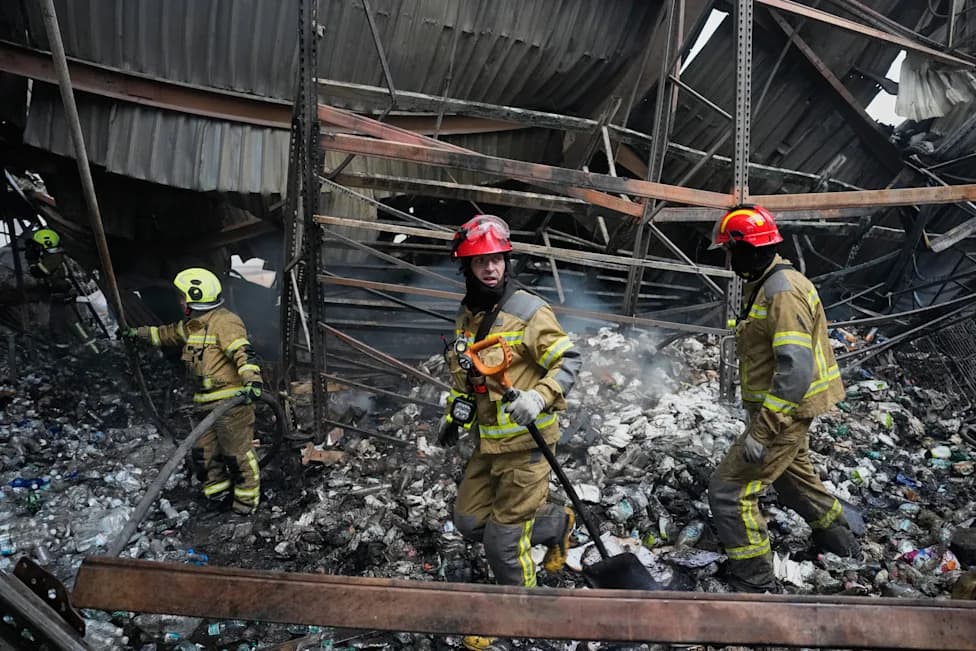
Firefighters put out a fire after Russian missiles hit a food warehouse near Kyiv, Ukraine, Wednesday, Aug. 5, 2026. (AP Photo/Efrem Lukatsky)(AP Photo/Efrem Lukatsky)
KYIV, Ukraine — When Russia fires a ballistic missile at Ukraine, air-defence systems often have only minutes — and sometimes only seconds — to detect and try to intercept the incoming threat. That narrow reaction window has left Kyiv and other Ukrainian cities more exposed to strikes from missiles that descend so steeply and so quickly that Ukrainian officials say only U.S.-made Patriot batteries can reliably stop them, and Kyiv says it does not have nearly enough Patriots or interceptors to provide full protection.
Why Ballistic Missiles Are Hard To Stop
Unlike cruise missiles, which fly like unpiloted aircraft and can be tracked over longer flight paths, ballistic missiles are launched like rockets and then arc downward at very steep angles and extreme speeds — often many times the speed of sound. These characteristics sharply reduce the time available to detect, track and destroy an incoming warhead.
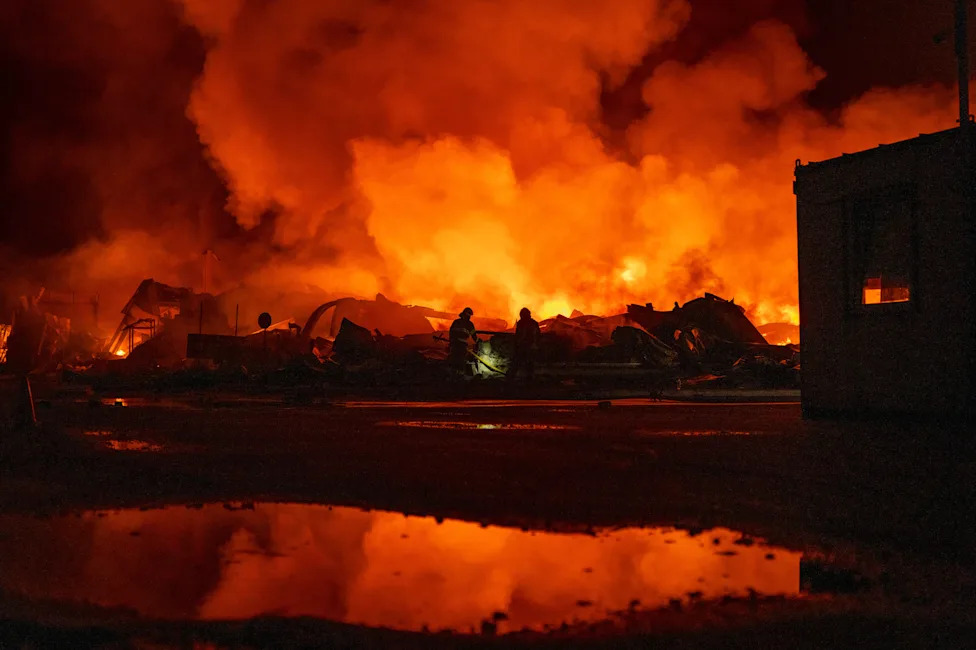
Firefighters put out a fire after Russian missiles hit a warehouse in Kyiv, Ukraine, Wednesday, Aug. 5, 2026. (AP Photo/Dan Bashakov)(AP Photo/Dan Bashakov)
"When the warhead is hurled toward its target, it's very, very steep and it's going at a ridiculous speed," said Thomas Withington, an electronic warfare expert at the Royal United Services Institute. He likened the physics to playing catch: "If the ball is going really fast, it's harder to catch."
Which Weapons Pose The Biggest Challenge
Russia's primary ground-launched ballistic weapon is the Iskander‑M. The air-launched Kinzhal has similar effects in practice. Moscow has also repurposed S‑300 and S‑400 surface-to-air missiles to strike ground targets, and the Zircon — classified as a hypersonic anti-ship cruise missile — travels so fast that it creates interception problems akin to those of ballistic weapons.
Patriot And The Limits Of Current Defences
The most capable Patriot configuration supplied to Ukraine (PAC‑3) is built to engage very high-speed missiles. Instead of detonating near a target, PAC‑3 uses hit-to-kill technology: a maneuverable interceptor is guided to collide with an incoming warhead. That requires rapid tracking, trajectory prediction and an almost-immediate interceptor launch — sometimes leaving only seconds for the final engagement.
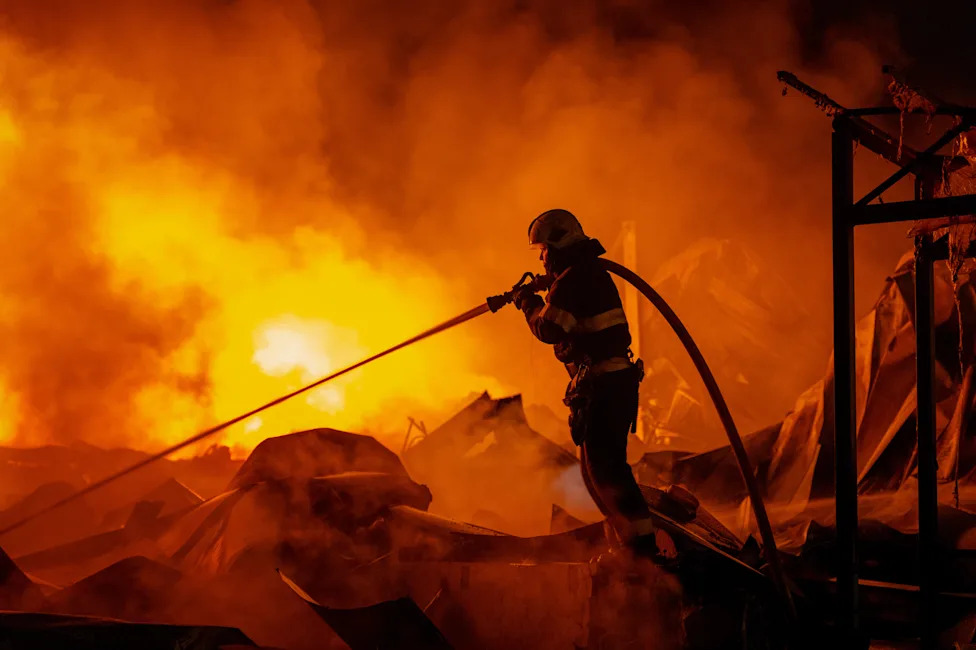
Firefighters put out a fire after Russian missiles hit a warehouse in Kyiv, Ukraine, Wednesday, Aug. 5, 2026. (AP Photo/Dan Bashakov)(AP Photo/Dan Bashakov)
According to Ukrainian Air Force spokesman Yurii Ihnat, Patriots are currently the only systems in Ukrainian service able to intercept strikes by Iskander‑M, S‑400 and Zircon missiles. The U.S. and its allies operate other anti-ballistic systems (such as THAAD and sea-based Aegis), but those have not been supplied to Ukraine.
Shortages, Production And Political Hurdles
Ukraine lacks enough batteries to shield every population centre. Russia counters by combining ballistic missiles with cruise missiles, loitering drones and decoys, forcing defenders to follow many simultaneous threats and ration a limited stock of interceptors.
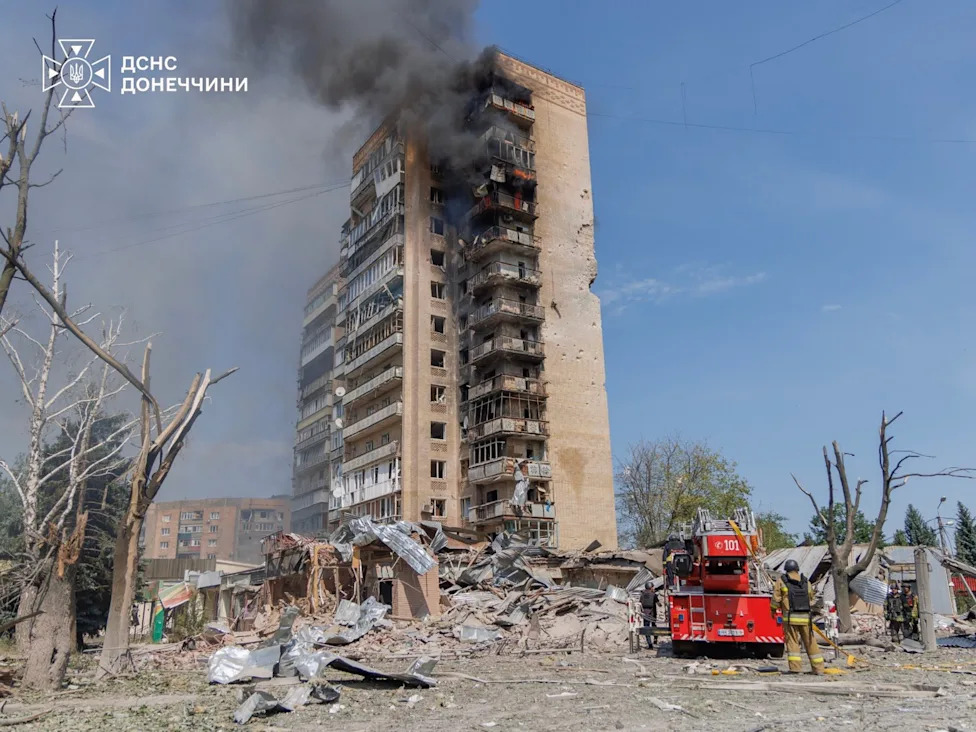
In this photo provided by the Ukrainian Emergency Service, firefighters put out a fire in a residential building following a Russian air attack in Kramatorsk, Donetsk region, Ukraine, Wednesday, Aug. 5, 2026. (Ukrainian Emergency Service via AP)(Ukrainian Emergency Service via AP)
Interceptors are in tight supply. An Associated Press analysis estimated the U.S. Patriot inventory had fallen by at least 65% from its prewar level, although the Pentagon says it still retains a deep overall arsenal. Production cannot close the gap overnight: Lockheed Martin delivered more than 600 PAC‑3 MSE interceptors in 2025 and is working toward an annual capacity of 2,000 by the end of 2030. NATO says Europe's first Patriot production facility is expected to open in September in Germany.
Political signals have also been mixed. At a recent NATO summit, U.S. political leaders discussed licensing Ukraine to build Patriots domestically, but officials warned that even with a license, establishing local production would take years.
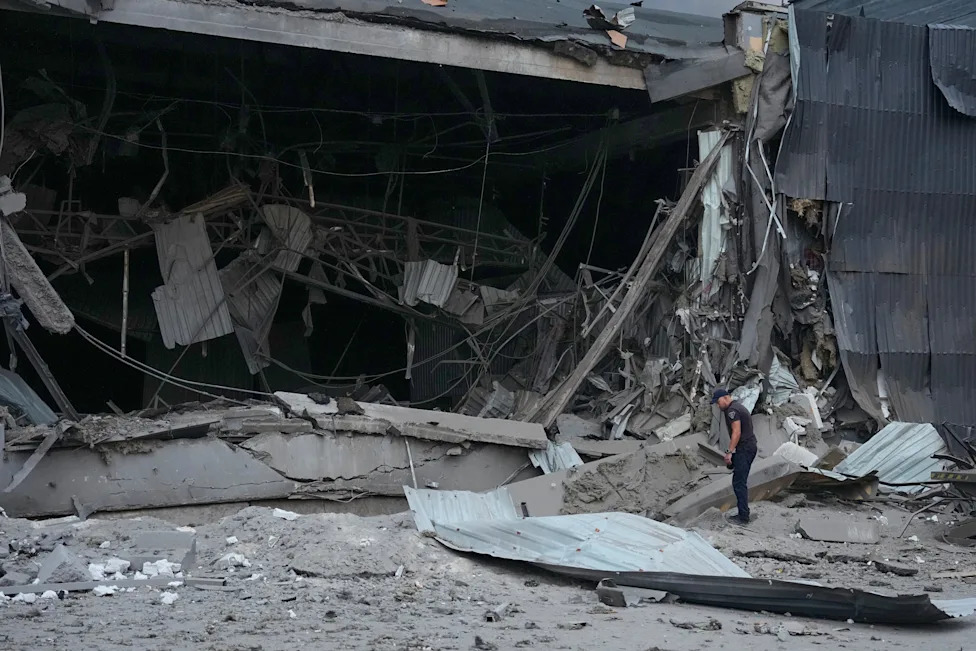
A police officer examines a damaged Nova Poshta postal warehouse after Russian missiles strikes in Kyiv, Ukraine, Wednesday, Aug. 5, 2026. (AP Photo/Efrem Lukatsky)(AP Photo/Efrem Lukatsky)
How Ukraine Is Responding
Kyiv is trying to reduce the incoming threat before missiles are launched by striking Russian launchers and support infrastructure — "shooting the archer instead of the arrow." Officials have also sought permission to use commercial satellite communications inside Russian territory to improve drone targeting. People familiar with the discussions told the AP that President Volodymyr Zelenskyy asked U.S. leadership to help secure Elon Musk's permission to use Starlink for targeting inside Russia, where the service has been restricted.
Ukraine is also developing "Freya," a proposed lower-cost, Ukrainian-led anti-ballistic system intended to reduce reliance on Patriots. In July, Ukraine and nine European countries formed a coalition to pursue a shared missile-defence capability; Zelenskyy said they could jointly develop a mass-produced system within 12 months. Freya remains under development and its operational timetable is uncertain.
Human Toll And Urgent Needs
The pattern of strikes has continued: a recent barrage on Kyiv hit a brewery, a warehouse and a mail-sorting facility, killing at least 17 people and wounding dozens, President Zelenskyy said. After that attack he warned that Ukraine received only one-third as many air-defence missiles in the first half of 2026 as it did in the same period last year and urged partners to increase interceptor deliveries or consider new sanctions to constrain Russian missile production.
Associated Press reporting contributed to this article; Danica Kirka in London additionally contributed.
Help us improve.