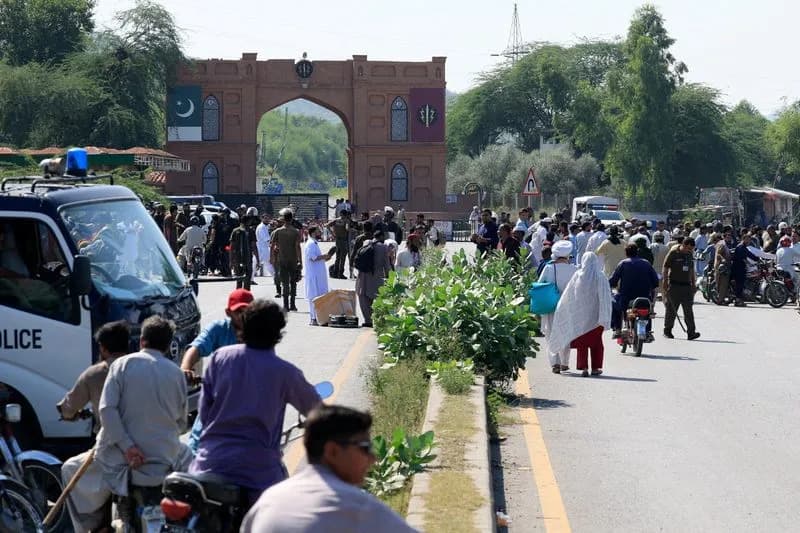
Imran Khan has reached the three-year mark in custody amid nationwide PTI protests and condemnation from Amnesty International and U.N. experts, who have called his detention arbitrary and warned that prolonged solitary confinement may amount to torture. Khan and his wife, Bushra Bibi, face multiple prison terms, while concerns focus on restricted access to family and lawyers and his deteriorating eye condition. The Supreme Court will hear his petition for transfer to a private hospital, even as the government defends its legal oversight and analysts point to the military's role in limiting prospects for his political return.
Imran Khan Marks Three Years In Custody As PTI Protests, Rights Groups Decry 'Arbitrary' Detention
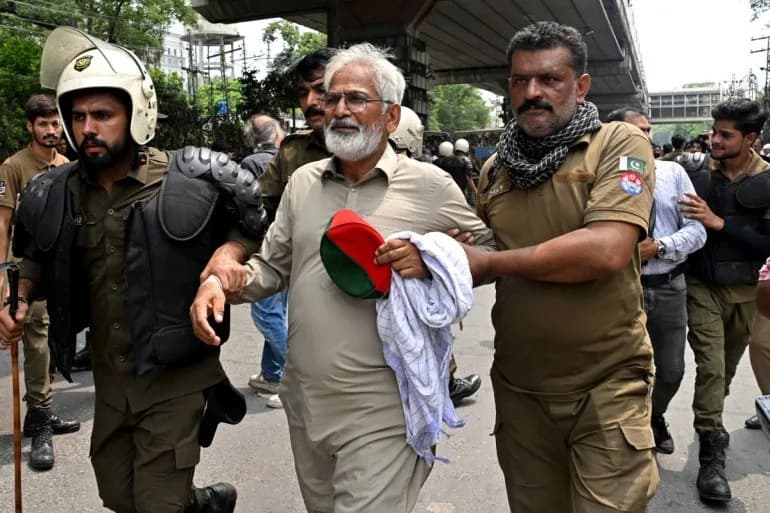
Police detain a PTI supporter in Lahore on August 5, 2026 [Arif Ali/AFP]
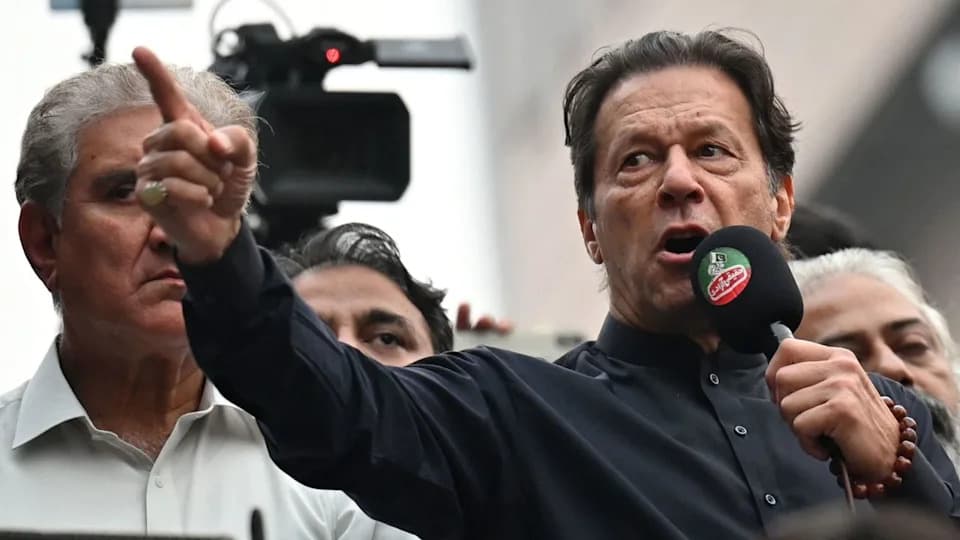
Islamabad — Former prime minister Imran Khan has completed three years in custody, prompting nationwide protests by his Pakistan Tehreek-e-Insaf (PTI) party and sharp criticism from international rights groups and U.N. experts.
Khan, 73, who led Pakistan from 2018 until his removal in April 2022, was first briefly detained in May 2023 and later jailed on Aug. 5, 2023, on multiple charges including corruption and disclosure of state secrets. He denies the allegations and says prosecutions are politically motivated.
Prison Terms and Legal Battles
He is serving a 14-year sentence in a corruption case, while his wife, Bushra Bibi, received seven years in the same trial. In December the couple were also handed an additional 17 years in a separate case related to state gifts. Authorities have concurrently launched a crackdown on PTI, detaining senior party figures and banning the party from contesting the 2024 general election.
Allegations of Solitary Confinement and Restricted Access
Amnesty International says Khan has not seen his family for more than eight months and has had little meaningful access to lawyers since December. The group called on Pakistani authorities to "unconditionally restore" the couple's visitation and legal rights and to end prolonged solitary confinement.
"For three years, Pakistan's authorities have systematically denied Imran Khan the right to a fair trial, subjected him to prolonged solitary confinement, and limited his access to medical care and visitation rights," said Isabelle Lassee, Amnesty's acting regional director for South Asia.
Two U.N. mechanisms have also raised concerns. In July 2024 the U.N. Working Group on Arbitrary Detention ruled Khan's detention "arbitrary," warning that, given his age, the accumulated sentences could amount to an effective life term. In December, U.N. Special Rapporteur on Torture Alice Jill Edwards said Khan had spent up to 23 hours a day in solitary under constant camera surveillance — conditions she warned could amount to torture. The rapporteur also reported poor conditions and significant weight loss for Bushra Bibi.
Health Concerns and Supreme Court Petition
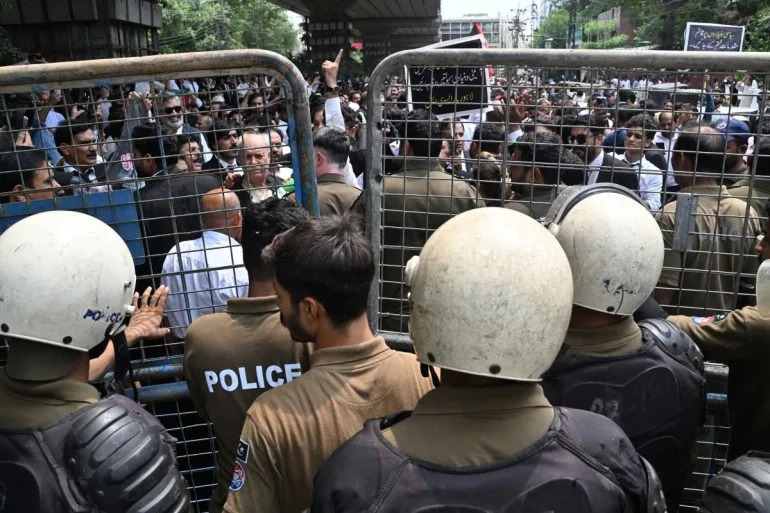
Police restrict PTI supporters as they protest for Khan's release in Lahore on August 5, 2026 [Arif Ali/AFP]
Khan was diagnosed in January with a retinal condition in his right eye and, according to PTI, has received five injections at a government hospital allegedly without prior notice to his family or lawyers. The Supreme Court has agreed to hear his petition to be transferred to a private hospital in Islamabad and to have access to doctors of his choice; the petition has been pending since February.
Public Response and Political Context
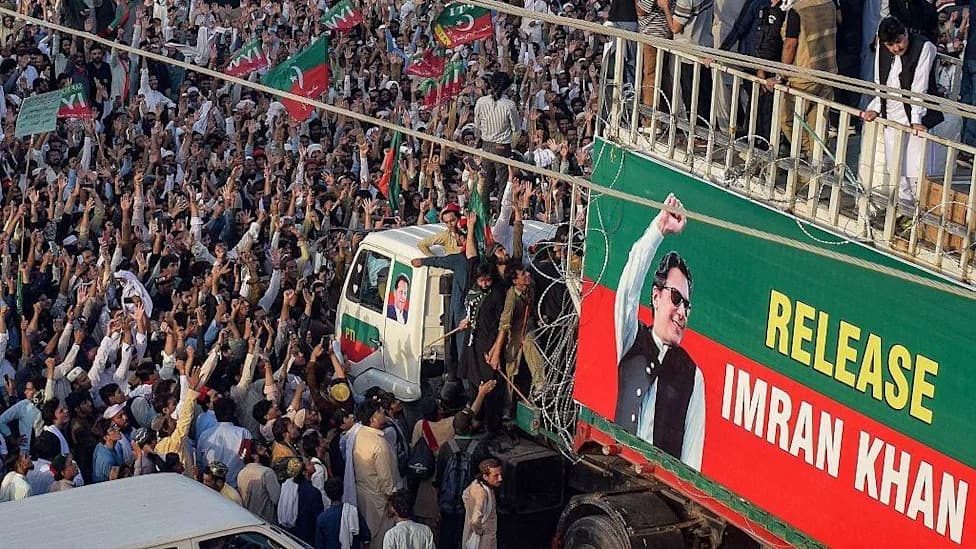
Under heavy security on the three-year anniversary, thousands of PTI supporters staged demonstrations across Pakistan calling for Khan's immediate release. PTI posted on X: "Three years. Thousands of days behind prison walls. Endless attempts to break his spirit. Yet they have failed." Party members described the demonstrations as part of a continuing struggle for democracy and constitutional rule.
The government has rejected allegations of mistreatment. Minister of State for Interior Tallal Chaudhry told Al Jazeera that international observations "do not override the jurisdiction of Pakistan's independent courts" and said Khan's conditions have been subject to continuous judicial oversight, adding that he has been provided "dedicated accommodation, cooking arrangements, exercise facilities and other amenities".
Analysts say Khan's prospects for release are influenced less by court rulings than by the political calculations of Pakistan's powerful military and governing parties. Some commentators argue that unless the military's strategic stance changes, there is little incentive for the state to facilitate Khan's return to active politics. Others note Khan's refusal to apologise for the May 9, 2023 violence — an apology reportedly sought by the military — complicates any reconciliation.
Legal Actors and Observers
PTI lawyers and politicians describe a pattern of relentless prosecutions, restricted access to counsel and family, and obstacles to judicial relief. Government officials say any alleged violations are subject to judicial review and reject claims of preferential treatment or extrajudicial settlements.
Photo captions: Police detain a PTI supporter in Lahore on Aug. 5, 2026; Police restrict PTI supporters as they protest for Khan's release in Lahore on Aug. 5, 2026. [Arif Ali/AFP]
Help us improve.