
Sen. Susan Collins announced she will oppose Todd Blanche's confirmation as attorney general, citing actions she says have politicized the Department of Justice. Blanche, a former personal lawyer to President Trump, has drawn criticism over an approximately $1.8 billion "anti-weaponization" fund and pledges linked to restricting abortion medication mailings. The nomination was advanced by the Senate Judiciary Committee, but Collins' opposition narrows his margin as Blanche needs a simple majority in the full Senate.
Sen. Susan Collins Opposes Todd Blanche's AG Nomination, Narrowing His Path to Confirmation
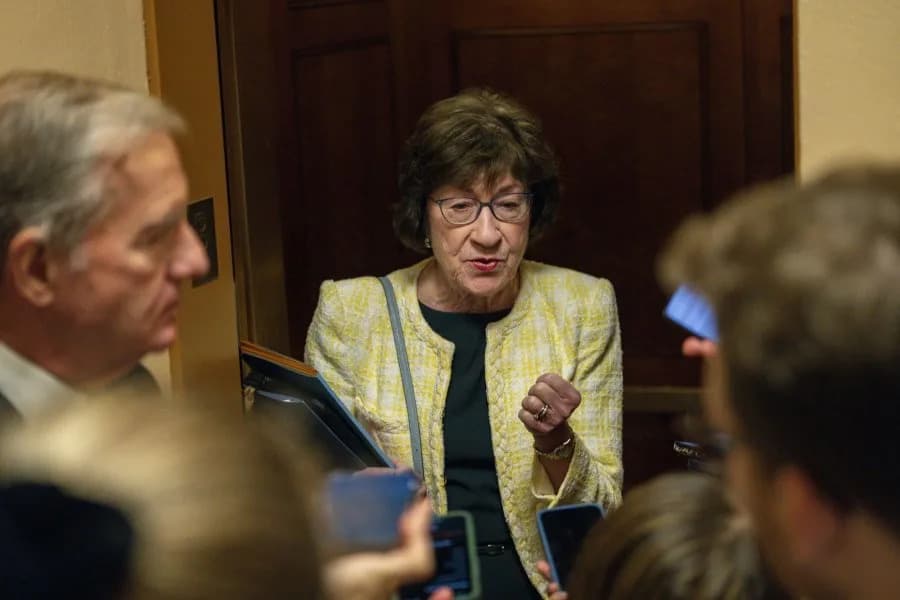
Sen. Susan Collins, R-Maine, said Tuesday that she would not vote to confirm Todd Blanche as attorney general of the Justice Department. Photo by Bonnie Cash/UPI
Aug. 4 (UPI) — Sen. Susan Collins announced Tuesday she will vote against Todd Blanche's confirmation as attorney general, a decision that tightens the margin for Senate approval and underscores growing bipartisan concern about the politicization of the Department of Justice.
"While I believe Mr. Blanche is a capable lawyer, the Department of Justice has become increasingly political. Mr. Blanche has taken several actions that have further eroded the department's independence, and that is the basis for my vote to oppose his confirmation," Collins, a Republican from Maine, said in a statement.
Why Collins Opposed the Nomination
Collins cited several concrete concerns: Blanche's role in establishing a controversial so-called "anti-weaponization" fund, his reported commitments to anti-abortion groups aimed at restricting the mailing of abortion medication, and the Justice Department's unsuccessful effort to indict six Democratic lawmakers over a video allegedly encouraging service members to refuse unlawful orders. "For these reasons, I will vote against this nomination," she added.
Nomination Status and Senate Math
President Trump nominated Blanche, his former personal lawyer, to lead the Justice Department in June. Blanche has served as acting attorney general since Trump dismissed Pam Bondi in April. His nomination was advanced out of the Senate Judiciary Committee after he provided written assurances that the controversial anti-weaponization fund had been rescinded, a key demand from some Republican senators.
To be confirmed by the full Senate, Blanche now needs a simple majority. All 45 Senate Democrats and both independents are expected to oppose him. With Senate Republican Leader Mitch McConnell absent and Collins opposing the nomination, Blanche can lose only one additional Republican vote and still reach the 51 votes needed.
Key Controversies
Critics from across the political spectrum — including Democrats, democracy advocates and many legal experts — say Blanche's actions have further politicized the Justice Department and may be being used to advance political goals. Among the most contentious moves was Blanche's approval of an approximately $1.8 billion anti-weaponization fund intended to compensate people who claim to have been harmed by alleged politicization at the DOJ, including some convicted in connection with the Jan. 6, 2021, Capitol attack.
The fund was part of a settlement to resolve a lawsuit President Trump filed against the federal government seeking $10 billion after an IRS contractor leaked his tax returns to the press. That settlement also included language shielding Trump, his two adult sons and the Trump Organization from certain audits, a provision that drew bipartisan concern.
Wider Reaction
Last month, more than 1,200 former Department of Justice employees from 14 administrations sent a letter to the Senate Judiciary Committee urging senators to reject Blanche's confirmation. They argued that his actions have made "communities less safe, Americans' rights less protected and our national security more vulnerable."
Some Republican senators remained undecided or pressured for additional guarantees; Sen. John Cornyn and Sen. Thom Tillis had sought written, binding proof that the fund was rescinded. Sen. John Curtis, R-Utah, said he will support Blanche following "robust discussions," while the positions of Sens. Bill Cassidy and Lisa Murkowski remained unclear.
What Comes Next
With the nomination now on the Senate floor, a confirmation vote could come as soon as lawmakers schedule it. Blanche's path depends on uniting nearly all Senate Republicans; a single additional GOP defection could block confirmation if all Democrats and independents vote against him.
Help us improve.





















