The founders of the proposed Ben Gamla Jewish charter school have sued after Oklahoma’s Statewide Charter School Board rejected their application, arguing the state's nonsectarian requirement amounts to religious discrimination. U.S. District Judge David Russell will consider requests to let the school open while litigation proceeds and to limit public access to the school's planning documents. The dispute occurs amid a broader nationwide chain of cases—Tennessee, Colorado and California—that raise the same core question left unresolved by a 4–4 U.S. Supreme Court split over whether charter schools are private entities that may teach religion.
Oklahoma Lawsuit Over Proposed Jewish Charter School Heads to Federal Court As Religious-Charter Debate Spreads Nationwide

The founders of a proposed Jewish charter school in Oklahoma will appear in federal court to ask a judge to allow the school to open after the Statewide Charter School Board rejected their application. The National Ben Gamla Jewish Charter School Foundation, Inc., led by former Democratic congressman Peter Deutsch, sued the board in March, arguing Oklahoma’s statutory requirement that charter schools be nonsectarian amounts to unlawful religious discrimination.
Ben Gamla’s organizers say the earliest a virtual version of the school could begin serving students is fall 2027. In their filing, they asked U.S. District Judge David Russell of the Western District of Oklahoma for two forms of relief: permission to open the school while litigation continues and an order barring intervening Oklahoma families from accessing certain internal planning documents, including proposed admissions and student-conduct policies.
Organizers’ View: Daniel Chen, an attorney with Becket, which represents the foundation, said many families—Jewish and non‑Jewish—want the “rigorous, faith‑based education Ben Gamla would provide.” Chen argued that intervenors seeking detailed planning documents are “on a fishing expedition” for sensitive information about students, donors and staff.
Opponents’ View: Attorneys for the families who sought to intervene disagreed, saying planning documents should be public so the community can evaluate whether proposed policies would discriminate on the basis of religion, sexual orientation or gender identity. Alex Luchenitser of Americans United for Separation of Church and State asked, “How religiously coercive will school operations be?”
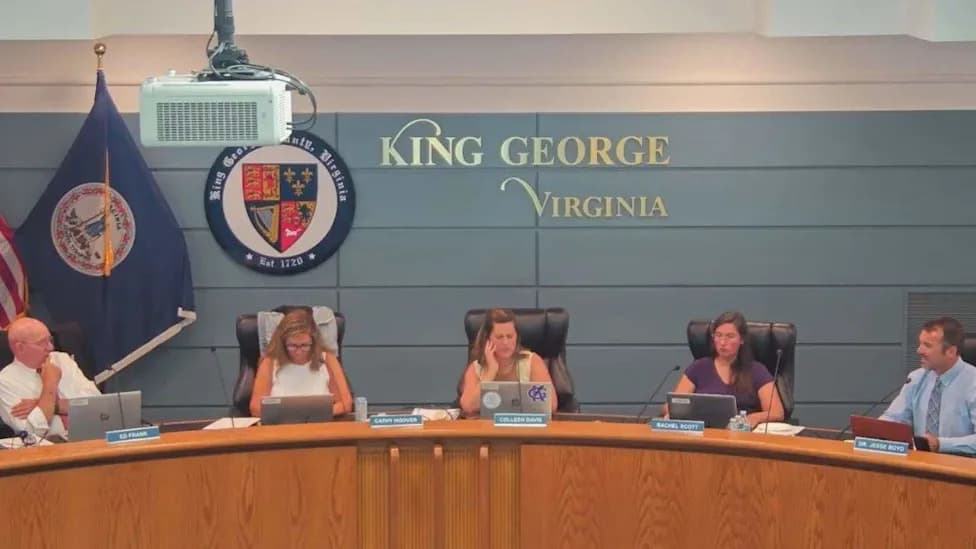
In June, Judge Russell allowed two groups of parents to intervene, writing that because the charter board declined to defend Oklahoma’s nonsectarian statute, the parents are effectively “the only litigants seeking to defend the constitutionality” of the law. The judge is expected to rule within weeks; he could rule on document access sooner.
Context And Parallel Cases
Ben Gamla is the second explicit religious charter effort in Oklahoma. Last year, a related dispute over St. Isidore of Seville Catholic Virtual School reached the U.S. Supreme Court but ended in a 4–4 tie, leaving unresolved whether charter schools are private entities that may explicitly teach religion. Supporters of religious charter schools say similar challenges in other states make it likely the issue will return to the high court.
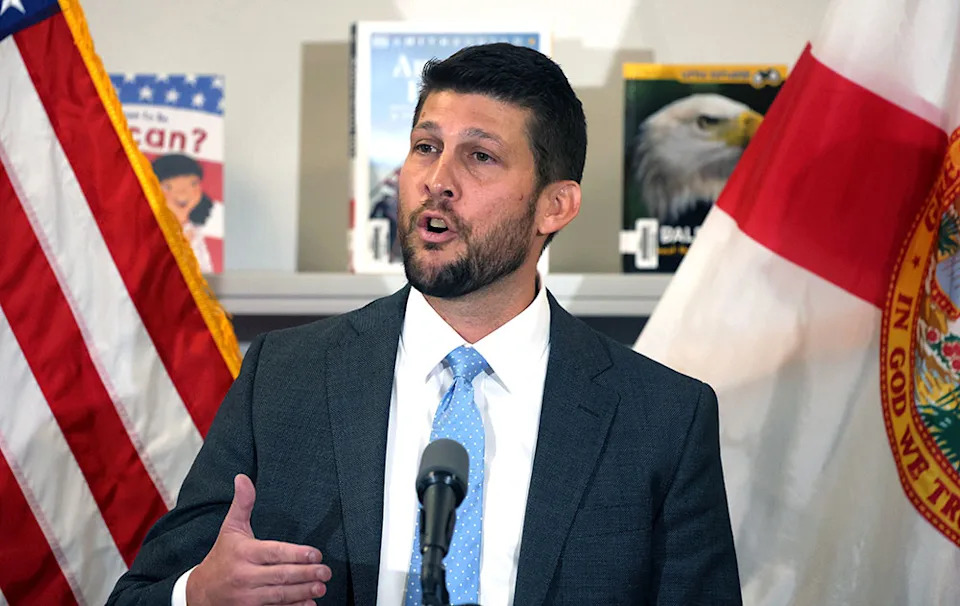
In an April opinion, Florida Attorney General James Uthmeier said excluding religious groups from opening charter schools violates the First Amendment. (Joe Burbank/Orlando Sentinel/Tribune News Service via Getty Images)
Across the country, related litigation is already underway. In Tennessee, Wilberforce Academy, a proposed “Christ‑centered” charter in Knoxville, sued after Knox County Schools said it would not accept the academy’s application; a trial is set for the week of Jan. 12. In Colorado, Riverstone Academy, a 30‑student Christian contract school, closed after health and safety violations and subsequent state finance changes made it ineligible for funding. In California, the Ninth Circuit recently held that a homeschool program affiliated with Blue Ridge Academy remains a public school and therefore cannot engage in overt religious instruction using public funds.
Liberty Justice Center, the conservative law firm representing families in one of the disputes, has until Aug. 20 to seek Supreme Court review in that matter.
Policy Stakes
The larger debate is whether charter schools are public entities fully subject to constitutional and civil‑rights requirements or private institutions that could, if courts rule accordingly, be allowed to provide religious instruction and potentially claim exemptions from laws that govern public schools (for example, open‑meetings rules and conflict‑of‑interest requirements). A June paper from the National Alliance for Public Charter Schools argues charters are not freestanding private institutions because they exist only by state action and use public resources. Critics—including education‑law scholars Kevin Welner, Carol Burris and Preston Green—warn that a court ruling treating charters as private could undermine public‑school accountability.
Those scholars have proposed requiring district authorizers rather than independent nonprofit boards to ensure charters are “unambiguously governmental entities.” Charter advocates, including Starlee Coleman of the Alliance for Public Charter Schools and groups such as the Center for Education Reform, oppose that change, arguing it would subject charters to greater district control and reduce autonomy and choice.
Meanwhile, Florida Attorney General James Uthmeier issued an opinion saying excluding religious groups from opening charter schools may violate the First Amendment—an opinion that has drawn attention but, so far, no immediate wave of new religious charter applications in that state.
As legal teams on both sides sharpen their strategies, the Oklahoma case is poised to be another important test of how courts define charter schools’ public or private status and the limits on religious activity in publicly funded school settings.
Help us improve.