Spider silk is a protein-based natural material with specialized fibers that spiders use for webs, safety lines and shelters. Researchers produce recombinant spider-silk proteins and shape them into particles, gels and scaffolds for biomedical uses, including controlled drug release and tissue engineering. Key advantages include exceptional toughness in some species and a room-temperature, water-based fiber-formation process that scientists aim to emulate. Experimental studies show silk systems can offer steady drug release for ~two weeks and support wound healing and nerve or bone repair.
From Spider-Man to the Lab: How Spider Silk Is Inspiring Drug Delivery and Wound Care
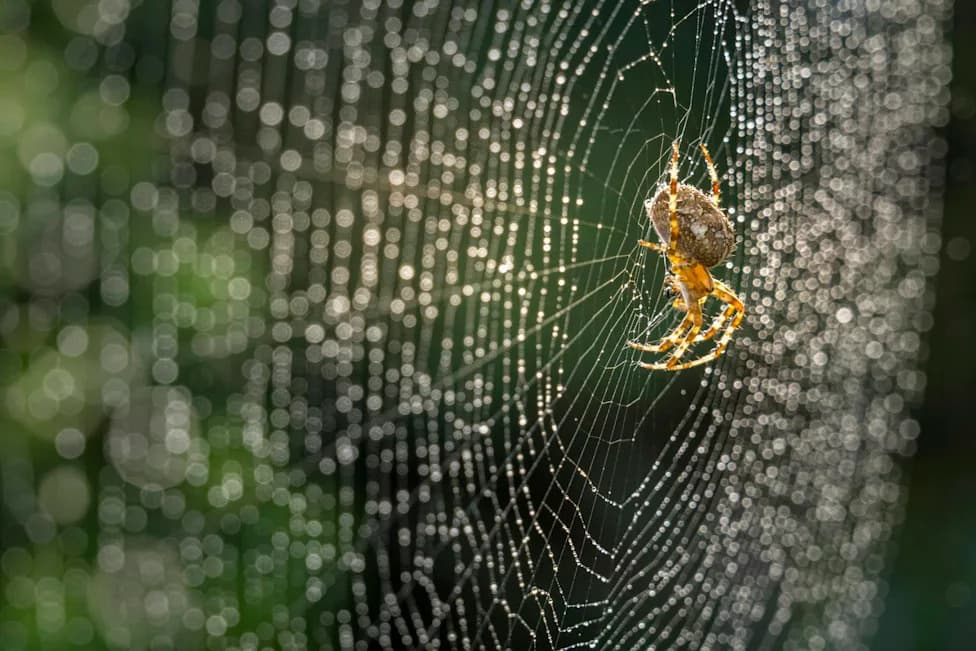
Spiders produce silk from a specialized gland and use it to build incredible web structures.James Rowland/500px via Getty Images
Spider-Man: Brand New Day (released July 31, 2026) imagines Peter Parker producing webbing from his body — a cinematic twist that highlights a real biological wonder: spider silk. While humans can’t spin silk from their bodies, researchers are studying how spiders make and use silk to inspire new medical materials for drug delivery, wound care and tissue repair.
What Is Spider Silk?
Spider silk is a protein-based material spiders secrete to build webs, safety lines, egg sacs and shelters. The web is the structure built from that material, in the same way steel is a material and a bridge is a structure. Different silk types perform different tasks: strong, structural fibers make the frame and radial spokes of an orb web, while a more elastic, sticky capture spiral traps prey.
How Spiders Make Silk
Spiders do not store finished thread. Instead, they keep concentrated silk proteins dissolved in water inside glands. As this protein-rich fluid flows through a narrowing duct, water is removed, pH falls, ion balances shift, and mechanical forces align the proteins so they assemble into a solid fiber at ambient temperature and in water — without high heat or harsh solvents. This efficient, green manufacturing process fascinates biomaterials scientists.
Molecular Design: Spidroins
The main components are very large proteins called spidroins, which contain alternating stiff sections that pack together and flexible sections that act like molecular springs. That architecture gives many silks both high strength and remarkable toughness. For example, Darwin’s bark spider (Caerostris darwini) produces dragline silk that, by volume, absorbed over 10 times the energy of Kevlar in one comparative study — though each web thread is extremely thin, so the absolute force to break a web remains small.
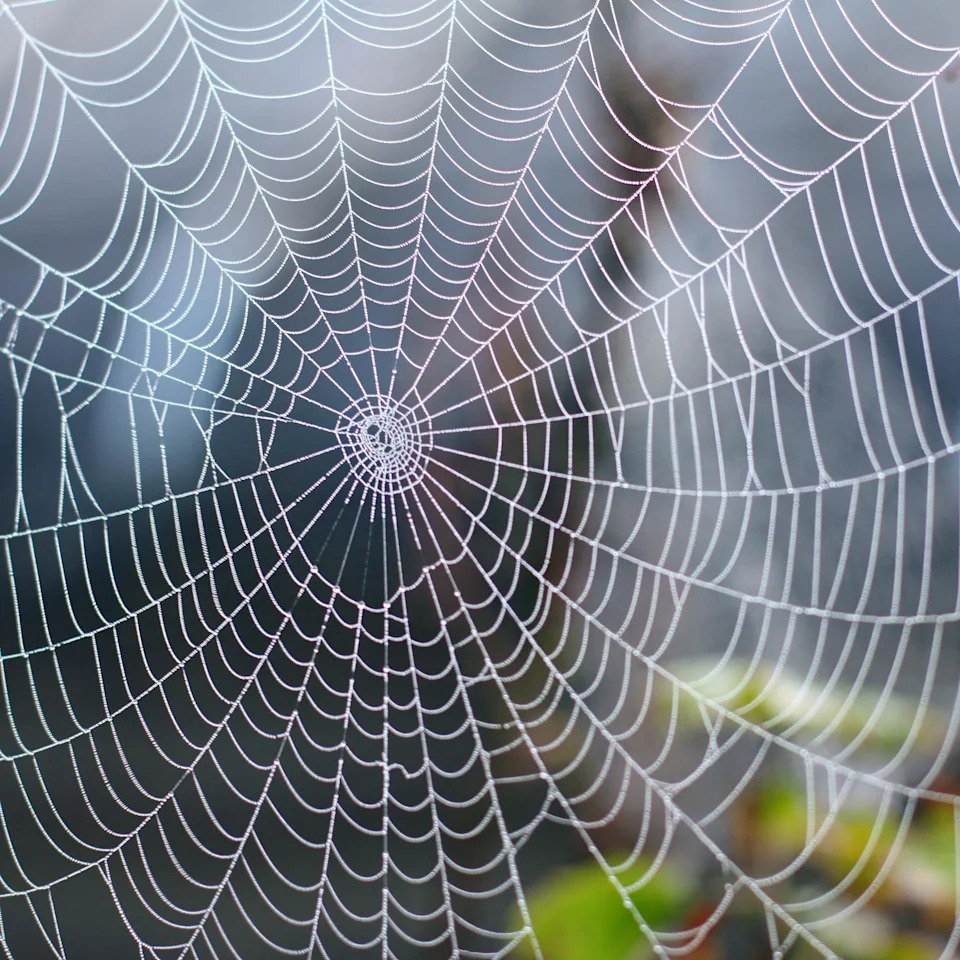
Spider webs are often made with multiple types of silk: a stronger form that creates a structure, and a more delicate, sticky form that traps prey.baza178/iStock via Getty Images Plus
Why Materials Scientists Care
Beyond ingredients, a material’s performance depends on how it is processed and organized — a central lesson from spider silk. Instead of harvesting silk from spiders, researchers insert silk genes into bacteria or other cells to produce recombinant silk proteins. These proteins can be fabricated into particles, films, gels, fibers and porous scaffolds for biomedical use.
Medical Applications Under Study
Engineered silk shows promise in several experimental areas:
- Drug Delivery: Silk particles can act as biodegradable reservoirs that protect medicines and modulate release. In the lab, engineered spider-silk particles released small molecules at an approximately constant rate for about two weeks.
- Wound Care: Recombinant silk has been tested as coverings for burns and as dressings that support healing.
- Tissue Engineering: Silk scaffolds provide a temporary 3D framework for cells to attach, grow and organize. Scientists add cell-binding signals or biological cues to guide cell behavior. Animal and lab studies have explored silk for nerve guidance and bone regeneration.
- Advanced Scaffolds: My team and others have applied similar principles using 3D-printed synthetic scaffolds that deliver DNA instructions to encourage blood-vessel growth and tissue repair.
Limits And Future Directions
Scientists cannot yet fully reproduce a spider’s precise control over fiber formation or its ability to build the complex architectures of natural webs. Still, the principles of silk’s molecular design and room-temperature, water-based fabrication continue to inspire experimental approaches to drug delivery, wound care and regenerative medicine.
Bottom line: Spider-Man delivers the spectacle; real spiders deliver a model for sustainable, high-performance biomaterials with promising medical applications.
Republished from The Conversation. Written by Aliasger K. Salem, University of Iowa. The author receives funding from NIH, NSF and Dow.
Help us improve.