
A Polling Europe survey taken as Ukraine advances EU accession talks finds 49% of EU respondents support Kyiv’s membership, 39% oppose and 12% are undecided. Spain shows the strongest backing at 65%, while Italy records 52% support. Opposition is highest in Poland (49%), influenced by a recent diplomatic row over the removal of President Zelenskyy’s Polish state honour after Ukraine named a unit after the WWII-era UPA. Accession negotiations currently focus on cluster six, covering external relations including defence, trade and foreign policy.
Where EU Voters Stand On Ukraine’s EU Bid — Spain Leads, Poland Lags
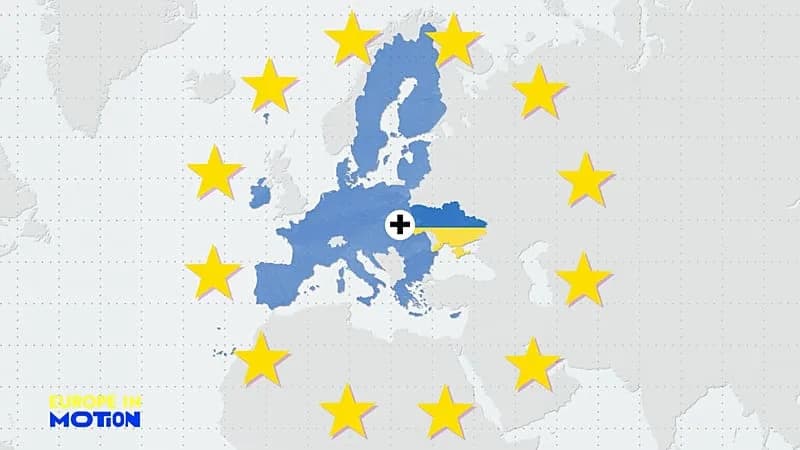
From Spain to Poland: Where does Ukraine's EU bid have the most support?
A new Polling Europe survey, carried out as Ukraine advances EU accession talks and the sixth negotiation cluster opened, maps public opinion across the European Union on Kyiv’s potential membership.
Key Findings
Overall EU Support: 49% of respondents across the EU say they support Ukraine joining the bloc, 39% oppose accession for now and 12% are undecided.
Strongest Backing: Spain shows the highest level of support at 65%, followed by Italy at 52% (with many Italians saying Kyiv should implement further reforms first).
Notable Opposition: Opposition is strongest in Poland, where 49% of respondents expressed resistance to Ukraine joining as a full voting member. France and Germany also show pluralities opposed in this poll.
Context Behind The Numbers
The survey was conducted in early July, shortly after a diplomatic dispute between Warsaw and Kyiv. Poland’s authorities withdrew Ukraine’s president Volodymyr Zelenskyy’s Polish state decoration, the Order of the White Eagle, following controversy over Ukraine’s decision to name a military unit after the World War II–era Ukrainian Insurgent Army (UPA).
The UPA is a contentious historical actor: while it fought both Nazi and Soviet forces in its bid for an independent Ukraine, units associated with it were also responsible for mass killings of Polish civilians in Volhynia and Eastern Galicia between 1943 and 1945. That history has fuelled the recent diplomatic fallout and shaped public sentiment in Poland.
Diplomacy And Reconciliation Efforts
Before the row, President Zelenskyy — who received Poland’s decoration in April 2023 — took steps intended to address historical grievances, including granting exhumation permits and opening archives related to wartime atrocities. Those gestures were described in Poland as evoking “satisfaction and hope,” and Polish Prime Minister Donald Tusk called for “a serious and friendly dialogue” to address disputes.
Security And Support From Member States
Relations between Kyiv and Madrid have deepened since Russia’s full-scale invasion in 2022. Spain says it has trained more than 9,000 Ukrainian service personnel and announced a €1 billion military aid package for Ukraine in 2026. These concrete measures help explain Spain’s strong public backing for Kyiv’s EU aspirations.
What’s Next
Accession talks are currently focused on cluster number six — external relations — which covers how Ukraine would align with the EU on defence, trade and international policy. Public opinion across member states will remain a key political factor as negotiators work through technical chapters and as governments balance domestic views with geopolitical considerations.
Bottom line: EU public opinion is divided. While several countries show strong support, ongoing diplomatic disputes and historical sensitivities — especially in Poland — are cooling public enthusiasm for Ukraine’s rapid accession.
Help us improve.





















