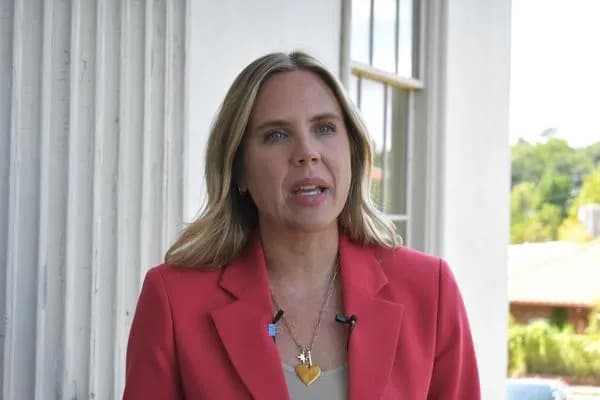
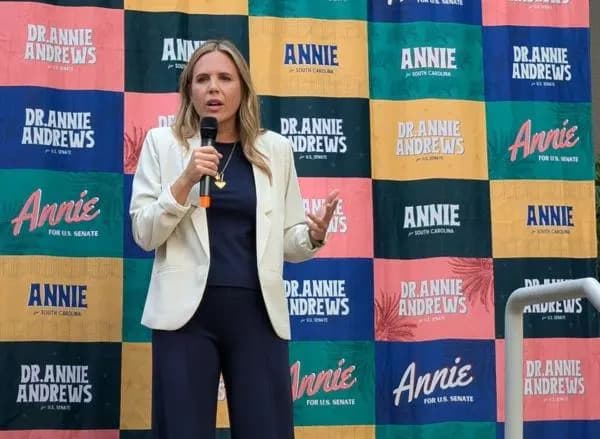
Five Republicans debated Aug. 3 for the Senate seat left by the late Lindsey Graham, largely agreeing on support for Trump, a hawkish posture on Iran, and priorities like tougher immigration enforcement and fiscal restraint. The key differences concerned how aggressively candidates would pursue those goals and who has the experience to represent South Carolina. Darline Graham, the appointed incumbent and Trump's endorsee, faced scrutiny over experience and her approach to legislative tactics like the filibuster. The Aug. 11 primary and a possible runoff will test how those debates translate to voter support.
Five Republicans Clash Over Lindsey Graham's Senate Seat — Little Policy Split, Big Questions on Experience
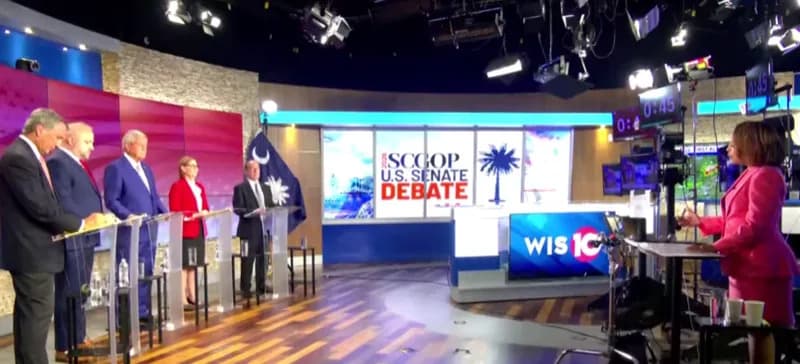
Candidates for the U.S. Senate seat vacated by U.S. Sen. Lindsey Graham participate in a debate hosted by Gray Television at the studios of WIS-TV in downtown Columbia on Aug. 3, 2026. Screenshot / Gray Media
COLUMBIA — In the first Republican debate for the U.S. Senate seat left vacant by the late Sen. Lindsey Graham, five leading candidates offered broadly similar conservative priorities but emphasized different approaches and experience levels.
Debate Snapshot
The Aug. 3 debate featured U.S. Reps. Russell Fry and Ralph Norman, businessman Mark Lynch, former Gov. Mark Sanford and Sen. Darline Graham, who was appointed to fill her late brother's seat. Candidates largely united in praise for former President Donald Trump, took hawkish positions on Iran and prioritized tougher immigration policies, lower federal spending and relief from rising living costs.
Where They Differed
Differences were more about temperament and tactics than core policy. Fry, 41, pitched himself as a voice of a "new generation" promising energetic support for the president's agenda. Norman positioned himself as an uncompromising conservative backed by Freedom Caucus allies. Lynch ran on a nativist immigration platform and criticized the status quo for not going far enough, while Sanford leaned into his reputation as an independent willing to break with the party when South Carolina's interests require it.
"I have agreed with the president overwhelmingly," Sanford said. "When we overlapped when I was in Congress, I think I have voted with him 90 percent of the time. But when I've disagreed, I disagreed, and I think that that's the American way."
Scrutiny On Darline Graham
Much of the night’s attention focused on Darline Graham, the newly appointed junior senator and Lindsey Graham's sister. She repeatedly praised Trump — noting his endorsement of her bid for a full six-year term — and defended her positions on national security, saying she believes Iran has nuclear-capable capabilities and that "the more we can fight them over there, the better."
Graham also diverged from her brother on a notable procedural issue: she signaled that the filibuster may be effectively gone if Democrats choose to eliminate it, a departure from Lindsey Graham's long-standing defense of the tool.
She revealed some distinct policy positions during the debate, including explicit support for data centers — a stance that set her apart from other candidates — while also confronting attacks on her experience and on her brother's record.
Context And Next Steps
The debate was a rare opportunity for South Carolina voters to see all five major contenders together before the Aug. 11 primary. A second statewide debate is scheduled for Aug. 4, though Darline Graham is not expected to attend because of prior commitments in Washington during the Senate's final voting week before recess.
Graham remains a front-runner in polls and is likely to make a runoff, but her limited local press availability and carefully managed public appearances since her appointment — following Lindsey Graham's death from a torn aorta on July 11 — have invited questions about readiness and experience. Her only national interviews so far were with Fox News hosts Sean Hannity and Trey Gowdy, both personal friends of the late senator.
For many voters, the debate clarified that the primary contest will be as much about style, experience and political instincts as about policy specifics. As one candidate put it, "The Senate is no place for on-the-job training."
Help us improve.