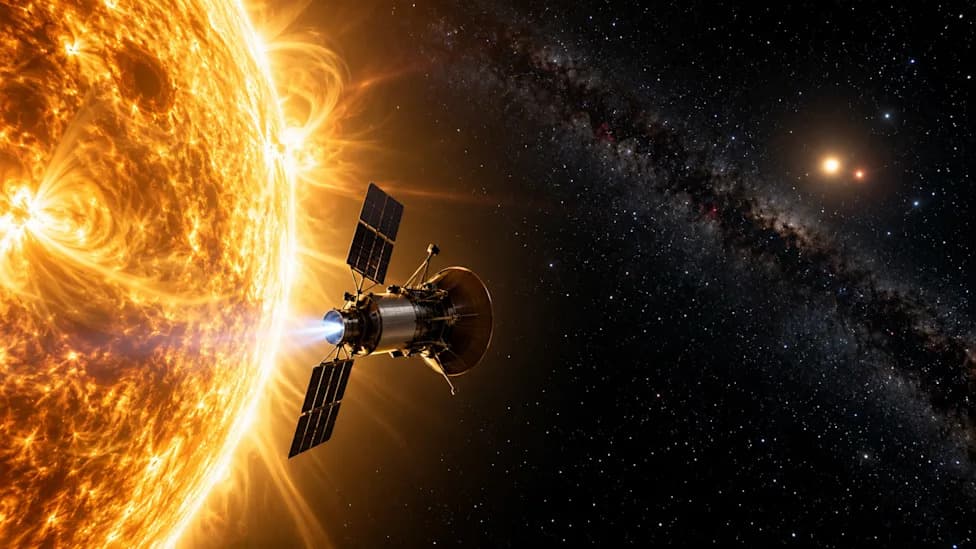
The Parker Solar Probe, launched in August 2018 and operated by Johns Hopkins APL for NASA, matched its own record speed on June 8, reaching roughly 430,000 mph (~120 miles/second). The probe is the first spacecraft to pass through the solar corona and flies closer to the Sun than Mercury, reaching about 3.8 million miles from the solar surface where temperatures can approach 1,700°F. The mission continues to deliver unique scientific measurements, though its long-term operations are under review amid agency staffing and budget pressures. NASA’s New Horizons retains a different distinction as the fastest self-propelled spacecraft at launch (36,400 mph in 2006).
Parker Solar Probe Repeats Record Run, Reaching About 430,000 mph — The Fastest Human-Made Object
APL
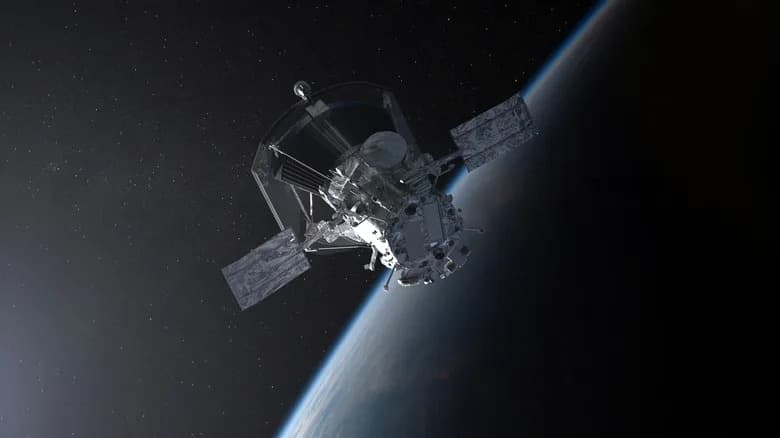
On June 8 the Parker Solar Probe matched its own top speed and once again pushed the limits of human exploration while collecting detailed scientific data. Designed and operated by the Johns Hopkins Applied Physics Laboratory (APL) for NASA and launched in August 2018, the probe uses close solar flybys and gravity assists to accelerate to extraordinary velocities.
Top Speed: During its closest approaches to the Sun, Parker reaches roughly 430,000 miles per hour (about 120 miles per second), making it the fastest human-made object on record.
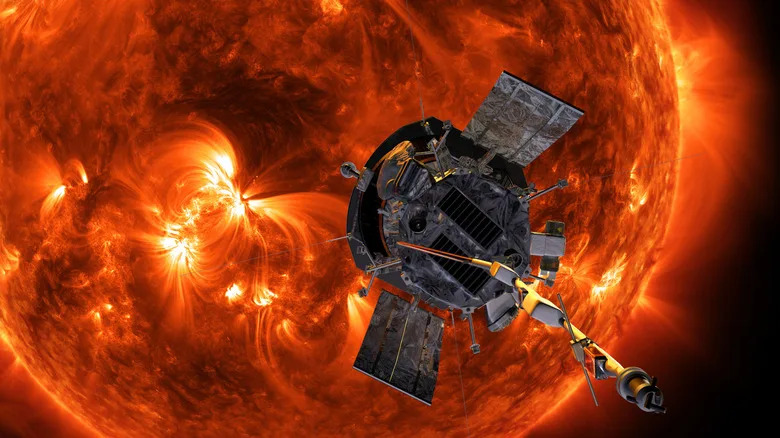
Mission Goal: Parker’s primary objective is to study the Sun’s outer atmosphere — the solar corona — and the processes that drive the solar wind and energetic events such as flares and coronal mass ejections. To do that it flies closer to the Sun than any previous spacecraft, even closer than Mercury, and it is the first vehicle to pass directly through the corona.
Proximity and Conditions: At its nearest approach the probe comes within about 3.8 million miles of the Sun’s visible surface, where local conditions can reach roughly 1,700°F. These conditions vary with the Sun’s approximately 11-year activity cycle; the cycle last peaked in 2024, when Parker first logged the speed and proximity milestones it has since repeated.
APL
Scientific Value: By sampling particles and magnetic fields so close to the Sun, Parker is helping scientists understand how the corona is heated, how the solar wind is accelerated, and how space weather originates — all information that improves forecasting and informs future missions.
Mission Outlook: The long-term future of the Parker mission is currently under review at NASA amid agency-wide staffing constraints, waves of experienced employees choosing buyouts, and proposed budget pressures. While the spacecraft is engineered to withstand extreme thermal conditions near the Sun, its continued operations also depend on programmatic and budgetary decisions.
Alternate 'Fastest' Claim: Another spacecraft, NASA’s New Horizons, holds a separate distinction: it achieved about 36,400 mph during its 2006 launch — the fastest speed attained by a spacecraft via onboard propulsion at launch rather than by gravitational assists. New Horizons later delivered the most detailed images of Pluto and explored the Kuiper Belt object Arrokoth.
Why It Matters: Parker’s repeated record runs are more than headline-grabbing speeds — they enable unique in-situ science that will deepen our understanding of the Sun and its influence throughout the solar system, with practical benefits for satellite operations, astronauts, and technology on Earth.
Help us improve.