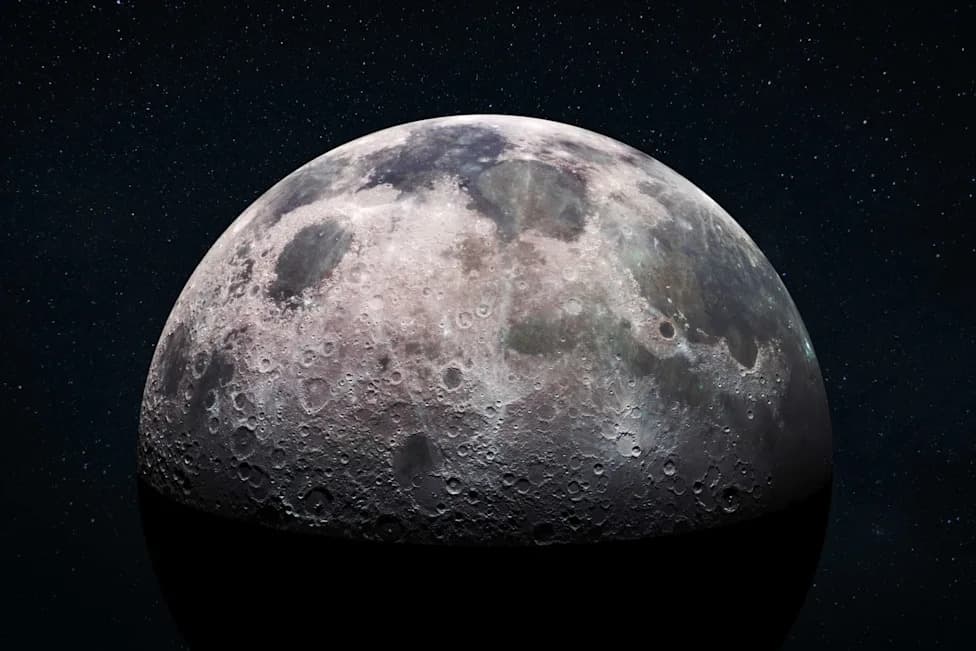
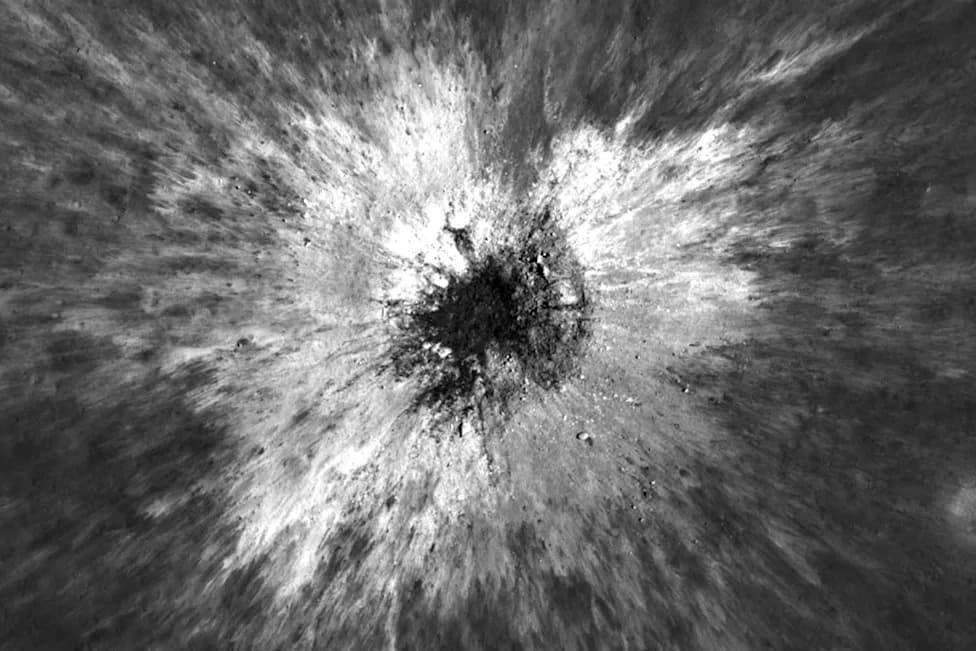
The upper stage of a SpaceX Falcon 9 (about 4,000 kg) will hit the Moon on Aug. 5, 2026, at ~2:35 a.m. EDT, creating an estimated 89‑foot (27 m) crater. The stage was left in a moon‑crossing high‑Earth orbit after nearly all its fuel was expended delivering two private landers in January 2025. Subtle forces — gravitational interactions and solar effects — gradually steered the stage onto a lunar collision course. Scientists plan to use the impact to test flash detection, seismic location methods, and to study hazards posed by space debris to future lunar bases.
SpaceX Falcon 9 Upper Stage Set To Strike Moon Aug. 5 — What Put It On A Collision Course?

Firefly Aerospace's Blue Ghost moon lander captured this view of a lunar sunset, with Earth and Venus also visible, on March 16, 2025.
On Wednesday, Aug. 5, 2026, at approximately 2:35 a.m. EDT (06:35 GMT), the upper stage of a SpaceX Falcon 9 rocket is expected to collide with the lunar surface, producing a crater roughly 89 feet (27 meters) wide. The 8,800-pound (about 4,000 kg) stage has been drifting in a moon-crossing high‑Earth orbit since its January 2025 launch.

Firefly Aerospace's Blue Ghost moon lander captured this view of a lunar sunset on March 16, 2025. The upper stage of the SpaceX Falcon 9 rocket that sent Blue Ghost to the moon is set to slam into the lunar surface on Aug. 5, 2026. | Credit: Firefly Aerospace
How It Ended Up On A Lunar Trajectory
The Falcon 9 launched in January 2025 carrying two private robotic landers: Firefly Aerospace’s Blue Ghost and Tokyo-based ispace’s Resilience. Blue Ghost successfully landed and completed its mission; Resilience was lost during its touchdown attempt. Unlike Falcon 9 first stages (which SpaceX routinely recovers), the second stage is single-use. Nearly all of its fuel was consumed to send the landers to their deployment point, leaving insufficient propellant for a controlled deorbit into Earth’s atmosphere.
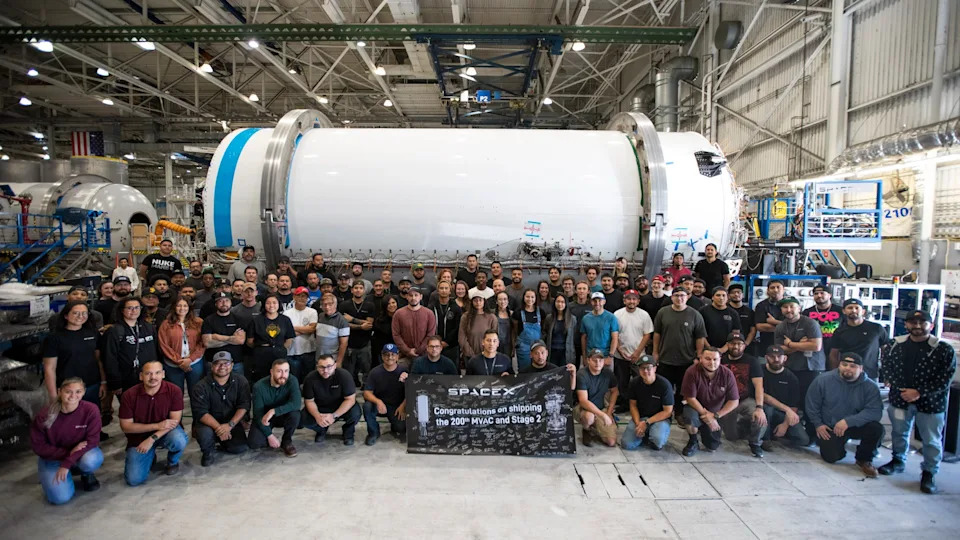
A SpaceX photo of one of the company's Falcon 9 upper stages, taken in 2022. A similar second stage is expected to impact the moon on Aug. 5, 2026. | Credit: SpaceX
According to a recent study led by Benjamin Fernando of Los Alamos National Laboratory, SpaceX performed an alternative maneuver that complied with relevant safety rules and regulations but did not park the stage in a permanently stable orbit. Over the subsequent 18 months, small, persistent forces — primarily gravitational interactions within the Earth–Moon system and the effects of solar activity — nudged the stage onto a moonbound path.
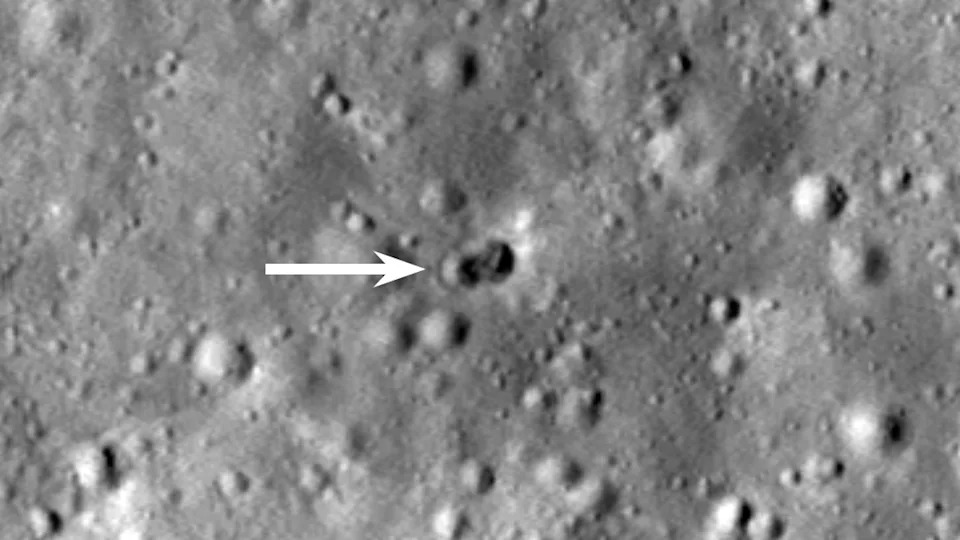
The double crater created on the moon by the March 2022 crash of the upper stage of China's Long March 3C rocket. | Credit: NASA/Goddard/Arizona State University
Why Scientists Are Watching
Although the collision will occur on the Sun‑lit side of the Moon and will likely be difficult to see with the naked eye from Earth, astronomers and lunar researchers view the event as a useful experiment. Observatories and impact‑detection networks plan to measure the light flash, search for ejecta plumes with telescopes, and attempt seismic localization of the strike if instruments on or near the Moon record signals.
Fernando and colleagues say the impact offers an opportunity to test detection pipelines, refine methods for measuring impact flashes, and better understand the multiple hazards that space debris could pose to future lunar infrastructure and crews — data that will be valuable as NASA and commercial partners build out lunar bases under the Artemis program.
Policy And Safety Implications
Julianna Scheiman, SpaceX’s director of NASA science and Dragon programs, told reporters that the company is working with NASA and other agencies to identify better disposal paths for high‑energy missions operating in the Sun–Earth–Moon system to reduce the likelihood of spent stages threatening occupied lunar sites in the future.
Precedents
The upcoming Falcon 9 impact is not the first time human‑launched hardware has struck the Moon. Third stages from NASA’s Saturn V rockets impacted the lunar surface during several Apollo missions. More recently, on March 4, 2022, a rocket body struck the Moon and produced a distinctive double crater; investigators later identified that object as the upper stage of a Long March 3C rocket associated with China’s Chang'e 5‑T1 mission.
What To Expect: A localized impact on the Sun‑lit lunar hemisphere, a crater estimated ~27 meters wide, and potential short‑lived ejecta plumes that may be detectable by telescopes and impact‑monitoring networks.
Help us improve.