The U.S. Department of Homeland Security has banned imports from 43 companies tied to labor facilities where Uyghurs are reportedly forced to work, raising the U.S. blacklist to 187 firms — about a 30% increase. Human rights groups and U.N. reporting say more than one million Uyghurs have been detained in Xinjiang since 2017, with roughly 500,000 estimated to remain in reeducation camps and subject to surveillance, religious restrictions and forced labor. The U.S. determined in 2021 that China’s treatment of Uyghurs met the threshold for genocide; the U.K., Canada and the EU have taken related measures, while dozens of other countries have publicly backed China’s position.
DHS Adds 43 Companies to Uyghur Forced-Labor Blacklist, Expanding U.S. Crackdown
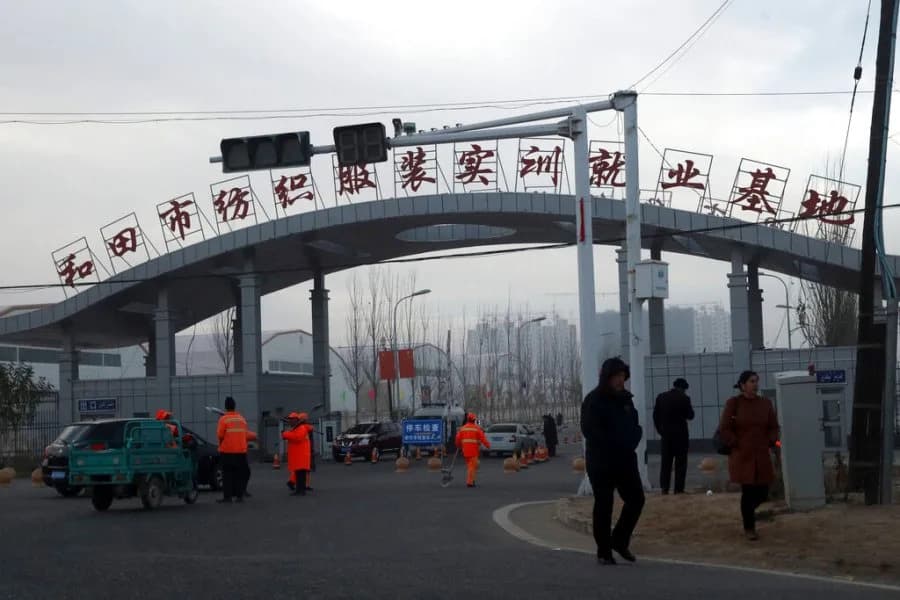
The U.S. Department of Homeland Security has moved to block imports from 43 companies tied to labor facilities in China where Uyghurs, a predominantly Muslim ethnic minority, are reported to be compelled to work. The latest action raises the total number of firms subject to U.S. restrictions to 187 — roughly a 30% increase in entities believed to be linked to forced labor in Xinjiang.
DHS Rationale
"The American worker must not be undercut and cheated by foreign companies that use slave labor," DHS Secretary Markwayne Mullin said, framing the decision in both economic and moral terms.
Who Are the Uyghurs?
The Uyghurs are a Turkic-speaking, predominantly Muslim people indigenous to northwest China’s Xinjiang region. Estimates place the Uyghur population in Xinjiang at about 11 to 12 million, forming a substantial regional minority with a distinct language, culture, and history that extends more than a millennium.
Allegations and International Findings
Human rights groups and policy organizations, including the Council on Foreign Relations, say more than one million Uyghurs and other ethnic minorities have been detained in Xinjiang since 2017. Those not imprisoned reportedly face intense surveillance, restrictions on religious practice, coerced labor, family separations and allegations of forced sterilizations. Rights advocates estimate roughly half a million people remain in so-called reeducation camps.
A 2022 U.N. Human Rights Office report documented "patterns of torture or other forms of cruel, inhuman, or degrading treatment" in Xinjiang between 2017 and 2019. Other accounts describe forced pledges of loyalty to the Chinese Communist Party, demands to renounce Islam, sleep deprivation during interrogation and allegations of sexual abuse. Children of detained parents have reportedly been placed in state-run boarding schools where instruction is predominantly in Mandarin.
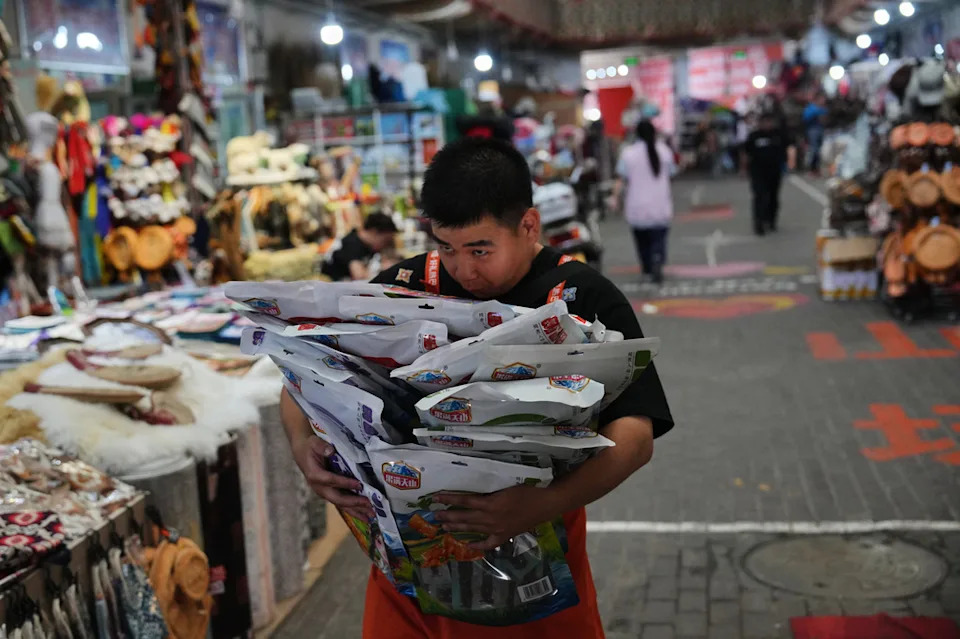
A worker carries packaging of local specialty products at Jinshan market in Altay prefecture, in the northwest Xinjiang Uyghur Autonomous Region of China, Wednesday, June 10, 2026. (AP Photo/Andy Wong)
Beijing's Response
Chinese officials initially denied the existence of mass detention facilities, later characterizing them as voluntary vocational training centers intended to teach Mandarin, job skills and counter extremism. Beijing has dismissed critical reporting as fabrications by "anti-China forces."
International Reactions and Policy Measures
In 2021 the United States determined that certain actions by Chinese authorities toward Uyghurs amounted to genocide; Canada and the United Kingdom have issued similar findings. U.S. trade measures include the Uyghur Forced Labor Prevention Act, which aims to block goods made with forced labor from entering U.S. supply chains. The European Union implemented a forced-labor import ban in 2024, and the U.K. has proposed corporate fines for companies with forced-labor links. At the same time, in 2022, about 60 countries — including Pakistan and Saudi Arabia — signed a diplomatic statement supporting China’s characterization of Xinjiang as an internal matter, drawing criticism from rights groups.
Why This Matters
The DHS action is part of a broader international effort to identify and disrupt supply chains that may rely on coerced labor, protect workers’ rights, and signal consequences for human-rights abuses. The expansion of the blacklist increases pressure on companies and importers to verify supply chains and avoid complicity in alleged abuses.
Photo caption: Workers pack local specialty products at a market in Altay prefecture, Xinjiang, June 10, 2026 — an image underscoring the economic and social complexity of the region.
What To Watch
- Whether further entities are added to U.S. and international blacklists.
- How importers and global brands adjust sourcing and compliance practices to meet new enforcement standards.
- Diplomatic and trade responses from governments that continue to support or oppose China’s Xinjiang policies.
Help us improve.