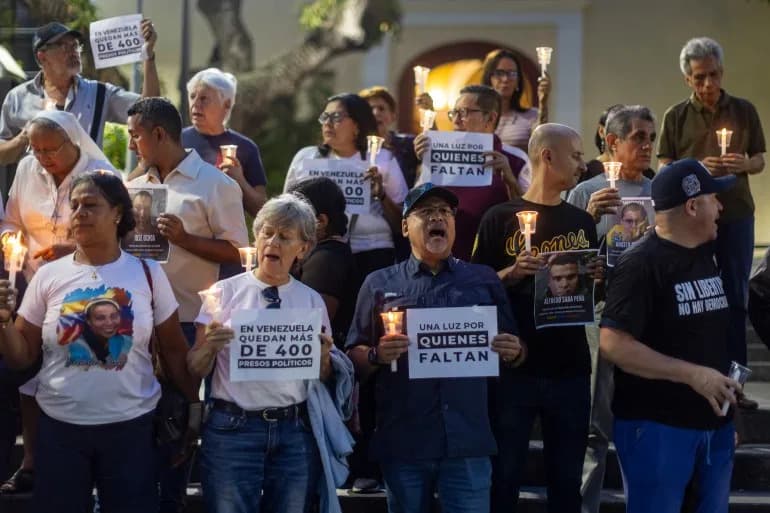
The author describes detention at Rodeo Uno, Venezuela's maximum-security prison, where guards posted fabricated cell identities and authorities staged a mass proceeding that functioned as a kangaroo court. A March 7 event recycled blanket evidence, featured a judge who dismissed international rights, and produced no rulings. The author coins the term "breadcrumbing" for procedural theater that renews hope without changing status. Tangible signs—extra food, outdoor time, and medical attention—proved the clearest indicators of imminent transfer or release.
Inside Rodeo Uno: False Names, Kangaroo Courts, and the Real Signals of Release
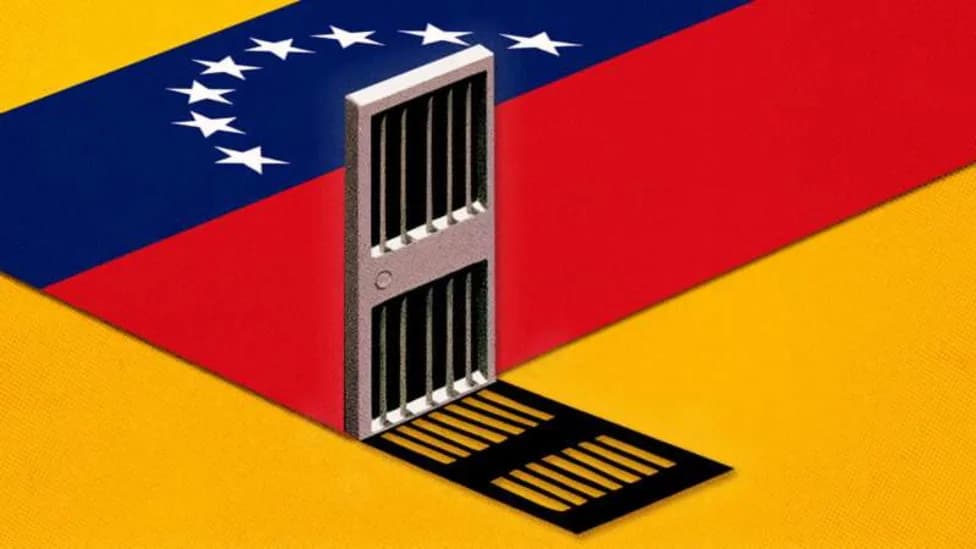
Illustration: Fatima Ruiz, Midjourney
Not long after I spent 11 days in a spartan clinic attached to Rodeo Uno, Venezuela's maximum-security prison, inmates across from my cell told me the loose sheet taped outside my door bore a new name: Jhon Piamond. I could make out similar sheets outside other cells, though the angle kept me from seeing my own directly.
The name felt contrived: Jhon—a Venezuelan rendering of John—and Piamond, clearly Diamond with the first letter altered. During bed checks, guards called for Jhon Piamond and waited for me to answer.
"Who the hell is Jhon Piamond?" I asked. No one explained. The guards did not seem puzzled about who I was, and the other Americans detained with me knew my identity. Still, the institution treated the fabricated sheet as if it were official.
This was not ordinary intake confusion. Rodeo Uno houses Venezuelans and foreign nationals whose detentions are entangled with politics and diplomacy. At that stage I had not been formally charged. Nearly four months into my detention, authorities applied the same sweeping allegations used against many foreign prisoners—terrorism, financing terrorism, espionage and treason. Paperwork and proceedings inside the prison offered little reliable information about whether we would be freed. Formalities could suggest movement while leaving our status unchanged.
Twenty-eight days later, on January 31, 2025, four of the six Americans at Rodeo Uno were released. Two other Americans were transferred in from a different Caracas prison, replacing me and another detainee on the list for release. I was moved from the fourth-floor section nicknamed Gringolandia to a floor populated by Venezuelan prisoners. People across from me said the paper outside my cell now read Joseph St. Clair.
No official announced a correction or acknowledged that the earlier identity had been false. The prison stopped calling me Jhon Piamond, and later some foreign prisoners arrived under what appeared to be their real names. I concluded the fictitious labels served a concealment purpose: once the released Americans could tell the U.S. government who remained behind bars, the fiction lost much of its utility. I cannot prove the institution's exact motive, only that the practice changed as political circumstances shifted.
March 7: A Mass Proceeding That Wasn’t A Trial
On March 7, the prison assembled roughly 150 detainees—first men, then women—from many countries. We wore blue uniforms and handcuffs. Masked guards with rifles moved among us. Officials sat at a cheap folding table that looked more at home in a garage than in any legitimate courtroom.
A lawyer spoke rapidly in Spanish. When I asked him to slow down because many of us were not native speakers, he obliged. Afterwards I asked two basic questions: "What's my name?" and "What country am I from?" He could not answer either. I asked how he could represent me without knowing those facts.
The problem went beyond one unprepared lawyer. Whatever officials chose to call the event, it functioned as a kangaroo court. Authorities recycled blanket evidence from a case years earlier and applied it to batches of prisoners instead of linking individuals to specific accusations. The presiding judge, Carlos Enrique Liendo Acosta, made the lawlessness explicit: when detainees invoked international law and consular rights, he laughed and dismissed those protections. Armed guards stepped in front of men who tried to speak, a clear tactic of intimidation.
When the session ended, nothing tangible followed—no ruling, sentence, deportation order, written disposition, or announced next step. We returned to our cells with the same status as before.
Breadcrumbing
Still, the proceeding had an effect. It consumed a day and gave prisoners hours and days of speculation: Did a lawyer’s arrival mean cases were moving? Did the judge’s presence signal impending deportation? Official silence turned every small detail into evidence. I came to call that effect "breadcrumbing"—procedures that create the appearance of movement and renew hope without actually changing detainees' legal status.
The more reliable signals were quieter and material. In the days before the January 31 release, I watched Americans housed with me receive substantially more food, patio time, and medical checks—especially older men. About a week before a date I was told I would leave (May 14), staff gave me extra meals, sunlight, more frequent clinic visits, and insect repellent for severe bites.
Those changes required real resources and altered routines. They were not courtroom theater. They indicated someone expected to transfer a living person whose condition would soon be visible outside the prison. My release did not occur on May 14; I left on May 20. By then, an extra plate of food felt like a more reliable indicator than any judge.
The court said nothing. The food did.
Help us improve.