Robert E. Bush, an 18‑year‑old Navy hospital corpsman attached to Marines at Okinawa, won the Medal of Honor for rushing to treat and protect his wounded platoon leader on May 2, 1945. While administering an intravenous plasma transfusion under heavy counterattack, he fired the leader’s carbine, was wounded by grenades and lost sight in one eye, yet refused care until his patient was evacuated. Bush received the Medal of Honor from President Truman and later became a businessman and president of the Congressional Medal of Honor Society.
How an 18‑Year‑Old Navy Corpsman’s Medical Courage Turned the Tide at Okinawa
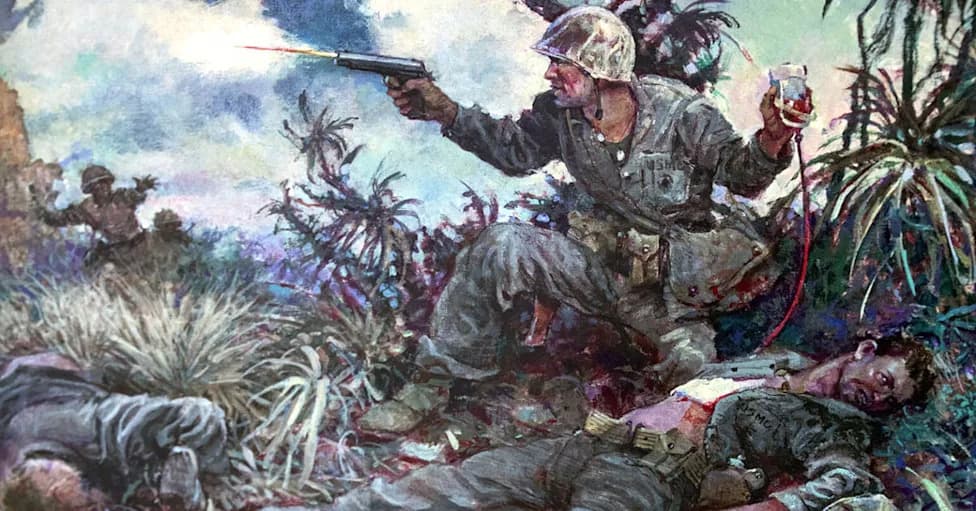
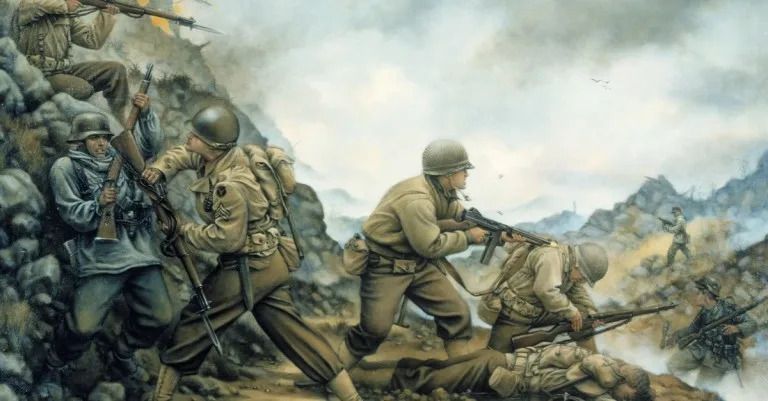
A painting depicts Navy Petty Officer 3rd Class Robert E. Bush during the Battle of Okinawa in 1945. (U.S. Marine Corps/Cpl. Jonathan Willco)
A month after landing on Okinawa, Hospital Apprentice First Class Robert E. Bush learned a grim assessment: the 1st Marine Division was considered expendable in the U.S. effort to seize the island. That sobering news sharpened the resolve of Bush and his comrades as they prepared for some of the fiercest fighting of World War II.
Heroism Under Fire
On May 2, 1945, during the desperate fight for Kunishi Ridge, Bush—then 18 and serving as a Navy hospital corpsman attached to the Marines—raced to the aid of his wounded platoon leader, Corporal Jim Roach. Two Marines who accompanied him were killed en route. Alone at Roach’s side, Bush administered an intravenous plasma transfusion while Japanese forces mounted a counterattack.
"If they're going to take me, then by God, they're going to pay the bill," Bush later recalled in a "Living History" interview with the Congressional Medal of Honor Society.
Holding the plasma bottle with one hand, Bush seized Roach’s carbine with the other and fired until the magazine was empty. When enemy soldiers hurled grenades at their position, Bush instinctively raised his left arm—saving his left eye but costing him sight in his right eye and inflicting other wounds. Despite his injuries, he refused medical attention until Roach was evacuated.
Recognition and Aftermath
For these actions Bush was awarded the Medal of Honor, presented by President Harry S. Truman on October 5, 1945—one of the youngest recipients of the nation’s highest military decoration. He later served as president of the Congressional Medal of Honor Society from 1971 to 1973.
Context: The Battle of Okinawa
The 3rd Platoon, Company G, 2nd Battalion, 5th Marine Regiment arrived on Okinawa on April 1, 1945. The U.S. Tenth Army committed more than 60,000 troops to wrest control of the 465‑square‑mile island from entrenched Japanese defenders. The Battle of Okinawa lasted 82 days, ending on June 22, 1945, and earned the grim nickname the "Typhoon of Steel." U.S. casualties exceeded 49,000, including more than 12,000 killed; Japanese military deaths were about 90,000 and civilian fatalities reached into the six figures, according to the National WWII Museum. The Tenth Army commander, Lt. Gen. Simon Bolivar Buckner Jr., was killed by shellfire during the fighting.
Life After War
After the war, Bush returned home, married, finished high school and used the GI Bill to attend the University of Washington. He went on to a successful business career and remained active in veterans’ affairs until his death on November 8, 2005, at age 79. Reflecting on his award, Bush emphasized that the Medal recognized many who never received formal honors and those who did not return home.
Sources: Congressional Medal of Honor Society ("Living History" interview), National WWII Museum, contemporary military records and photographs documenting corpsmen and casualty evacuation during the Battle of Okinawa.
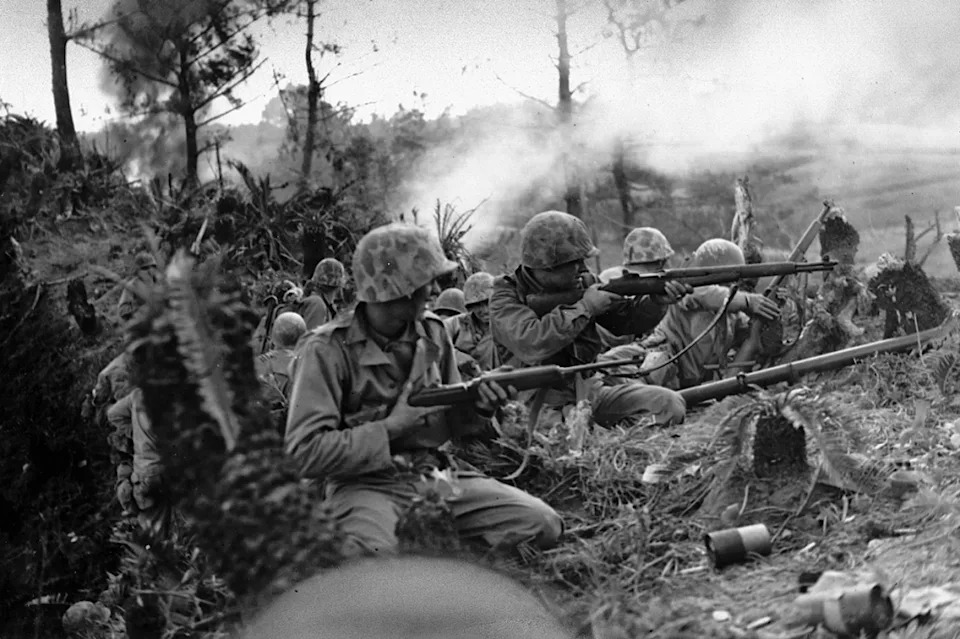
U.S. Marines battle for control of a ridge near Naha, Okinawa, in May 1945. (U.S. Marine Corps)
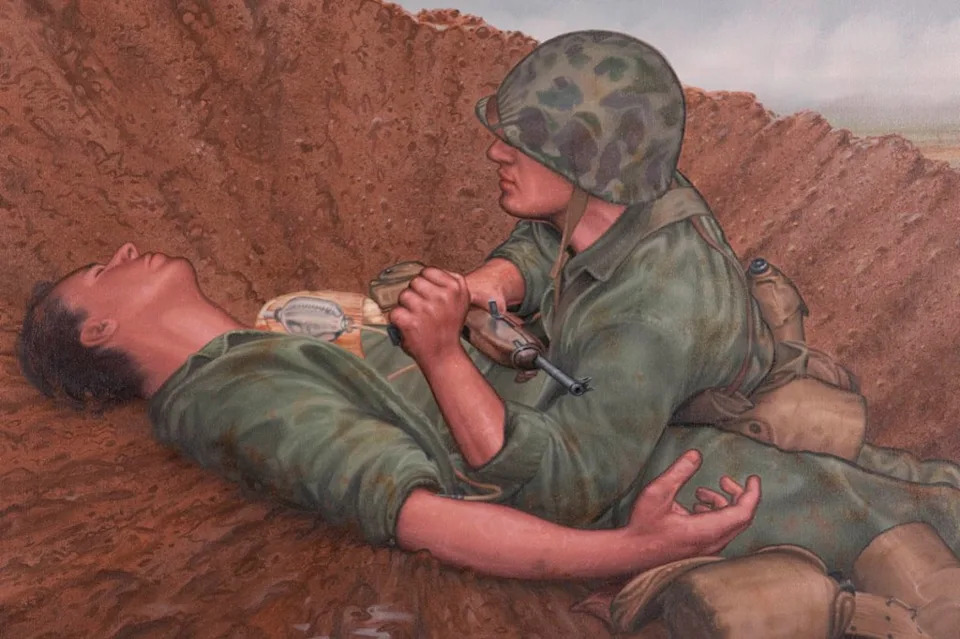
Artist Morgan Wilbur's painting depicts Hospital Apprentice First Class Robert E. Bush administering aid to a wounded Marine during the Battle of Okinawa in 1945. (U.S. Navy/Morgan Wilbur)
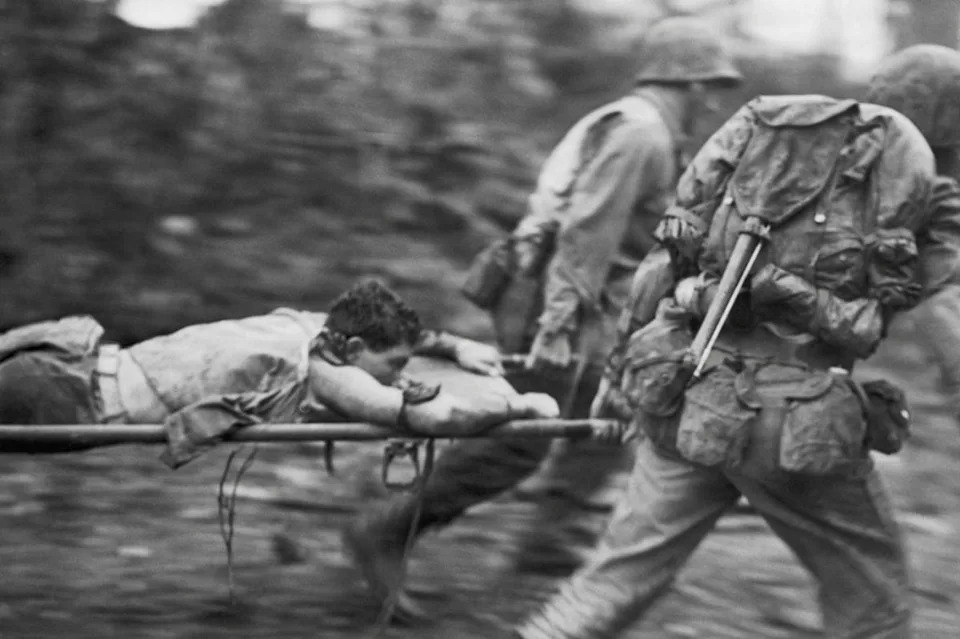
U.S. service members carry a wounded Marine on a stretcher to a medical aid station during the Battle of Okinawa in 1945. (U.S. Marine Corps)
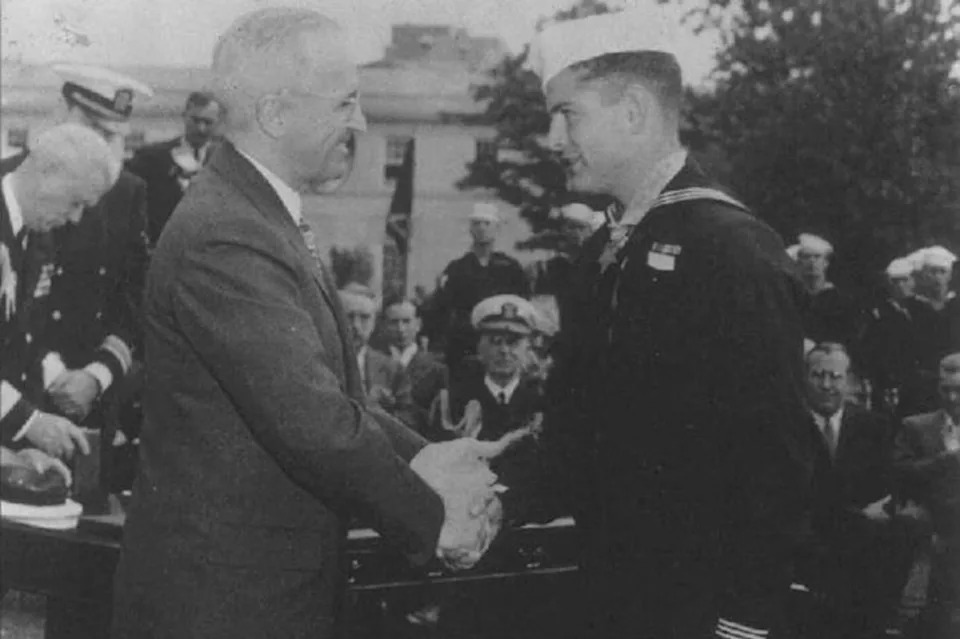
Corpsman Robert E. Bush receives the Medal of Honor from President Harry S. Truman in Washington, D.C., October 5, 1945. (U.S. Marine Corps)
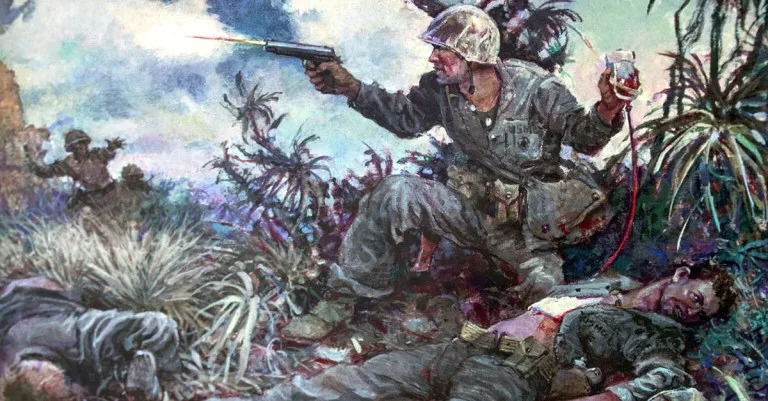
Robert E. Bush World War II
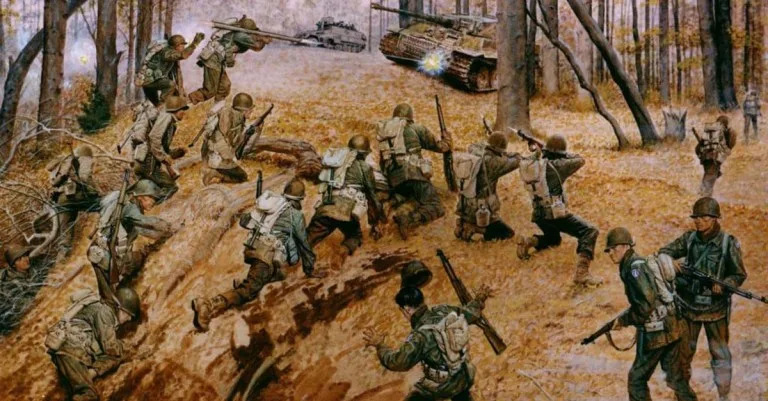
442nd Regimental Combat Team
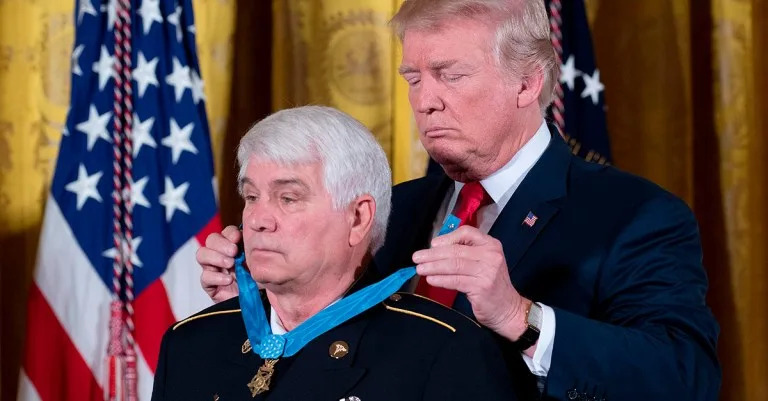
Medal of Honor Jim McCloughan
thomas wigle red bull winter line
UH-2A Seaspite helicopter
Help us improve.