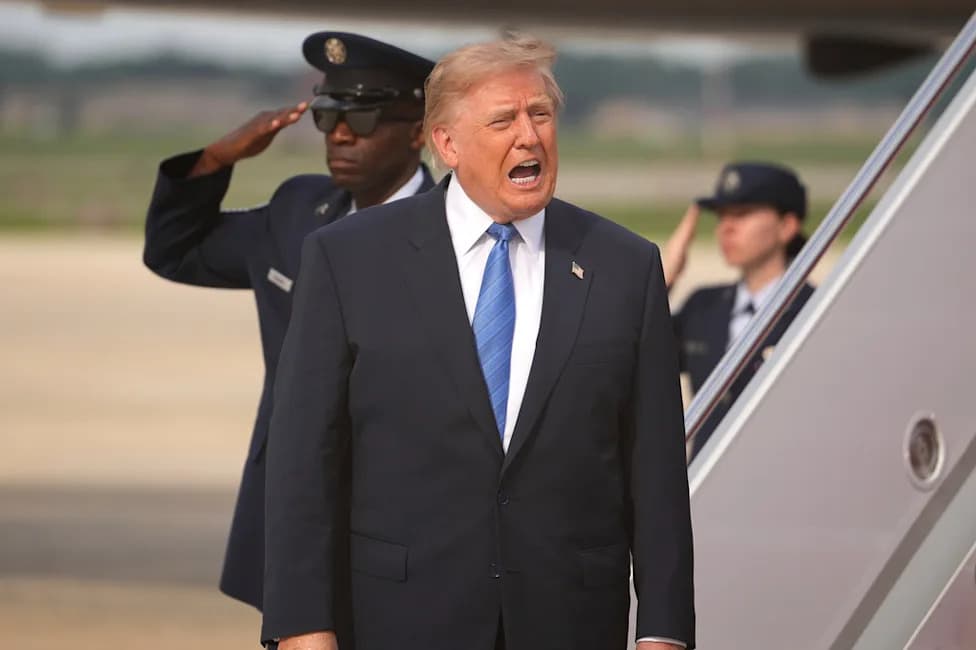
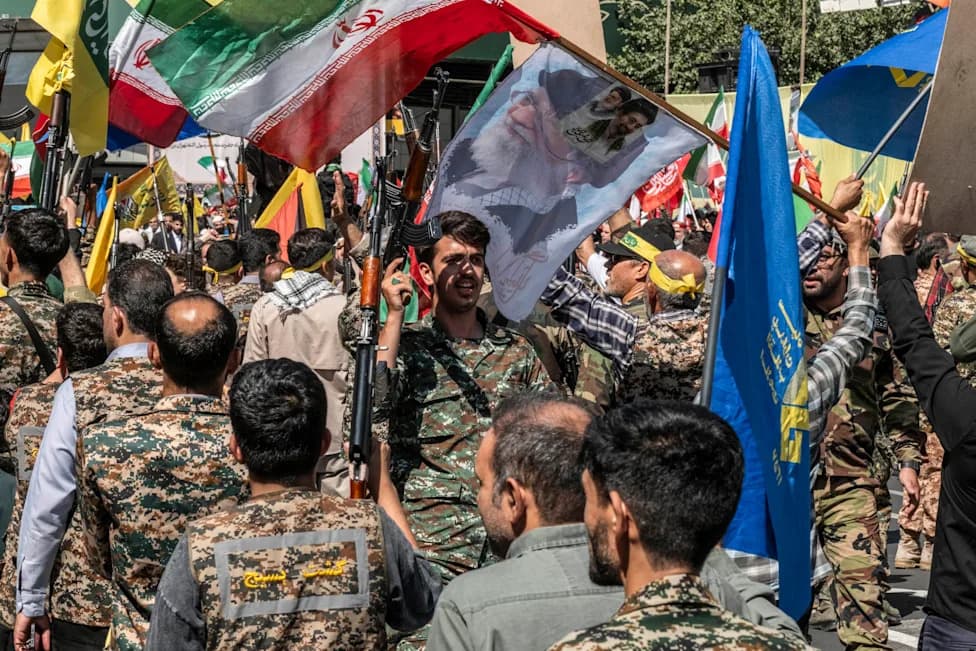
President Trump said he called off a planned, large-scale strike on Iran after Gulf leaders, including Saudi Crown Prince Mohammed bin Salman, urged him to give diplomacy a chance. He warned the strike could have been "the biggest attack since World War II" and said talks with Iran were due to resume Monday. The administration will pursue negotiations before deciding on further military action, and Trump refused to set a deadline.
Trump Says He Called Off a 'Massive' Strike on Iran After Gulf Allies Urged Diplomacy
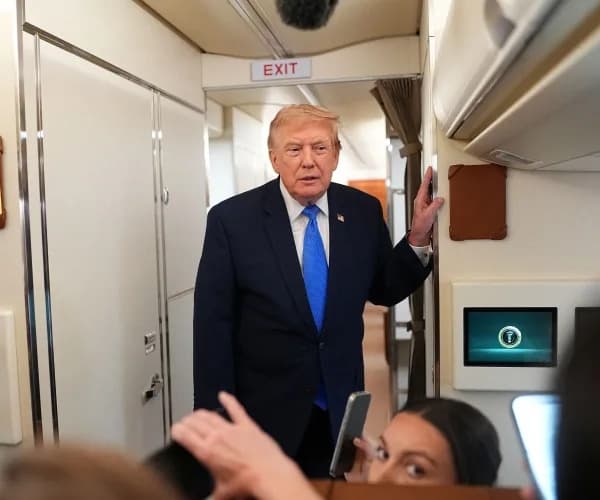
President Donald Trump speaks to the press aboard Air Force One on August 2, 2026. Trump is returning to the White House after spending the weekend in New Jersey at his Bedminster residence. (Aaron Schwartz / AFP via Getty Images)
President Donald Trump told reporters Sunday that he called off what he described as a planned, large-scale military strike on Iran after leaders of key Gulf states urged him to give diplomacy more time.
Speaking aboard Air Force One while returning from Bedminster, New Jersey, to Joint Base Andrews, Trump said the operation he canceled would have been "the biggest attack since World War II" and could have had "disastrous" consequences for Iran.
"I was asked to by Saudi Arabia, the UAE, by Qatar, and by Iran to hold off strikes," Trump said, adding that the request from allies prompted him to pause. "When the allies asked to call it off, you gotta say, 'Well, let's see.'"
"It would have been a massive attack," he said, describing the scale and potential fallout of the planned operation.
Trump said Saudi Crown Prince Mohammed bin Salman personally urged negotiations rather than military action. "I asked the Crown Prince of Saudi Arabia, 'What would you rather have us do?' He said, 'We would prefer a deal rather than an attack,'" Trump recounted.
Diplomacy, Hormuz and Nuclear Talks
The president framed Gulf partners as optimistic that a diplomatic solution could be reached, pointing to efforts to reopen the Strait of Hormuz and to broader nuclear discussions with Tehran. "Allies think there is a deal," he said. "There is a deal on Hormuz, and it will be a deal on the nuclear."
Trump indicated the United States would give negotiations a chance before deciding whether military action remained necessary. "We are just going to see whether or not we can make a deal," he said, and declined to set a deadline for Iran. "We will see. I am not looking to kill people."
The president acknowledged competing views inside Washington about how to handle Tehran: "There is a group of people who would love me to do it — just do it — and there is another group of people that does not want me to do it."
Trump said talks with Iranian officials were scheduled to resume Monday afternoon, and he expressed hope that renewed diplomacy could avert further bloodshed. "We are talking to them. It begins tomorrow afternoon. It would save a lot of lives," he said.
This episode highlights the influential role Gulf states — including Saudi Arabia, the United Arab Emirates and Qatar — in pressing for restraint and encouraging diplomatic openings amid a tense standoff between Washington and Tehran.
© 2026 Newsmax. All rights reserved.
Help us improve.